

From DIY weekend projects to full custom installs — your definitive guide to adding lasting value, beauty, and function to any room.
There is something about walking into a room with perfectly fitted built in cabinets that makes you stop and stare. They hug every wall, eliminate wasted space, and somehow make a house feel like it was always meant to look this way. Whether you are browsing home décor accounts online or flipping through a design magazine, built in cabinets are consistently the element people point to and say, “That. That is what I want my home to feel like.”
But here is the thing — you do not have to hire a high-end carpenter or spend tens of thousands of dollars to get that look. The world of diy built in cabinets has genuinely matured. Homeowners across the country are building stunning, custom-looking wall units using stock materials, a handful of tools, and a weekend or two of focused work. This guide covers it all: design decisions, material choices, step-by-step construction, and honest advice on when to call in a professional.
According to a 2023 National Association of Realtors study, storage improvements — particularly built in shelves and cabinetry — ranked among the top five upgrades that influenced buyer decisions. The return on investment is real, the satisfaction is immediate, and the process is far more accessible than most people think. Let’s dig in.
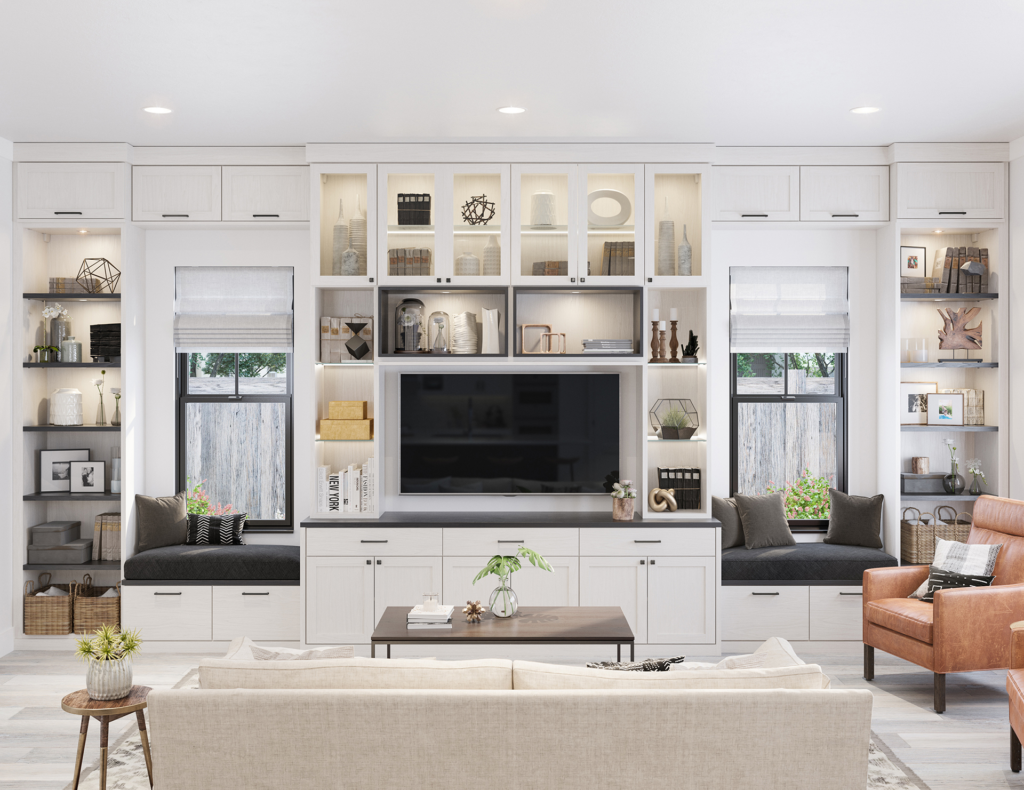
A classic combination of open shelving and lower closed cabinetry — the foundation of virtually every great built-in design.
Why Built In Cabinets Are Worth Every Penny (and Every Bead of Sweat)
Let’s get the value case out of the way first, because it is compelling. A professionally installed set of custom built in cabinets in a living room can increase home resale value by anywhere from $5,000 to $20,000 depending on the market and quality of execution. Even a well-executed DIY project using stock materials adds perceived value far beyond its material cost — often three to five times the investment.
Beyond money, there is the question of livability. Built in cabinets living room installations eliminate the visual clutter that comes with freestanding furniture. Everything has a place. Books, electronics, decorative items, and the things you never quite know where to put — they all find a home inside a well-designed built-in system. It changes how you experience your own space daily.
The Difference Between Custom, Semi-Custom, and Stock
Understanding the options before you start saves enormous amounts of time, money, and frustration. Here is a quick breakdown:
- Custom built in cabinets: designed and built entirely from scratch to your exact specifications. Maximum flexibility, maximum cost — typically $8,000 to $30,000 or more for a full living room wall.
- Semi-custom / prefab: Prefab built in cabinets or modular built in cabinets from companies like IKEA, Home Depot, or California Closets. Mid-range cost with more flexibility than pure stock.
- DIY built ins with stock cabinets: using off-the-shelf base cabinets for built ins from big-box stores, combined with custom shelving, trim, and paint for a built-in look. This is where most DIYers land, and it can look absolutely incredible with careful execution.
The secret most professional designers will not tell you? A lot of what you see in magazine-worthy homes falls into that third category. Smart use of stock cabinets for built ins, combined with the right crown molding and a perfect paint job, is virtually indistinguishable from a $25,000 custom job to any untrained eye.
Planning Your Built In Cabinets Project
Great built in cabinets do not start with a drill — they start with a pencil and a lot of careful measuring. The planning phase is where most DIY projects either succeed or struggle, and spending an extra afternoon getting it right here will save you days of frustration later.
Choosing the Right Wall and Room
Not every wall is created equal. Before you commit to a specific location for your living room built in cabinets, consider the following:
- Load-bearing walls: if you plan to create recessed built in wall cabinets that require cutting into the wall, always determine whether it is load-bearing first.
- Electrical and plumbing: walls with existing outlets, switches, or plumbing lines need careful consideration.
- Ceiling height: taller ceilings are a gift for floor to ceiling cabinets living room installations. Standard 8-foot ceilings work perfectly; anything under 7.5 feet requires scaled-down designs.
- Focal points: the most impactful installations are centered around a fireplace, TV wall, or window.
Measuring and Designing Your Layout
Measure the wall width, height, and depth at multiple points — walls are rarely perfectly square, and this matters enormously when you are trying to achieve tight-fitting built in cabinetry. Record the distance from the floor to any windows, outlets, vents, or ceiling irregularities.
Sketch your design on graph paper or use free tools like SketchUp or RoomSketcher. A typical built in bookcase with base cabinets design follows a classic three-zone structure: lower cabinets (approximately 34 inches tall), a middle open shelf zone for display, and upper shelving that reaches toward the ceiling.
Built In Cabinets — Cost & Complexity at a Glance
| Tier | Price | Description |
| DIY Stock | Semi-Custom ★ | Full Custom |
| $500 – $2,500 | $3,000 – $8,000 | $8,000 – $30,000+ |
| Stock base cabinets + DIY shelves + trim & paint. Best value, high effort. | Prefab systems with custom trim. Moderate cost, moderate effort. | Professionally built from scratch. Maximum flexibility and finish quality. |
How to Build Built In Cabinets: A Step-by-Step DIY Guide
Ready to get your hands dirty? Here is a comprehensive look at how to build built in cabinets using the stock cabinet method — the most popular and cost-effective approach for homeowners tackling this as a weekend project. This covers a standard diy built in bookcase with base cabinets installed against a flat wall.
Step 1 – Materials and Tools You Will Need
For a typical diy built in cabinets living room project using the stock cabinet method, gather:
- Base cabinets for built ins: unfinished stock cabinets (12″ or 16″ deep) in widths that add up to your target wall measurement
- 3/4″ plywood for the upper shelf unit frame
- 1×4 and 1×6 pine boards for shelves and face frames
- Crown molding, base molding, and shoe molding
- 1-1/4″ pocket screws, wood glue, and brad nails
- Stud finder, level, circular saw, jigsaw, drill, nail gun, and a sander
- Primer, paint, and caulk
Pro Tip: When buying cabinets for built ins, always choose unfinished stock rather than pre-finished. Unfinished cabinets are significantly cheaper, and since you are painting everything one uniform color anyway, the finish on the box does not matter.
Step 2 – Installing the Base Cabinets
This is where making built in cabinets truly begins. Start by locating all wall studs with a stud finder and snapping a level chalk line at 34 inches from the floor — that is your standard base cabinet height. If your floors are not perfectly level (and they rarely are), shim the cabinets up from the lowest point, working across the wall.
Secure the base cabinets to the wall by screwing through the cabinet’s mounting rail into studs. For diy built ins with stock cabinets, it is critical to screw adjacent cabinets together through the side walls before attaching them to the wall — this creates a rigid run.
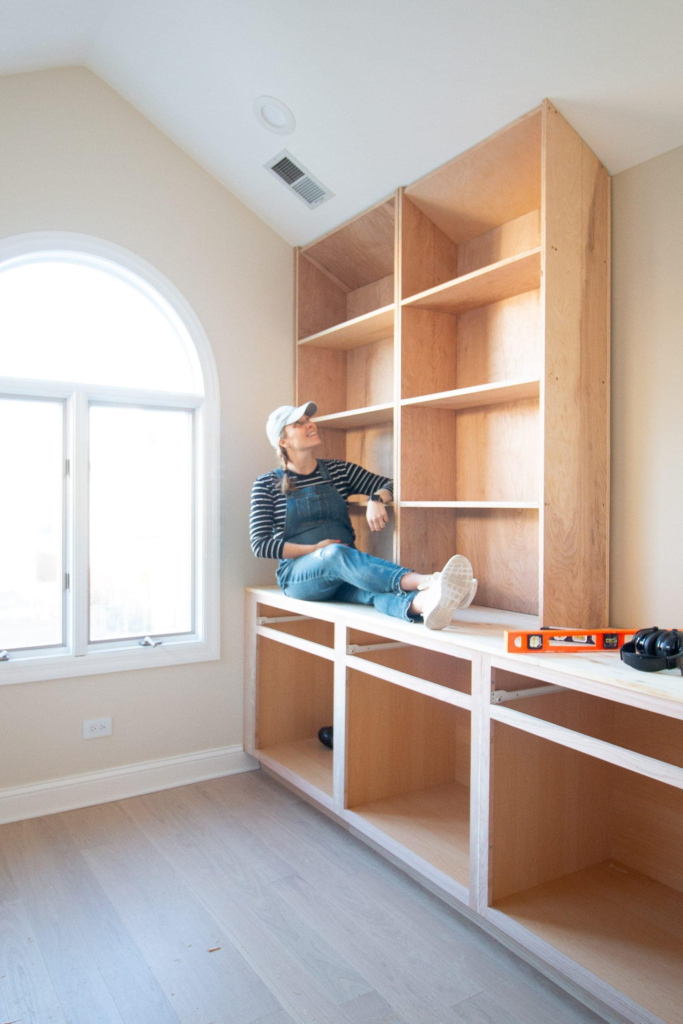
Using plywood frames built above stock base cabinets is the backbone of most successful DIY built-in projects.
Step 3 – Building the Upper Bookcase Frame
For how to build built in bookshelves, the upper section is typically a simple plywood box system. Cut 3/4″ plywood panels for vertical dividers and horizontal top/bottom pieces. A standard upper unit is 12 inches deep — shallow enough to feel open, deep enough for books and decorative items.
The trick to building built in cabinets that look truly professional is the face frame. Cut 1×3 pine strips and apply them to the front edges of your plywood box — this hides the plywood edges and gives the unit a furniture-quality appearance.
Step 4 – The Trim Work (Where the Magic Happens)
Ask any experienced woodworker what separates a good built-in from a great one, and the answer is almost always the same: trim. This is where diy built in cabinets and shelves cross over from looking like assembled furniture to looking like architecture.
Run a continuous crown molding at the very top of the unit where it meets the ceiling. Add base molding at the bottom to cover the gap between the cabinet base and the floor. Fill every nail hole and seam with wood filler, let it dry, and sand smooth. It is tedious work, but building built ins is all about the details.
The caulk line secret: After priming and before your final paint coat, run a thin bead of paintable caulk along every joint where the built-in meets the wall, floor, and ceiling. When painted over, these caulk lines create seamless transitions that make your diy built in look like it grew out of the house.
Step 5 – Painting for a Built-In Finish
Color choice is deeply personal, but certain approaches reliably work. Painting the entire unit — cabinets, shelves, trim — a single color in a semi-gloss or satin finish creates cohesion. Classic white is perennially popular and makes rooms feel brighter and larger. Bold colors like navy, forest green, or charcoal black create dramatic impact, particularly in built in cabinets living room installations flanking a fireplace.
Always prime first. Use a high-quality brush for flat surfaces and a small foam roller for large panels. Sand lightly between coats with 220-grit sandpaper. Two or three thin coats always beat one thick coat.
Built In Cabinet Ideas by Room
One of the most exciting things about built in furniture is its versatility. The same core construction principles apply across different rooms, but each space has its own design logic.
Living Room Built In Cabinets
Living room built in cabinets are the most popular application by far. The most impactful configuration is flanking a fireplace with matching built in bookshelves with cabinets on each side, creating a symmetrical focal point that anchors the entire room.
Consider incorporating a built in bookshelves with tv setup, where the television is recessed into the center of the wall unit. A media wall with cabinets below for storing electronics and above for books and décor is both functional and visually stunning. This creates the classic built in cabinets living room look that dominates design inspiration boards.
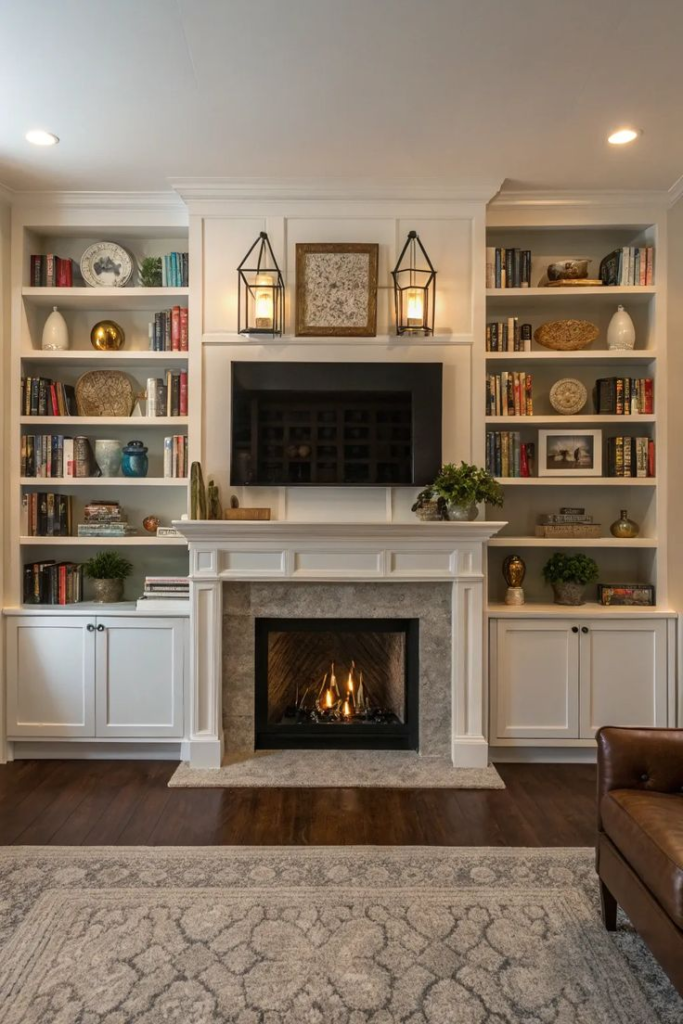
A symmetrical built-in bookcase arrangement around a fireplace is one of the most timeless and beloved interior design choices.
Home Office Built In Cabinets
The rise of remote work has made the home office a genuine priority. Diy built in office cabinets can transform a spare bedroom or awkward alcove into a productivity powerhouse. A full wall of built in wall shelves flanking a floating desktop creates a built-in desk situation that makes the most of every square inch.
Basement Built In Cabinets
Basements present unique opportunities. Basement built in cabinets can serve as an entertainment center, a workshop storage wall, or a full home bar. The lower ceiling heights common in basements actually work in your favor here — a full-height built in wall unit with no gap at the top looks intentional and polished.
Kitchen and Bonus Room Built Ins
Kitchen built ins and built in kitchen cabinets represent the most complex application but also the highest potential return. A full set of diy built in kitchen cabinets using stock cabinet boxes with custom face frames and doors can save 50 to 70 percent versus a professionally installed kitchen. Meanwhile, bonus room built ins and family room built in cabinets create dedicated storage that turns underused spaces into genuinely functional rooms.
Design Tips That Separate Good Built Ins from Great Ones
Proportion Is Everything
The proportional relationship between the lower cabinet section, the middle shelf area, and the upper shelves dramatically affects the visual outcome. A classic ratio is roughly 40% lower cabinets, 10% middle shelf zone, and 50% open shelving above. This is a reliable starting point for any built in cabinet plans.
Lighting Transforms Everything
Integrated lighting inside built in bookshelves elevates any installation from attractive to extraordinary. Puck lights inside upper cabinets, LED strip lighting along the underside of shelves, or accent lighting directed at the back panel of open shelving all add drama and depth. This is one detail far easier to plan for before construction than after.
Making Stock Cabinets Look Custom
A few specific techniques help diy built ins with stock cabinets look far more custom. First, replace the stock hardware with something distinctly better — quality pulls and knobs make a significant visual difference. Second, add a bead board or V-groove pattern to cabinet door fronts. Third, use a consistent reveal on all face frames. For homeowners going the stock route, understanding how to make cabinets look built in through trim, paint, and hardware is the essential skill.
Common Mistakes to Avoid When Building Built In Cabinets
Experience is expensive. Learning from other people’s mistakes is free. These are the most common pitfalls encountered in diy built in cabinets projects:
- Not accounting for baseboards: standard baseboards are typically 3 to 5 inches tall. You must notch the back of cabinets to accommodate them, or remove and reinstall the baseboard.
- Ignoring ceiling height variations: always measure ceiling height at multiple points and design for the lowest point.
- Underestimating the caulk and fill work: even a perfectly built unit looks amateurish without meticulous attention to nail holes, gaps, and transitions.
- Rushing the paint: skipping primer, not sanding between coats, or using a cheap brush will create visible texture problems.
- Not securing tall units to the wall: any built in wall cabinets or tall shelving units must be secured to wall studs for safety.
Before You Start: Always check your local building codes regarding built in cabinetry, especially if you are modifying a load-bearing wall or running new electrical wiring. Most jurisdictions require a permit for structural changes.
Frequently Asked Questions About Built In Cabinets
Q: What is the average cost to build DIY built in cabinets?
The cost of diy built in cabinets varies significantly. A simple plywood bookcase can be completed for $300–$700 in materials. A more elaborate living room built-in using stock base cabinets, upper plywood shelving, crown molding, and quality paint typically runs $800–$2,500 for a 10-to-14 foot wall. Hiring a professional to build custom built in cabinets typically starts around $3,000 and can reach $30,000 or more.
Q: How do I make stock cabinets look like built in cabinets?
The key to making cabinets that look like built ins is trim work, paint, and integration. Run continuous crown molding at the ceiling, base molding at the floor, and side trim panels. Paint everything — including the wall between cabinets — one uniform semi-gloss color. Fill all gaps with paintable caulk. Upgrade to quality hardware. These steps together create a cohesive, architectural appearance indistinguishable from fully custom work.
Q: How long does it take to build DIY built in bookshelves with cabinets?
A typical diy built in bookshelves with cabinets project on a single wall takes most intermediate DIYers two to four focused weekends. The first weekend covers planning and base cabinets. The second handles upper shelving. The third focuses on trim and sanding. The final session is painting. Rushing any of these stages is the most common reason projects end up looking unfinished.
Q: Can I use wall cabinets as base cabinets for built ins?
Yes — using upper cabinets as base cabinets is a popular hack for achieving a shallower profile. Standard base cabinets are 24 inches deep, but stock upper cabinets are typically 12 inches deep. Placing them on a platform base creates a more furniture-like, less kitchen-heavy appearance — ideal for living rooms and offices.
Q: Do built in cabinets increase home value?
Yes, well-executed built in cabinets consistently add real estate value. The impact is most pronounced in living rooms and kitchens. Quality matters enormously — a well-finished installation is a genuine selling point. The ROI on a well-executed diy built in project using stock cabinets can be 200–400% in terms of perceived value versus material cost.
Q: What depth should built in shelves be?
The ideal depth for built in shelves depends on purpose. For books, 10–12 inches is standard. For a media center with a television, 16–20 inches deep is typical. The built in shelf depth should be the minimum necessary — deeper shelves collect clutter and make items at the back hard to reach.
Q: How do I build built in bookshelves around a TV?
Building built in bookshelves around tv requires careful planning for cable management and TV mounting. Mount the TV bracket to studs first, then build surrounding built in wall units with a recessed center panel framing the TV. Run conduit inside the wall before installing the built-in for cables — this is much easier before the unit is in place.
Q: Is it worth hiring a professional for built in cabinets?
It depends on your goals, skills, and budget. If you have basic woodworking competence and can dedicate several focused weekends, diy built in cabinets using the stock cabinet method can deliver results you will be genuinely proud of at a fraction of professional cost. For truly complex custom built in cabinet work, a professional cabinetmaker will deliver results extremely difficult to replicate as a DIYer.
Conclusion: Start Small, Think Big
Built in cabinets represent one of the most genuinely transformative improvements you can make to any home. They add function, character, architectural interest, and real financial value — often at a cost far more accessible than most people assume when they first start researching the project.
Whether you pursue diy living room built ins using stock cabinets from your local hardware store, invest in custom built in wall units from a professional cabinetmaker, or land somewhere in between with a semi-custom installation, the key is to plan carefully, execute patiently, and not rush the finishing details.
Start with one wall. One room. Maybe even just a single built in bookcase flanking a window or fireplace. Learn the process, build your confidence, and let the project grow from there. The results — when you step back and see what your space has become — are absolutely worth it.