

Have you ever walked into a room and felt something shift inside you, without being able to explain why? Maybe it was the way the light fell across a velvet couch, or how a single green plant in the corner made the whole space breathe easier. That quiet, almost magnetic pull is exactly why interior design is interesting mintpaldecor lovers talk about so often — it’s not just furniture and paint, it’s emotional architecture happening right in front of you.
Most people assume interior design is about taste. Pick a nice sofa, match the curtains, done. But the truth is far richer and a lot more human. Every room you’ve ever loved — a grandmother’s kitchen, a favorite coffee shop, a hotel lobby that made you stop and stare — was shaped by decisions rooted in psychology, light, proportion, and story. That’s the real reason why interior design is interesting mintpaldecor enthusiasts can spend hours debating a single shade of beige.
This article digs into the layers most people never stop to consider: the science behind why certain rooms calm us down, the history hiding in design movements, the sensory tricks professionals use, and the small details that separate a forgettable room from one you can’t stop thinking about. Whether you’re a curious homeowner, an aspiring designer, or just someone who likes pretty spaces, there’s something here that will change how you see every room you walk into.
By the end, you won’t just understand why this field fascinates so many people — you’ll start noticing design choices everywhere, from your dentist’s waiting room to your best friend’s apartment, and you’ll never look at a blank wall the same way again.
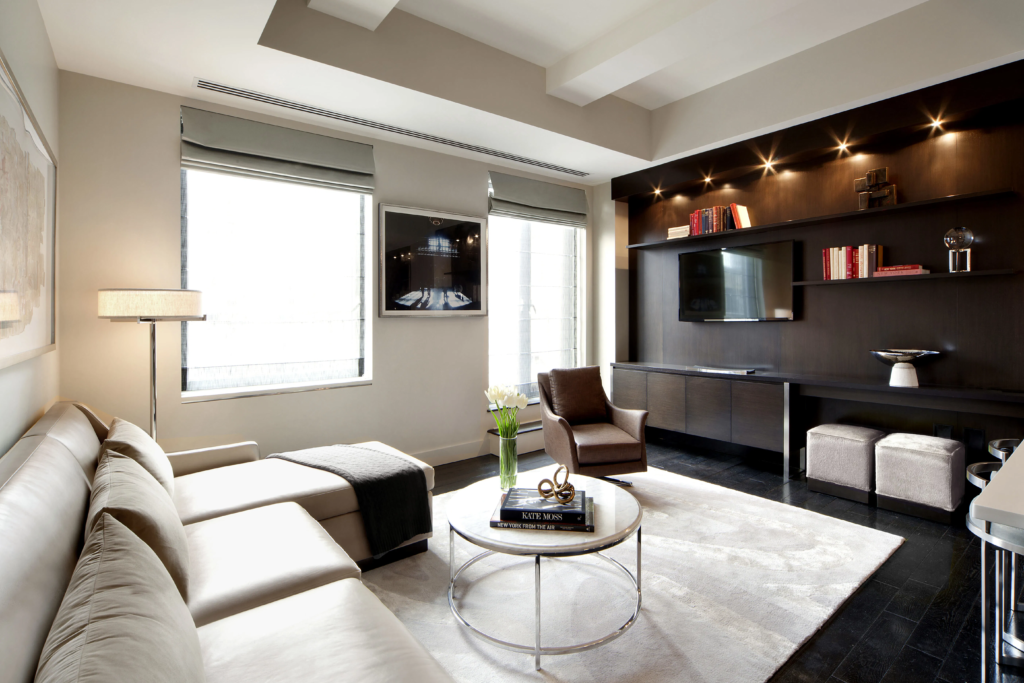
A well-balanced living room shows how light, color, and layout work together to shape how a space feels.
Why Interior Design Is Interesting Mintpaldecor: The Psychology Behind Every Room
Here’s something most people don’t realize: rooms talk to your brain before you’ve even consciously registered what’s in them. Color, light, texture, and layout all send signals to your nervous system within seconds of entering a space. This is the core of why interior design is interesting — it sits at the exact intersection of art and human behavior.
Designers who understand this aren’t just decorating. They’re quietly engineering how you’ll feel. A hospital waiting room painted in soft blues and greens isn’t an accident — those colors are linked to lower heart rates and reduced anxiety. A restaurant with warm amber lighting and tight seating isn’t lazy design — it’s built to make strangers feel intimate and linger a little longer over dessert.
The Emotional Triggers Designers Rely On
A few patterns show up again and again in spaces that genuinely move people:
- Natural light exposure — rooms with abundant daylight are consistently linked to better mood and alertness.
- Texture contrast — pairing rough materials (wood, stone) with soft ones (linen, wool) creates subconscious comfort.
- Visual flow — uncluttered sightlines reduce the mental fatigue of processing too many objects at once.
- Personal symbolism — objects that carry memory (a travel souvenir, a family photo) anchor a space emotionally.
None of this is guesswork. It’s backed by decades of environmental psychology research, and it’s a huge part of what makes professional design feel different from simply arranging furniture you bought on sale.
The Historical Story Hiding in Every Style
Another layer of fascination comes from history. Every design style you scroll past on social media — minimalist, Scandinavian, Art Deco, industrial, bohemian — carries a story about the era, economy, and culture that created it.
Mid-century modern, for instance, exploded after World War II when manufacturing technology allowed cheaper mass production of clean-lined furniture, and people wanted optimism after years of hardship. Industrial design, with its exposed brick and metal piping, grew out of converted factories and warehouses in cities reinventing themselves after manufacturing declined. Even the cozy “hygge” trend reflects Scandinavian countries coping with long, dark winters by prioritizing warmth and comfort indoors.
Why This History Matters to You
Understanding the backstory of a style does more than make you sound smart at dinner parties. It helps you:
- Choose a direction that genuinely fits your lifestyle rather than chasing trends blindly.
- Mix styles intentionally instead of accidentally clashing eras.
- Appreciate why certain combinations (like brass with deep green, popular in Art Deco) keep returning decade after decade.
This blend of art history and lifestyle context is a major piece of the puzzle behind why interior design is interesting mintpaldecor followers find endlessly rewarding to study.
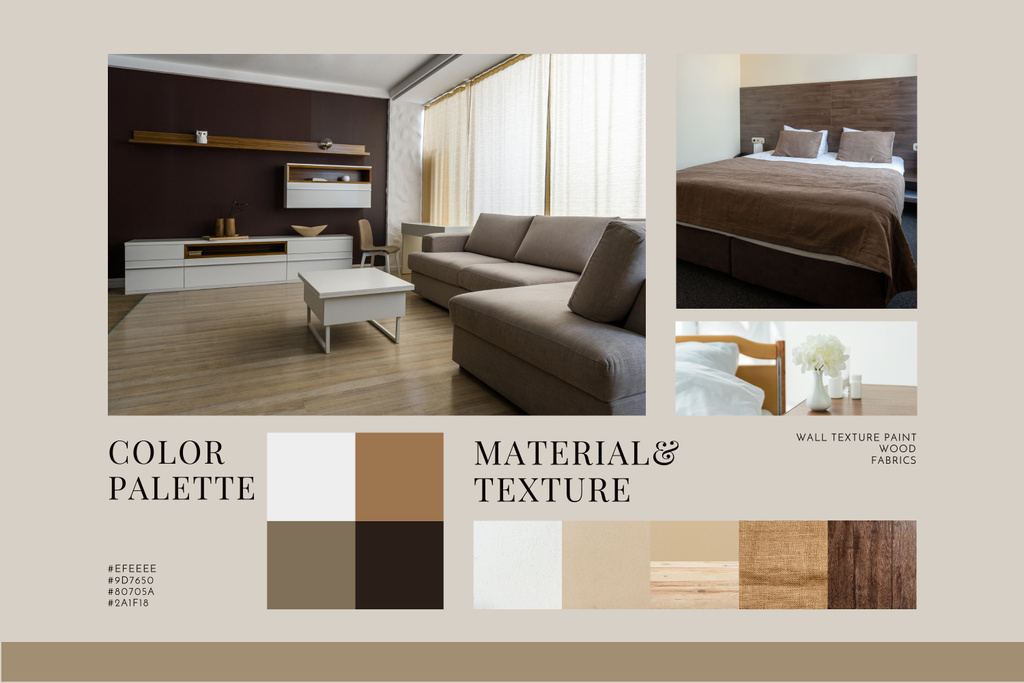
A mood board built around dominant, secondary, and accent tones — the same 60-30-10 principle professionals use in real rooms.
Color Theory: The Invisible Force Shaping Your Mood
If psychology and history are the bones of design fascination, color theory is the nervous system running through it. Color isn’t decoration — it’s communication. Warm tones like terracotta and mustard tend to energize a space and make it feel intimate, while cool tones like sage and slate create distance and calm.
Professional designers think about color in layers:
- Dominant color — usually walls or large furniture, setting the overall tone.
- Secondary color — rugs, curtains, or accent furniture that supports the dominant tone.
- Accent color — small pops (cushions, art, vases) that add personality without overwhelming the eye.
A common mistake beginners make is choosing colors they like in isolation, without testing how they behave under different lighting throughout the day. A soft gray that looks elegant at noon can turn cold and lifeless by 7 p.m. under warm bulb light. This is one of the small, often-missed details that makes the craft genuinely complex — and genuinely interesting.
The 60-30-10 Rule, Explained Simply
A classic framework many designers lean on:
- 60% dominant color (walls, large furniture)
- 30% secondary color (textiles, accent furniture)
- 10% accent color (decor, art, small details)
This ratio keeps a room visually balanced instead of chaotic, and it’s one of those simple rules that, once you know it, you’ll start spotting in every well-designed space you visit.
Space Planning: The Math Behind the Beauty
Here’s a side of design that rarely gets attention but deserves it: spatial mathematics. Every well-designed room is secretly a puzzle of measurements — door swing clearances, walking paths, furniture proportions, and sightlines all calculated before a single cushion is chosen.
Designers often work with “human scale” — the idea that furniture and spacing should match natural body movement and comfort. A coffee table placed too far from a sofa forces awkward reaching. A hallway narrower than 36 inches feels cramped even with beautiful decor. These invisible rules are why some rooms feel effortless to move through, while others — despite expensive furniture — feel oddly uncomfortable.
Common Space Planning Principles
- Keep walking paths at least 30–36 inches wide for comfortable movement.
- Leave 14–18 inches between a sofa and coffee table.
- Use rugs large enough that at least the front legs of furniture rest on them, visually anchoring the seating area.
- Avoid blocking natural sightlines from entryways toward windows or focal points.
This combination of geometry and intuition is exactly why interior design rewards both analytical and creative minds — it’s a rare field where spreadsheets and storytelling work side by side.
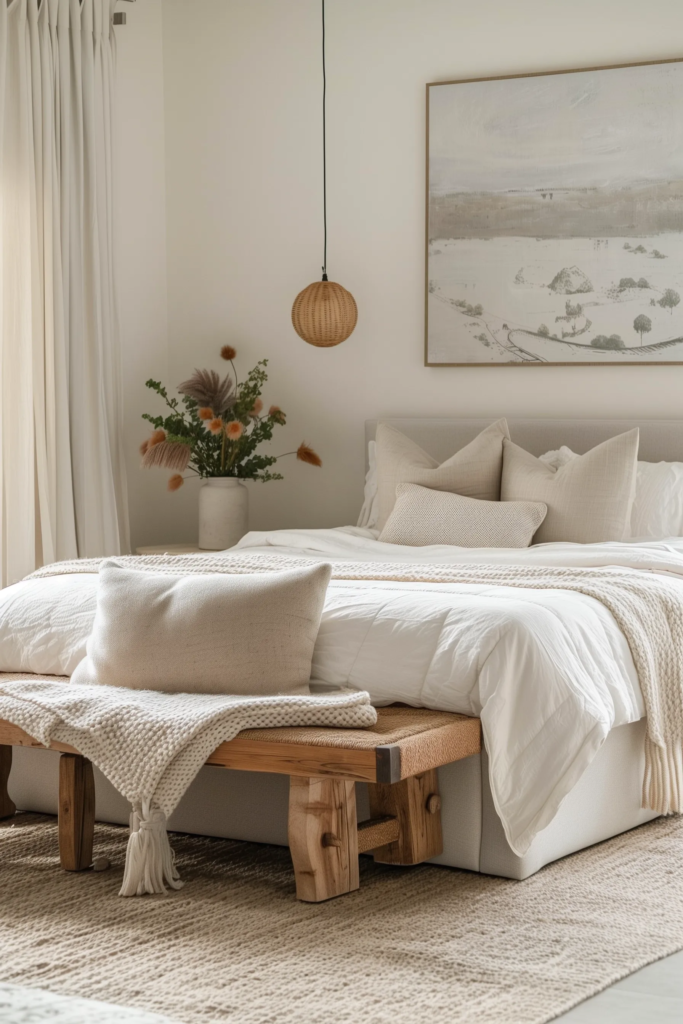
Layered textures and warm lighting turn a simple bedroom into a space that feels emotionally comfortable, not just visually styled.
Texture, Lighting, and the Sensory Layer Most People Miss
A room isn’t just seen — it’s felt. Texture and lighting add a sensory dimension that photos on a screen can never fully capture, which is part of why stepping into a beautifully designed space in person feels so different from scrolling past a picture of it.
Layered Lighting Explained
Professionals typically design with three lighting layers:
- Ambient lighting — the general, overall light source (ceiling fixtures, recessed lights).
- Task lighting — focused light for specific activities (reading lamps, under-cabinet kitchen lights).
- Accent lighting — dramatic highlights for art, architecture, or decor (wall sconces, picture lights).
Rooms lit by a single overhead bulb often feel flat and clinical, no matter how nice the furniture is. Layered lighting creates depth, shadow, and warmth — the same way good photography uses multiple light sources to avoid harsh, flat images.
Texture as an Emotional Tool
Texture works on a similar layered principle. A room made entirely of smooth, hard surfaces (glass, polished stone, metal) can feel sterile and cold, even if it’s stylish. Introducing soft layers — a chunky knit throw, a woven basket, a velvet cushion — softens the space and makes it feel lived-in rather than staged.
This is one of the quieter reasons design enthusiasts get hooked: there’s always another sensory layer to learn, tweak, and master.
Sustainability and the New Era of Conscious Design
Modern interior design has also evolved into something with real environmental weight. Sustainable design now influences material choices, furniture sourcing, and even how rooms are arranged to reduce energy consumption.
Designers increasingly favor:
- Reclaimed or responsibly sourced wood
- Low-VOC paints that reduce indoor air pollution
- Energy-efficient lighting and appliances
- Furniture built to last rather than disposable, trend-driven pieces
This shift adds another compelling layer to the field — it’s no longer just about beauty, but about responsibility. Designers today balance aesthetics with ethics, which makes the profession feel more meaningful than ever.
How Technology Is Reshaping the Design Process
Another major reason the field keeps evolving is technology. 3D rendering software, AI-assisted mood boards, and virtual reality walkthroughs now let designers (and homeowners) experience a room before a single nail is hammered. This reduces costly mistakes and lets people experiment fearlessly with bold colors or layouts they might otherwise avoid.
Online tools also make professional-level design more accessible to everyday homeowners, not just those who can afford a full-service designer. Anyone with a smartphone can now test paint colors virtually, compare furniture layouts, or browse mood boards for inspiration — democratizing a field that used to feel exclusive.
Practical Ways to Apply This Fascination at Home
Understanding the theory is one thing — applying it is where the real fun begins. Here are practical steps anyone can use:
- Start with a mood board. Collect images, colors, and textures that genuinely excite you before buying anything.
- Test lighting at different times of day. What looks great at 10 a.m. may look completely different at dusk.
- Measure before you shop. Bring a tape measure and painter’s tape to mark furniture footprints on the floor.
- Layer textures intentionally. Mix at least three different materials (wood, textile, metal, ceramic) in every room.
- Edit ruthlessly. Remove one item from a finished room — most spaces look better with slightly less than more.
These small habits mirror exactly what professionals do, just on a smaller scale, and they’re a great way to experience firsthand why this craft is so endlessly engaging.
FAQs About Interior Design
What makes interior design different from interior decorating?
Interior design typically involves structural and spatial planning — layout, flow, lighting systems, and sometimes architectural changes — while decorating focuses on surface-level elements like furniture, color, and accessories within an existing space.
Why do some rooms feel instantly comfortable while others feel “off”?
This usually comes down to a mismatch between scale, lighting, and flow. A room can have beautiful individual pieces, but if proportions are wrong or lighting is too harsh, it will still feel uncomfortable despite the nice decor.
Do I need a professional designer to create a good space?
Not necessarily. Many principles — like the 60-30-10 color rule or layered lighting — can be applied by homeowners themselves. Professionals add value through experience, sourcing, and solving complex spatial problems, but thoughtful DIY design can absolutely succeed.
How important is color choice in a small room?
Very important. Lighter, cooler tones tend to make small rooms feel more open, while darker, warmer tones can make them feel cozy but smaller. The right choice depends on the mood you want, not a fixed rule.
What’s the easiest way to start improving a room without spending much money?
Rearranging existing furniture for better flow, adding a few textured accessories, and improving lighting layers are often the cheapest and most impactful changes you can make.
Why does natural light matter so much in design?
Natural light affects mood, perceived room size, and even how accurately colors appear. Designers often plan furniture placement and window treatments specifically around maximizing daylight exposure.
Is interior design considered an art form or a science?
It’s genuinely both. It uses scientific principles like ergonomics, psychology, and physics of light, while also relying on artistic skills like composition, color harmony, and storytelling through space.
How do designers decide which style fits a specific home?
They typically consider the home’s architecture, the client’s lifestyle and personality, the local climate, and practical needs like family size or work-from-home requirements, blending all of these into a cohesive direction.
Final Thoughts
At its heart, design is never just about looking nice — it’s about how a space makes you live, feel, and remember. That layered mix of psychology, history, math, and sensory detail is exactly why interior design is interesting mintpaldecor fans and casual homeowners alike keep returning to, again and again, room after room, project after project. Once you start noticing these details, you’ll never see a room the same way — and honestly, that’s half the fun.