

RVA is the nickname for Richmond, Virginia, the state capital on the falls of the James River. Locals use it on everything from T-shirts to street murals, and the city’s tourism board leans into it too.
Richmond packs more than 400 years of history, rows of preserved Victorian homes, a river you can raft through downtown, and a food scene that keeps landing on travel lists. It’s also a mid-sized city where many people still find homes more affordable than in Washington, D.C., two hours north.
This guide covers what RVA means, how the city is laid out, its most distinctive neighborhoods and house styles, what living there is like, and how to bring a little Richmond character into your own home.
What does RVA mean?
RVA simply stands for Richmond, Virginia. It’s shorthand that took off in local culture and branding, and you’ll see it on businesses, events,s and the city’s tourism site, Visit Richmond VA.
The name signals something a little different from formal “Richmond.” RVA suggests the creative, food-loving, outdoorsy side of the city: breweries, murals, river trails and independent shops.
There’s another reason for the shorthand. The United States has several Richmonds, including cities in California, India,na and Kentucky. RVA makes it clear which one you mean.
Richmond at a glance
| Fact | Detail |
|---|---|
| State | Virginia; Richmond is the state capital |
| Population (city) | 237,257 (US Census estimate, July 2025) |
| Median home value | $353,000 (owner-occupied homes, 2020 to 2024) |
| Median household income | $64,587 (2020 to 2024, in 2024 dollars) |
| Owner-occupied homes | 43.5% (2020 to 2024) |
| River | The James River runs through the city |
| Highways | Sits where Interstate 95 meets Interstate 64 |
Sources: US Census Bureau QuickFacts; Visit Richmond VA.
The owner-occupied rate is worth noting. With fewer than half of homes owner-occupied, Richmond is very much a renters’ city too, partly because of its large student population and many apartments in converted older buildings.
Getting to RVA
Richmond is easy to reach by road, rail or air.
By car, the city sits where Interstate 95 and Interstate 64 meet. Washington, D.C., is about two hours north, and Virginia Beach is roughly two hours east, traffic permitting.
By train, Amtrak serves Richmond’s historic Main Street Station downtown and Staples Mill Road Station in Henrico County, just outside the city.
By air, Richmond International Airport sits a short drive east of downtown, with flights to many major US hubs.
Once you arrive, central neighborhoods are compact enough to explore on foot, by bike or with short rides.
A short history of the city
Richmond was founded in 1737 at the falls of the James River, the point where boats from the coast couldn’t travel further upstream. That location made it a natural trading hub.
The city plays a big part in American history. Patrick Henry gave his famous “Give me liberty, or give me death” speech at St. John’s Church in 1775, in today’s Church Hill neighborhood. Richmond became Virginia’s capital in 1780.
During the Civil War, it served as the capital of the Confederacy. That history remains complex and visible, and in recent years the city has reshaped how it presents it. Confederate statues on Monument Avenue were removed in 2020 and 2021.
Richmond also has deep African American history. Jackson Ward was a thriving center of Black business and culture in the early 20th century, often called the “Harlem of the South.” It’s where Maggie L. Walker founded a bank and became the first Black woman in the US to charter one.
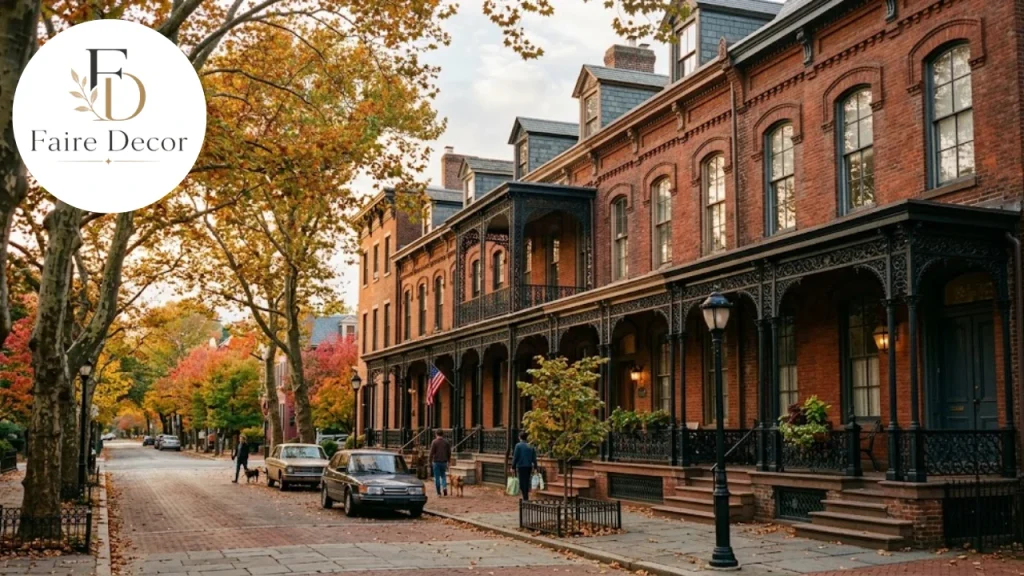
RVA’s architecture: why the homes stand out
For anyone who loves houses, RVA is a treat. The city has one of the richest collections of 19th- and early 20th-century homes in the eastern US, thanks largely to neighborhoods that were preserved rather than torn down.
These are the styles you’ll see most:
| Style | What to look for | Where you’ll see it |
|---|---|---|
| Federal | Simple brick fronts, symmetrical windows, fanlights over doors | Church Hill, older downtown streets |
| Greek Revival | Columns, pediments, strong symmetry | Church Hill, historic civic buildings |
| Italianate | Tall windows, decorative brackets under deep eaves | Church Hill, Jackson Ward |
| Victorian and Queen Anne | Turrets, bay windows, bold trim, decorative porches | The Fan, Museum District |
| Colonial Revival | Classical doorways, columns, balanced facades | The Fan, Westhampton, Monument Avenue |
| Craftsman and bungalow | Low roofs, wide porches, tapered columns | Northside, Forest Hill |
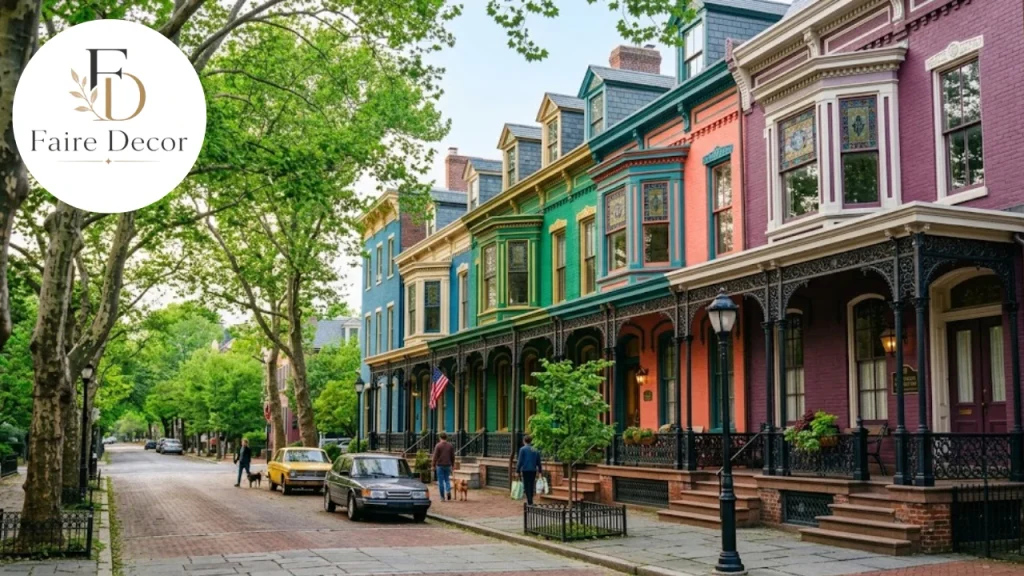
Ornamental cast-iron porches are one of Richmond’s signature details, especially in Jackson Ward and Church Hill. Many were made locally in the 19th century, when Richmond was an ironworking center.
Rowhouses are another hallmark. Long blocks of attached brick homes with deep, narrow lots give neighborhoods like The Fan their dense, walkable feel.
RVA neighborhoods worth knowing
Richmond’s personality changes block by block. These are the neighborhoods most visitors and new residents hear about first.
The Fan
The Fan gets its name from its street grid, which spreads out like a fan from downtown toward the west. It’s known for tree-lined streets, rowhouses, Victorian and Colonial Revival homes, and corner restaurants.
Its location next to Virginia Commonwealth University gives it a lively mix of students, families, and longtime residents. Monument Avenue, with its wide median and grand homes, runs along its edge.
Museum District
Just west of The Fan, the Museum District is home to the Virginia Museum of Fine Arts and the Virginia Museum of History & Culture. It’s a little quieter than The Fan, with handsome brick homes and easy access to Carytown.
Carytown
Carytown is Richmond’s best-known shopping street. About a mile of independent boutiques, vintage shops, cafés,s and restaurants line Cary Street, along with the historic Byrd Theatre, a 1928 movie palace.
Church Hill
Church Hill sits on high ground east of downtown and is one of Richmond’s oldest neighborhoods. It’s where you’ll find St. John’s Church and some of the city’s earliest homes.
Libby Hill Park offers a famous view over the James River. Locals often say the view reminded the city’s founder of Richmond upon Thames in England, inspiring the city’s name.
Jackson Ward
Jackson Ward is a historic district rich in African American history, architecture,re and cast-iron porches. It’s home to the Maggie L. Walker National Historic Site and the Black History Museum.
Scott’s Addition
Once an industrial area, Scott’s Addition is now one of the city’s buzziest neighborhoods. Warehouses have become breweries, cideries, restaurants, and loft apartments.
Manchester and the Southside
Across the river, Manchester has seen major investment, with converted industrial buildings, apartments and views back across the James to downtown.
Westhampton, Northside and Forest Hill
These areas feel more suburban, with larger lots, early 20th-century homes and easy access to parks. Forest Hill sits close to Forest Hill Park and the river, while Northside is known for Craftsman bungalows and tree-lined streets.
The James River: Richmond’s backyard
Few American cities have a river like the James running through the middle. Richmond’s stretch includes rapids, rocky islands,s and parkland, all within sight of downtown.
Visitors can paddleboard, take guided river tours, hike and bike the riverside trails, or simply sit on the rocks in summer. Belle Isle, reached by a pedestrian bridge, is a favorite spot for walking, climbing,ng and swimming in calm areas.
The James River Park System stretches along both banks, and the Virginia Capital Trail links Richmond with Williamsburg for long cycling trips.
River safety matters. The James can rise and run fast after rain, so check conditions and posted warnings before swimming or paddling, and follow local guidance.
Things to do in RVA
Richmond rewards curious visitors. Here’s a mix of the city’s best-known experiences.
Museums. The Virginia Museum of Fine Arts offers free general admission and a strong permanent collection. The Science Museum of Virginia, the Institute for Contemporary Art, and the Edgar Allan Poe Museum are also popular.
History. Walk the Richmond Liberty Trail, visit St. John’s Church, explore the Black History Museum, and tour the Maggie L. Walker National Historic Site.
Street art. Richmond is known for its murals. Wander the Arts District and Scott’s Addition to see large, colorful works on brick walls.
Food and drink. Follow the Richmond Beer Trail, try local barbecue, or book a table at one of the city’s chef-driven restaurants.
Outdoors. Explore Belle Isle, walk the riverside trails, and catch sunset from Libby Hill Park.
Family fun. Kings Dominion amusement park is a short drive north, and Maymont, a historic estate with gardens and animal exhibits, is a local favorite.
Parks and gardens in RVA
Beyond the river, Richmond has plenty of green space, which makes everyday life more pleasant.
Maymont is a historic estate with landscaped gardens, a Victorian mansion, and animal exhibits. It’s a favorite with families and photographers alike.
Lewis Ginter Botanical Garden on the city’s northern edge is known for seasonal displays, a conservatory and holiday lights in winter.
Byrd Park offers lakes, walking paths,s and the Carillon, a World War I memorial tower. It’s a popular spot for picnics and paddle boats.
Forest Hill Park has wooded trails, a lake,ke and a weekend farmers market nearby. It connects easily to the river trails.
Libby Hill Park is small but famous for its sweeping view over the James River and downtown.
RVA’s food and drink scene
Food is a big part of RVA’s identity. The city is known for chef-owned restaurants, Southern cooking with modern twists, and a long list of craft breweries.
Scott’s Addition alone has become a hub for breweries, cideries, and a meadery, all within walking distance of each other. Carytown and The Fan are packed with cafés and casual restaurants.
Farmers markets, food halls and food trucks round out the scene. If you visit, it’s worth booking popular restaurants ahead, especially on weekends.
Living in RVA: what to expect
Richmond appeals to people who want city life without the cost and pace of larger metros. Here’s an honest look at daily life.
Housing. The Census Bureau puts the median value of owner-occupied homes at $353,000 for 2020 to 2024. Prices vary widely by neighborhood, from historic Fan rowhouses to newer suburban homes.
Renting. With fewer than half of homes owner-occupied, renting is common. Older homes split into apartments and new warehouse conversions give renters plenty of character options.
Getting around. Many central neighborhoods are walkable, and the GRTC Pulse bus rapid transit line runs along Broad Street. Most residents still rely on cars, especially in outer neighborhoods.
Climate. Richmond has four distinct seasons, with hot, humid summers and fairly mild winters. Spring and fall are especially pleasant.
Location. Richmond sits where I-95 and I-64 meet, about two hours from Washington, D.C., and within easy reach of the Virginia coast and the Blue Ridge Mountains.
Older homes need care. Historic houses bring charm, but also older wiring, plumbing, and drafty windows. Budget for inspections and maintenance if you buy in a historic district.

Comparing RVA neighborhoods at a glance
If you’re thinking about moving to Richmond, this quick comparison helps you narrow your search. Character varies street by street, so always visit in person.
| Neighborhood | Feel | Typical homes | Good for |
|---|---|---|---|
| The Fan | Lively, walkable, historic | Rowhouses, Victorian and Colonial Revival homes | People who want city life on foot |
| Museum District | Quieter, cultured | Brick homes and apartments | Families and professionals near museums |
| Church Hill | Historic, scenic | Federal, Greek Revival and Italianate homes | Lovers of old architecture and views |
| Jackson Ward | Historic, central | Rowhouses with cast-iron porches | Those who want history close to downtown |
| Scott’s Addition | Trendy, social | Loft apartments in converted warehouses | Renters who like breweries and nightlife |
| Manchester | Changing fast, river views | New apartments and converted industrial buildings | People wanting newer buildings near downtown |
| Northside and Forest Hill | Leafy, relaxed | Craftsman bungalows and early 20th-century homes | Families wanting yards and parks |
Working and studying in RVA
As Virginia’s capital, Richmond has a large state government workforce. Health care, finance, law, and education are also major parts of the local economy.
The city is home to Virginia Commonwealth University, a large public university with a well-known arts program and medical center, and the University of Richmond, a private university on the city’s western edge.
The student population shapes daily life. It supports cafés, music venues,s and affordable rentals near campus, and it helps explain why so many older homes in central neighborhoods have been divided into apartments.
For remote workers, Richmond offers a lower cost of living than many larger East Coast cities, with good access to Washington, D.C., when in-person meetings are needed.
Buying or renovating a historic RVA home
Many people move to Richmond because they fall in love with an old house. A little preparation helps.
Check historic district rules. Some neighborhoods are designated historic districts, and exterior changes such as windows, porches, paint, or additions may need approval. Check with the city before planning work.
Get a thorough inspection. Look closely at foundations, roofs, chimneys, wiring, and plumbing. Older homes often have hidden issues behind walls.
Respect original details. Original wood floors, plaster moldings, fireplaces, and cast-iron details add value and character. Restore them where you can rather than replacing them.
Plan for efficiency. Insulation, storm windows,s and updated heating and cooling make old homes more comfortable without losing their charm.
Research tax credits. Virginia has offered historic rehabilitation tax credits for qualifying work on historic buildings. Check the current rules with the Virginia Department of Historic Resources before you start.
Shopping for home and design in RVA
For home lovers, Richmond is a good place to hunt for character pieces. Antique shops, salvage yards,ds and vintage stores are scattered around the city, especially in older commercial streets.
Architectural salvage, such as old doors, mantels, hardware, and stained glass, is a great way to add history to a newer home. Measure carefully before buying, and check the condition of old wood and hardware.
Local makers sell furniture, ceramics and art at markets and independent shops. Buying from them brings a little of the city’s creative spirit home.
Bringing RVA style into your home
You don’t have to live in Richmond to borrow its look. The city’s homes mix history, warmth,h and a creative streak.
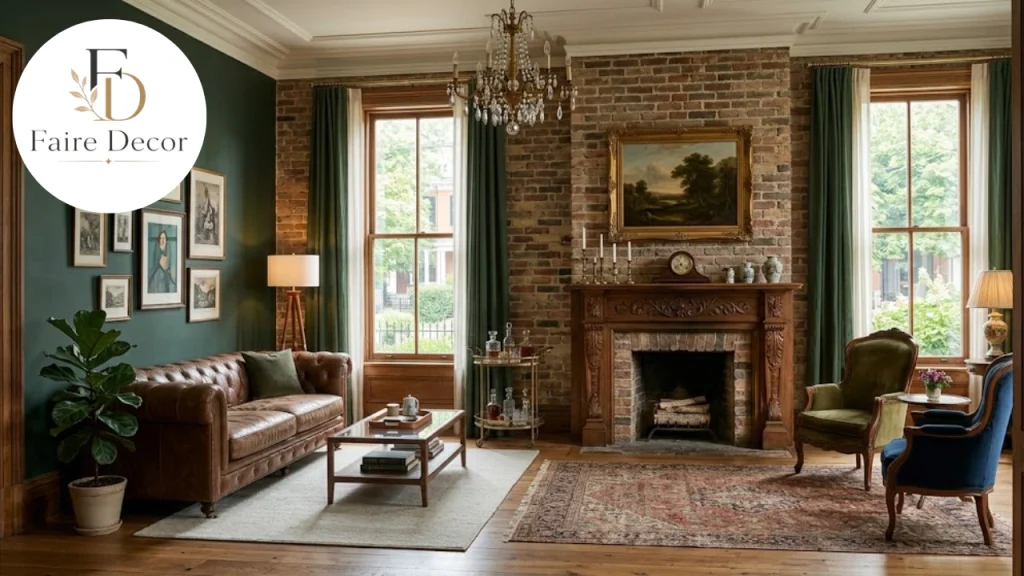
Celebrate original features. Exposed brick, tall windows, wood floors, and decorative fireplaces are Richmond signatures. If you have any of these, make them the focus of the room.
Add a front porch. Porches are central to Richmond’s neighborhoods. A welcoming, furnished front porch brings that sociable, Southern feel to any home.
Mix old and new. Many Richmond interiors pair antique furniture with modern art and vintage finds, much like a modern eclectic home.
Use rich, historic colors. Deep greens, warm reds, navy, and soft creams suit older homes. Our guide to home color combinations helps you build a scheme that feels historic but fresh.
Restore the fireplace. Many Richmond homes have several fireplaces. A restored fireplace hearth is one of the easiest ways to bring back period character.
Choose a classic kitchen. Period-inspired kitchens suit historic homes. Our Victorian-style kitchen ideas fit perfectly with Richmond’s older houses.
A first weekend in RVA
If you only have two days, this simple plan covers the city’s highlights.
Saturday morning: Start with breakfast in The Fan, then walk the tree-lined streets and Monument Avenue to see the architecture.
Saturday afternoon: Visit the Virginia Museum of Fine Arts, then browse the shops and cafés of Carytown.
Saturday evening: Head to Scott’s Addition for dinner and a brewery or cidery visit.
Sunday morning: Cross to Belle Isle for a walk along the rocks and rapids of the James River.
Sunday afternoon: Explore Church Hill, visit St. John’s Church,h and finish at Libby Hill Park for the view over the river.
This route gives you history, architecture, food,od and the outdoors, which is a fair snapshot of what makes RVA special.
Practical tips for visiting
A few practical points make a trip smoother.
Plan for parking. Street parking is common in older neighborhoods, but it fills up quickly near Carytown and The Fan on weekends. Check signs carefully, since rules vary block by block.
Wear comfortable shoes. Many of the best parts of Richmond are best explored on foot, and some historic sidewalks are uneven brick.
Check museum hours. Some museums close on certain weekdays, so confirm hours before you go.
Respect the river. Water levels can change fast after rain upstream. Follow posted warnings and never swim alone.
Stay central. Staying downtown, in The Fan or near Scott’s Addition puts many restaurants and sights within a short walk or ride.
Whatever you choose, give yourself time to wander. Much of RVA’s charm is in the details: a carved porch, a hidden mural or a corner café.
Festivals and events
Richmond’s calendar is busy year-round, and events are a great way to see the city’s community spirit.
The Richmond Folk Festival, held along the riverfront each fall, is one of the city’s best-known events. It brings traditional music, dance, and crafts from many cultures, and it’s free to attend.
Spring and summer bring outdoor concerts, food festivals and running events, including the Monument Avenue 10K. In winter, holiday light displays at gardens and parks draw big crowds.
Check the city’s tourism calendar before you plan a trip. Large events can make hotels harder to book, but they’re also some of the most memorable times to visit.
Best time to visit RVA
Spring and fall are the most comfortable seasons. Spring brings blooming gardens at places like Maymont and Lewis Ginter Botanical Garden, while fall offers mild weather and colorful trees along the river.
Summer is hot and humid, but it’s prime season for river activities, outdoor concerts,s and festivals. Winter is quieter, with holiday light displays and cozy indoor attractions.
Big events can fill hotels quickly, so check the local calendar and book early if your trip overlaps with a major festival or university event.
The bottom line
RVA is Richmond, Virginia: a capital city with deep history, distinctive neighborhoods, an urban river, and some of the most beautiful historic homes in the eastern US. Whether you’re visiting for a weekend, thinking about moving,ng or just love old houses, it rewards a closer look.
Walk The Fan, take in the view from Church Hill, eat your way through Scott’s Addition, and spend an afternoon on the James. You’ll quickly see why so many people proudly wear RVA on their T-shirts.
FAQs:
What does RVA stand for?
RVA stands for Richmond, Virginia. Locals, businesses,s and the city’s tourism brand all use the nickname.
Is Richmond, Virginia a good place to live?
Many people like its historic neighborhoods, food scene, river access,ss and lower cost of living than larger East Coast cities. Summers are hot and humid, and older homes need upkeep.
What is the population of Richmond, Virginia?
The US Census Bureau estimated the city’s population at 237,257 as of July 2025.
What are the best neighborhoods in Richmond, VA?
Popular areas include The Fan, the Museum District, Church Hill, Jackson Ward, Scott’s Addition, Carytown, Manchester, and Forest Hill. Each has a different feel and housing style.
What is Richmond, Virginia known for?
It’s known for its history, including Patrick Henry’s “liberty or death” speech, its Victorian and historic homes, the James River, murals, and its food and brewery scene.
How far is Richmond from Washington, D.C.?
About two hours by car via Interstate 95, depending on traffic. Amtrak trains also connect the two cities.
Can you swim in the James River in Richmond?
People do swim in calm areas in summer, but the river can rise and run fast after rain. Always check conditions and posted warnings first.