

Orange liqueur is one of the most useful bottles you can keep at home. A small splash brightens a margarita, balances a sidecar, lifts a fruit salad, and gives cakes, sauces,s and desserts a fragrant citrus note.
It’s also one of the most confusing. Triple sec, curaçao, Cointreau and Grand Marnier all sit in the same family, but they’re not the same thing, and they don’t always swap neatly.
This guide explains what orange liqueur is, how the main types differ, the classic brands and their history, how to use it in drinks and cooking, and what to use if you don’t have any.
This article is for adults of legal drinking age. Please enjoy alcohol responsibly.
What is orange liqueur?
An orange liqueur is a sweetened spirit flavoured with orange, usually from the peel. The peel holds the fragrant essential oils, which give these liqueurs their bright, perfumed character.
Most are made by steeping or distilling orange peels in a spirit, then adding sugar and water. The base spirit, the types of orange used and the sweetness level all shape the final flavour.
Strength varies widely. Wikipedia’s entry on triple sec puts the category at roughly 20% to 40% alcohol by volume (ABV) (Wikipedia: Triple sec). The best-known premium brands, Cointreau and Grand Marnier, are both 40%.
The three main families of orange liqueur
It helps to think of orange liqueur in three broad groups.
| Family | Base spirit | Typical style | Examples |
|---|---|---|---|
| Triple sec | Neutral spirit | Clear, bright, crisp orange | Cointreau, Combier, many budget triple secs |
| Curaçao | Traditionally brandy or other spirits | Often richer and spiced; sometimes coloured | Dry curaçao, blue curaçao, orange curaçao |
| Brandy-based | Cognac or other brandy | Rich, rounded, warming | Grand Marnier |
The lines between them are blurry. Labels aren’t strictly regulated, so a bottle called “curaçao” may taste like a triple sec, and the reverse. Tasting is the best guide.
Triple sec
Triple sec is the clear, crisp style most people know from margaritas. Wikipedia describes it as a French invention of the 19th century, mostly used in mixed drinks rather than sipped neat.
What does “triple sec” mean?
“Sec” is French for “dry,” and nobody fully agrees on the “triple.” According to Wikipedia, some sources link it to triple distillation, while others say that process isn’t used. Cointreau is reported to have coined the term, either for the three types of orange peel in the liqueur or to mean “three times the flavour” of curaçao.
Despite the name, triple sec isn’t dry in the wine sense. It’s sweet, though usually less syrupy than some older curaçaos.
Who invented it?
There are competing claims. The Combier distillery says Jean-Baptiste and Josephine Combier invented triple sec in their kitchen in Saumur, France, in 1834, according to Wikipedia.
By 1878, several distillers were showing “Curaçao triple sec” at the Paris Exposition Universelle, which suggests the style was already well established.
How it’s made
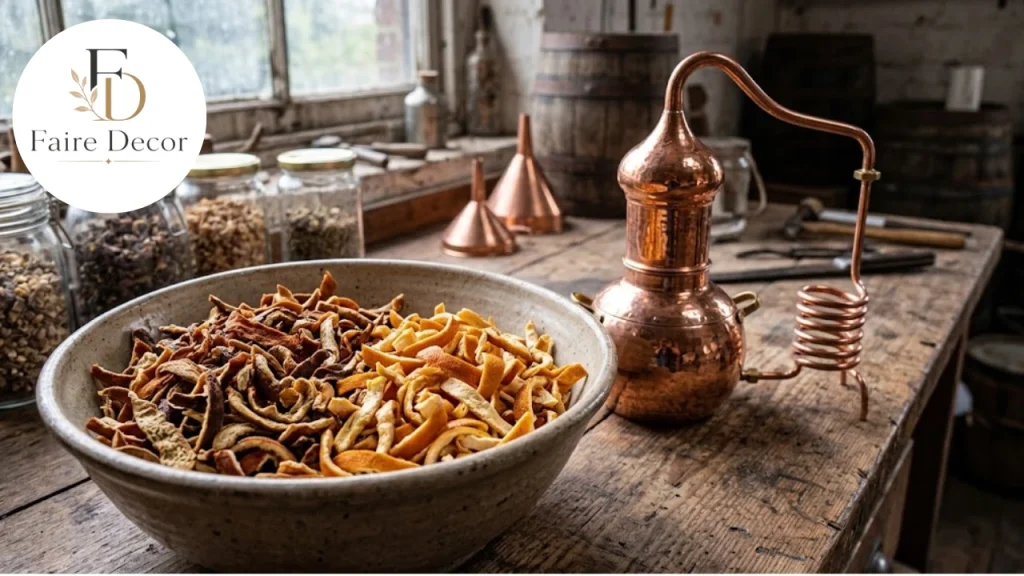
Wikipedia describes modern triple sec as a spirit made from sugar beet that’s steeped in orange peel, then redistilled and blended with neutral spirit, water and sugar. Oranges are picked while still green, so the essential oils stay in the skin.
Curaçao
Curaçao (pronounced roughly “cure-a-sow”) is the older style, and it takes its name from the Caribbean island of Curaçao.
Wikipedia notes that the Dutch East India Company made orange liqueurs by steeping dried peels, including peels from the island of Curaçao. Those Dutch versions often included herbs and spices and came in clear, orange and blue colours.
The laraha orange
The orange most linked with curaçao is the laraha, a bitter orange from the island. Difford’s Guide notes that 19th-century French houses infused laraha peel into brandy and cognac to make their curaçaos (Difford’s Guide).
Dry curaçao
“Dry curaçao” is a richer, less sweet style that bartenders prize for classic cocktails, especially the mai tai.
Difford’s Guide tells the story of Ferrand Dry Curaçao, launched in 2012 by Alexandre Gabriel of Maison Ferrand with drinks historian David Wondrich. The pair researched old archives and tasted surviving bottles to recreate the brandy-based French curaçao called for in 19th-century recipes, which had stopped being produced. Difford’s says they worked through more than forty trial recipes.
The result uses laraha bitter orange peel, sweet orange and lemon peel, and an infusion that includes grilled almonds, prunes and vanilla.
Blue curaçao
Blue curaçao gets its colour from food colouring, not from the oranges. The flavour is usually close to a sweet triple sec.
It’s mainly used for its colour in tropical and party drinks. If you only want the taste, a clear orange liqueur does the same job.
The big names: Cointreau and Grand Marnier
Two French brands dominate the premium end of the market. They’re both 40% ABV, but they taste quite different.
Cointreau
Cointreau is a triple sec. According to Wikipedia, brothers Adolphe Cointreau, a confectioner, and Édouard-Jean Cointreau founded the distillery in 1849 in Saint-Barthélemy-d’Anjou, France (Wikipedia: Cointreau). The first bottles of the liqueur were sold in 1875.
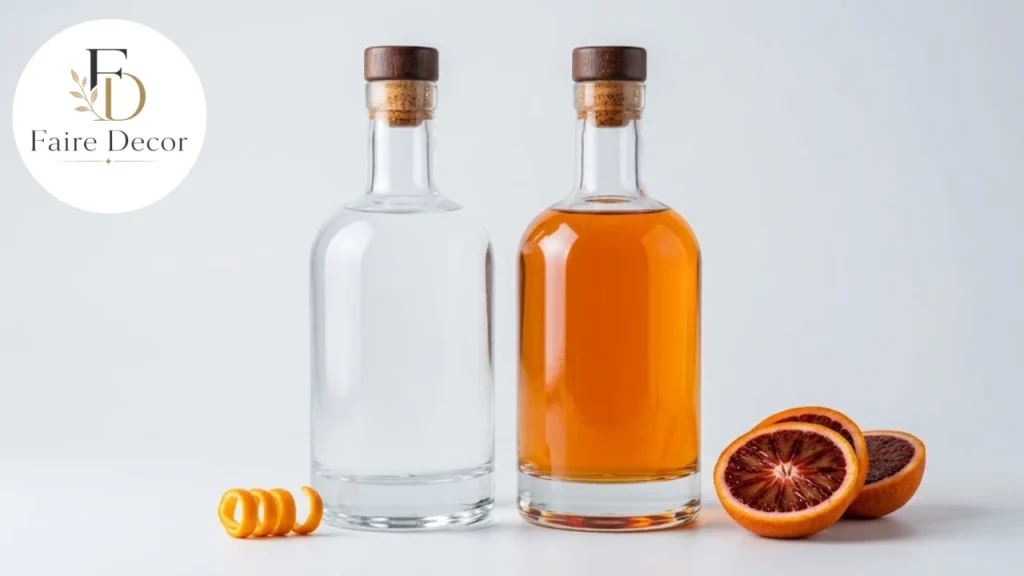
Cointreau is made with sweet and bitter orange peels and an alcohol made from sugar beet. The liquid is clear, even though the famous square bottle is orange-amber.
It was originally called Curaçao Blanco Triple Sec, Wikipedia notes. In 1990, Cointreau & Cie merged with Rémy Martin, forming Rémy Cointreau.
Cointreau appears in the official International Bartenders Association recipes for the Cosmopolitan and the Corpse Reviver #2, and it’s a classic choice for margaritas.
Grand Marnier
Grand Marnier is a brandy-based orange liqueur. Wikipedia says Alexandre Marnier-Lapostolle created it in 1880, blending cognac with distilled bitter orange essence and sugar (Wikipedia: Grand Marnier).
The original is Grand Marnier Cordon Rouge. Wikipedia lists older, more premium blends too:
Cuvée du Centenaire, released in 1927, made with cognacs up to 25 years old.
Cuvée Spéciale Cent Cinquantenaire, released in 1977, made with cognacs up to 50 years old.
The Campari Group announced an offer to take over the brand’s owner in 2016.
Because of its cognac base, Grand Marnier is rounder, warmer and more “brown spirit” in flavour than Cointreau. It’s lovely sipped neat or over ice, and it’s famous in the kitchen for crêpes Suzette.
Cointreau vs Grand Marnier vs triple sec
| Feature | Cointreau | Grand Marnier (Cordon Rouge) | Generic triple sec |
|---|---|---|---|
| Style | Premium triple sec | Brandy-based orange liqueur | Triple sec |
| Base | Neutral spirit from sugar beet | Cognac | Neutral spirit |
| ABV | 40% | 40% | Often lower; check the label |
| Colour | Clear | Amber | Usually clear |
| Flavour | Crisp, clean, intense orange | Rich, warm, orange and oak | Simpler, often sweeter |
| Best for | Margaritas, Cosmopolitans, light cocktails | Sipping, Sidecars, desserts | Budget mixing |
Which should you buy? If you can only have one bottle, a good-quality triple sec like Cointreau is the most versatile. Choose Grand Marnier if you’ll sip it or cook with it, or if you like richer, brandy-forward drinks.
Budget triple secs work fine in big-batch punches, but they’re often sweeter and less aromatic, so you may need to adjust the lime or lemon in a recipe.
How to taste orange liqueur
To understand the differences, pour a small measure of each into separate glasses and taste them side by side.
Look: Is it clear, amber or coloured?
Smell: Bright fresh peel, or something deeper like marmalade, vanilla, or oak?
Taste: How sweet is it? Is there bitterness from bitter orange peel?
Finish: Does the orange linger? Is there warmth from brandy?
Try each one neat and then with an ice cube. Ice softens the alcohol and often brings out more fruit.
Classic cocktails with orange liqueur
Orange liqueur is a backbone ingredient in many classic drinks. Wikipedia’s triple sec entry lists margaritas, cosmopolitans, sidecars, Long Island Iced Teas, and mai tais among its common uses.
Here are widely used versions of the classics. Proportions vary between bars, so adjust to taste.
Margarita
- 2 oz (60 ml) blanco tequila
- 1 oz (30 ml) orange liqueur
- 1 oz (30 ml) fresh lime juice
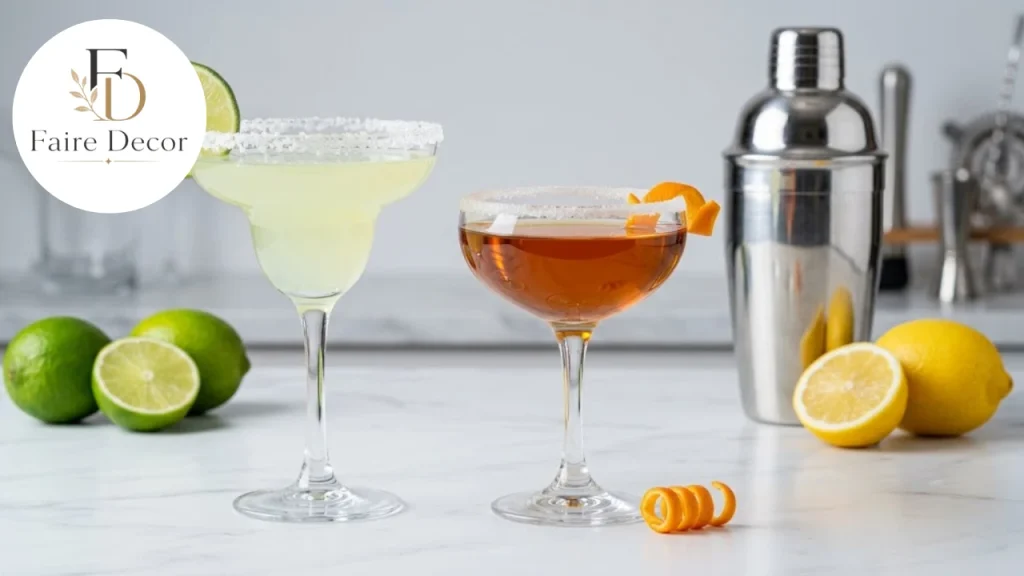
Shake with ice and strain into a salt-rimmed glass over fresh ice. Cointreau gives a clean, bright margarita. A cognac-based liqueur makes a richer version, sometimes called a “Cadillac” margarita.
Sidecar
- 2 oz (60 ml) cognac or brandy
- ¾ oz (22 ml) orange liqueur
- ¾ oz (22 ml) fresh lemon juice
Shake with ice and strain into a chilled coupe, with an optional sugar rim.
Cosmopolitan
- 1½ oz (45 ml) citrus vodka
- ¾ oz (22 ml) orange liqueur
- ½ oz (15 ml) fresh lime juice
- 1 oz (30 ml) cranberry juice
Shake with ice and strain into a chilled cocktail glass. Garnish with an orange twist.
Mai Tai
- 2 oz (60 ml) aged rum
- ¾ oz (22 ml) fresh lime juice
- ½ oz (15 ml) dry curaçao
- ½ oz (15 ml) orgeat (almond syrup)
Shake with crushed ice and pour into a rocks glass. Garnish with mint and a lime shell. Dry curaçao suits this drink especially well.
Equal parts gin, orange liqueur, Lillet Blanc (or a similar aperitif wine), and lemon juice, with a rinse of absinthe. Shake and strain into a chilled coupe.
Easy party drinks and mocktails
Not every drink needs a shaker. These simple serves work well for gatherings.
Orange spritz. Pour a small measure of orange liqueur into a wine glass with ice, top with sparkling wine and a splash of soda water, and garnish with an orange slice.
Sangria. Wikipedia lists sangria among the drinks made with Grand Marnier. Combine red or white wine with sliced oranges, apples, and berries, a splash of orange liqueur,r and a little sugar if needed. Chill for a few hours and top with soda water just before serving.
Orange liqueur and tonic. A long, light drink: orange liqueur over plenty of ice, topped with tonic water and a squeeze of lime.
Mimosa upgrade. Add a small splash of orange liqueur to a classic mimosa of sparkling wine and orange juice for a deeper citrus flavour.
Zero-proof orange cooler (mocktail). Mix fresh orange juice, a little orange syrup, and fresh lime juice over ice, then top with soda water. Garnish with mint. It’s a good option for guests who don’t drink.
When batching drinks for a party, mix everything except sparkling ingredients ahead of time, chill well, and add the bubbles at the last minute so they stay lively.
Cooking and baking with orange liqueur
An orange liqueur is a quick way to add citrus perfume to food. Wikipedia lists Grand Marnier in crêpes Suzette, soufflés, crème brûlée, canard à l’orange and bûche de Noël.
Here are easy ways to use it at home:
Crêpes Suzette: Warm butter, sugar, orange juice, and zest; add a splash of orange liqueur, and spoon over thin crêpes.
Macerated fruit: Toss berries, oranges or stone fruit with a little sugar and a spoonful of liqueur. Let it sit for 20 to 30 minutes.
Whipped cream: Fold a teaspoon or two into whipped cream for cakes and pavlova.
Cake soak: Brush a little, mixed with simple syrup, over sponge layers.
Chocolate pairings: Add to ganache, truffles or chocolate mousse. Orange and dark chocolate are a classic match.
Glazes and sauces: Stir into a glaze for duck, pork or roasted carrots.
Cranberry sauce: A splash at the end lifts the flavour.
Does the alcohol cook off?
Only partly. Heat reduces alcohol but doesn’t remove it completely, and how much remains depends on cooking time and method. Uncooked uses like whipped cream and fruit keep all of their alcohol. If you’re cooking for children, people who avoid alcohol, or anyone pregnant, use a non-alcoholic substitute instead.
Orange liqueur substitutes
Out of orange liqueur? Here’s what to use.
| If you need | Use instead | Notes |
|---|---|---|
| Cointreau | Any good triple sec | Cheaper triple secs may be sweeter; adjust citrus |
| Grand Marnier | Cointreau plus a splash of brandy | Gets you closer to the cognac richness |
| Triple sec | Dry curaçao | Richer and less sweet |
| Blue curaçao | Clear orange liqueur | Same flavour, without the colour |
| Any orange liqueur (in cocktails) | Orange syrup plus a little extra spirit | Adds sweetness and orange flavour |
Non-alcoholic substitutes
- Orange juice concentrate gives strong flavour and sweetness, ideal for baking and sauces.
- Fresh orange juice plus zest works well in sauces, glazes and fruit salads.
- Orange extract is very concentrated. A few drops replace a spoonful of liqueur in baking.
- Orange syrup suits mocktails and drizzles. Simmer equal parts sugar and water with orange zest, then strain.
- Non-alcoholic orange liqueur alternatives are now available from some brands for zero-proof cocktails.
Food pairings
Orange liqueur’s bright, aromatic flavour pairs with a wide range of foods, both as an ingredient and alongside a glass sipped neat.
Dark chocolate: The bitterness of cocoa and the sweetness of orange balance each other.
Almonds and hazelnuts: Think frangipane tarts, biscotti and nutty cakes.
Vanilla and cream: Custards, panna cotta and cheesecake take on a soft citrus glow.
Duck and pork: Rich meats welcome a sweet-sour orange glaze.
Spices: Cinnamon, clove, star anise and ginger all suit orange, especially in winter baking.
Berries and stone fruit: Strawberries, cherries, peaches and apricots love a splash of orange.
For a simple dessert, serve a small glass of a brandy-based orange liqueur with dark chocolate and toasted almonds.
How to store orange liqueur
Orange liqueur is shelf-stable thanks to its alcohol and sugar content. You don’t need to refrigerate it.
Keep it sealed. Close the cap tightly to stop evaporation and flavour loss.
Store it cool and dark. Keep it away from direct sunlight and heat sources like the stove.
Stand bottles upright. This protects the cap or cork.
Expect slow changes. Over years, especially after opening, the bright orange aroma can fade. Most bottles stay pleasant for a long time, but fresher tastes brighter.
Lower-ABV triple secs with more sugar may change a little faster than 40% liqueurs.
Setting up a home bar with orange liqueur
If you enjoy hosting, a small, well-chosen home bar goes a long way. An orange liqueur is one of the first bottles worth adding after the base spirits, because it appears in so many classic recipes.
A simple starter kit might include:
One base spirit you enjoy (tequila, gin, rum or brandy)
One orange liqueur (triple sec for versatility)
Fresh lemons and limes
A shaker, a jigger and a strainer
Simple syrup, kept in the fridge
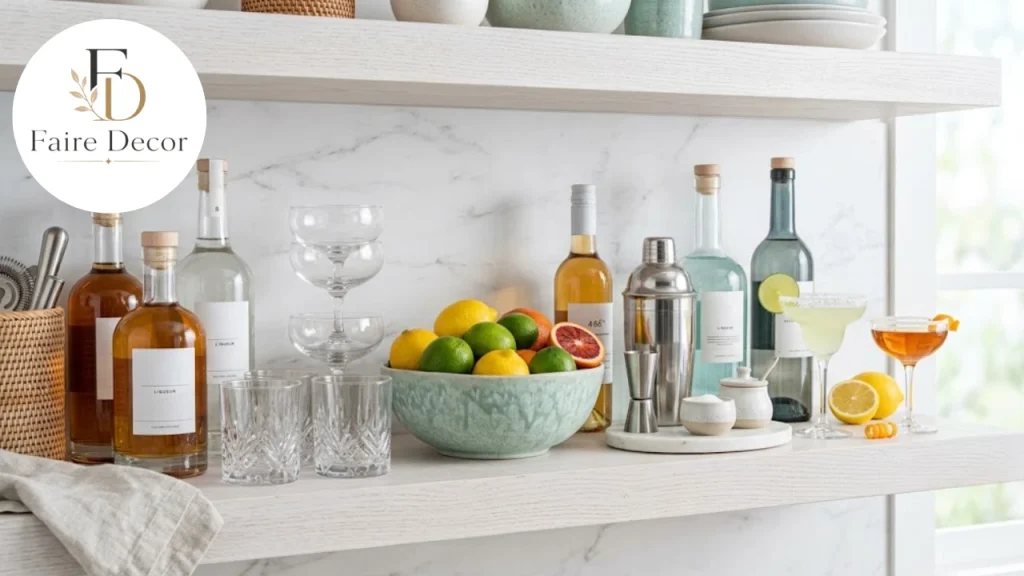
Display bottles on an open shelf or a tray to keep them organised. Good kitchen storage helps, too. Our guide to modern kitchen cabinets has ideas for building in a drinks corner.
For a breezy, entertaining-ready look, a coastal kitchen with light finishes and open shelving pairs naturally with citrus-bright cocktails. Want the space to feel warm and welcoming? Our home color combinations guide covers palettes that work well where friends gather.
A short history of orange liqueur
Orange liqueurs grew out of a long European tradition of flavouring spirits with fruit, herbs and spices.
| Period | Milestone (as reported by the sources) |
|---|---|
| Colonial era | Dutch producers make orange liqueurs from dried peels, including from Curaçao |
| 1834 | Combier says it invented triple sec in Saumur, France |
| 1849 | Cointreau brothers found their distillery |
| 1875 | First Cointreau sold |
| 1878 | “Curaçao triple sec” shown by several distillers at the Paris Exposition |
| 1880 | Grand Marnier created |
| 1927 | Grand Marnier Cuvée du Centenaire released |
| 1990 | Cointreau merges with Rémy Martin |
| 2012 | Ferrand Dry Curaçao launched to revive 19th-century French curaçao |
Through the 20th century, orange liqueur became a staple of cocktail culture. Today, it’s in many of the world’s most ordered drinks.
The category keeps evolving. Wikipedia mentions Mexican triple secs such as Flor de Azar, made with a mix of citrus and sweetened with agave syrup, a natural partner for tequila.
The revival of dry curaçao shows how bartenders’ interest in historical recipes can bring lost styles back. Expect to see more small-batch and regional orange liqueurs, alongside the long-established French brands, as drinkers explore beyond the classics.
Buying tips
Check the ABV. Higher-strength liqueurs usually taste more intensely of orange and less of sugar.
Read the base spirit. Neutral spirit means a crisp triple sec style. Brandy or cognac means a richer, warmer liqueur.
Match it to your drinks. Clear and bright for margaritas and cosmopolitans; brandy-based for sidecars, sipping and desserts.
Don’t judge by colour. Blue and orange colours are usually added and don’t tell you about flavour.
Try small bottles. Many brands come in miniatures, which are an easy way to compare styles before committing.
Common mistakes to avoid
A few small habits make a big difference to drinks made with orange liqueur.
Using bottled lime or lemon juice. Fresh citrus is far brighter. Bottled juice can make sweet liqueurs taste flat or sugary.
Overpouring. Orange liqueur is sweet and strong in flavour. Too much can drown out the base spirit, so measure with a jigger.
Swapping styles without adjusting. Replacing Cointreau with a sweeter, lower-ABV triple sec can unbalance a margarita. Add a little more lime to compensate.
Leaving bottles in the sun. Light and heat dull the aroma over time. Keep bottles in a cupboard or a shaded shelf.
Ignoring the base spirit. A cognac-based liqueur in a delicate gin drink can taste heavy. Match rich with rich and light with light.
FAQs:
What is orange liqueur?
A sweetened spirit flavoured with orange, usually from the peel. The main styles are triple sec, curaçao, and brandy-based liqueurs like Grand Marnier.
Is triple sec the same as orange liqueur?
Triple sec is one type of orange liqueur. It’s usually clear and made on a neutral spirit. Cointreau is a premium triple sec.
What’s the difference between Cointreau and Grand Marnier?
Both are 40% ABV and French. Cointreau is a clear triple sec made on a neutral spirit. Grand Marnier blends cognac with bitter orange, so it’s richer and amber.
What can I use instead of orange liqueur?
In cocktails, use another triple sec, dry curaça,o or orange syrup. In cooking, try orange juice concentrate, fresh juice with zest, or a few drops of orange extract.
Which orange liqueur is best for margaritas?
A crisp triple sec like Cointreau is the classic choice. A brandy-based liqueur makes a richer margarita.
Does orange liqueur need to be refrigerated?
No. It’shelf-stablele. Keep it tightly sealed in a cool, dark place.
Does the alcohol cook off when baking with orange liqueur?
Only partly. Heat reduces the alcohol but doesn’t remove it all, and uncooked uses keep all of it. Use a non-alcoholic substitute if you’re cooking for anyone who avoids alcohol.
Is blue curaçao a different flavour?
Usually not. The blue colour comes from food colouring, and the flavour is close to a sweet orange liqueur.