

Finding termites in house walls, floors, or window frames is one of those moments that makes your stomach drop. Wood is the frame of your home, and the pests that eat it work quietly, out of sight.
The good news is that termite damage usually moves slowly. The University of Connecticut’s extension guide says finding termites is not an immediate emergency, although it strongly recommends a licensed professional. That gives you time to think, as long as you do not ignore it.
This guide helps you work out whether you actually have termites, how to read the signs, what to do in the first week, how professionals treat them, and how to make your home less attractive afterward.
One caution first. Termite species, treatment rules,s and licensing differ by region, and I rely on extension sources from several U.S. states. Treat this as general information and confirm details with a licensed local pest professional.
First, Make Sure It Is Termites
Many homeowners see winged insects or sawdust and assume termites. Flying ants and carpenter ants are common look-alikes, and the right response is different for each.
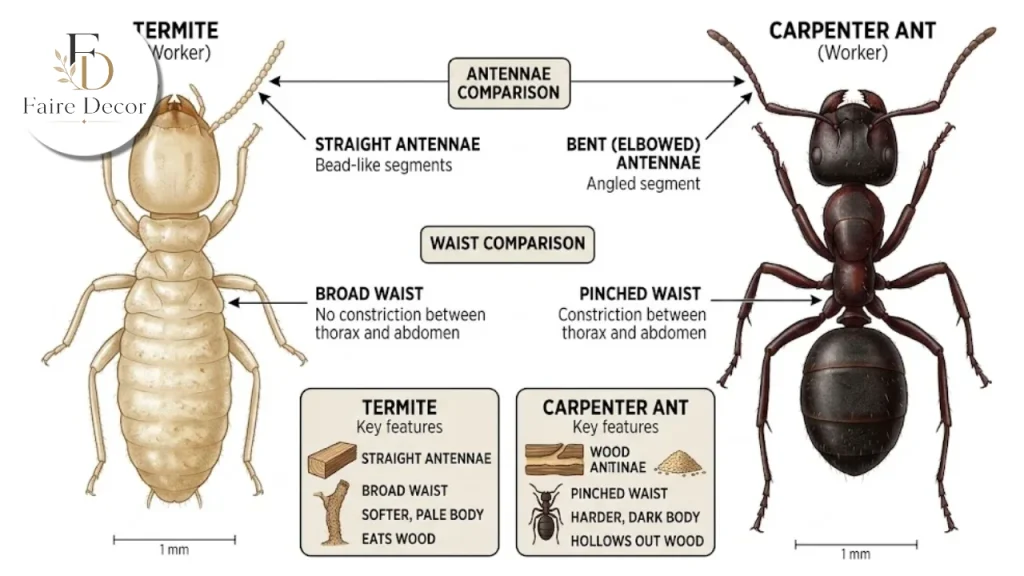
The UConn extension guide gives the quickest identifiers. Eastern subterranean termite workers are 1/4 to 3/8 inch long, cream-colored,ed and wingless. Termites have no narrow waist, and their antennae are straight rather than elbowed.
Termite swarmers, the reproductive adults, are black with wings and are often mistaken for flying ants. Carpenter ant workers are 1/4 to 1/2 inch long and may be all black or have a reddish-brown midsection. Winged carpenter ant swarmers run 1/2 to 3/4 inch.
| Feature | Termite | Carpenter ant |
|---|---|---|
| Waist | No narrow waist | Narrow, pinched waist |
| Antennae | Straight | Elbowed |
| Workers | Cream-colored, wingless, 1/4 to 3/8 in | Black or reddish-brown midsection, 1/4 to 1/2 in |
| What they do to wood | Eat it | Excavate it for nests |
| Telltale sign | Tan mud tubes, damaged wood | Sawdust piles, ants active in winter |
The waist and antennae details for ants are standard identification points. The termite features and sizes come from the UConn guide.
The difference matters because carpenter ants excavate wood for nests rather than eating it, according to the same guide. Their damage and treatment differ from termites, and homeowners can try some targeted measures on carpenter ants that are not recommended for termites.
If you are not sure what you have, catch a few insects in a jar or tape sample and take them to your county extension office or a licensed inspector. A clear photo helps too.
Signs of Termites in House Walls and Floors
Termites hide, so the signs are often indirect. Look in the places where wood meets soil or moisture: the foundation, crawl space, basement, garage, and porch.
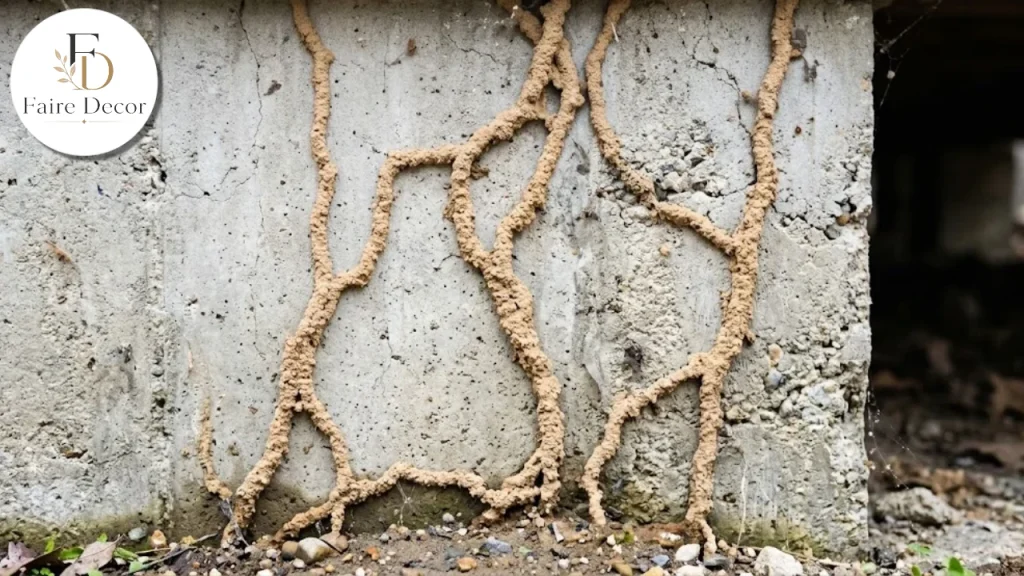
Mud tubes. Subterranean termites travel in tan tubes of soil and saliva. The UConn guide says they often enter through wood that touches the ground and may build mud tubes over surfaces such as concrete. The article advises breaking any tube you find and examining the adjacent wood for damage.
North Carolina State Extension adds a useful test. If you open a tube and find live termites, there is current activity. Empty tubes may have been abandoned, but termites can rebuild them.
Swarmers. Winged termites emerging indoors are a major warning. Swarming outdoors is normal, but swarming inside suggests an active infestation, according to NC State. UConn adds that swarmers indoors suggest a colony at least five years old.
Damaged wood. Iowa State Extension names mud tubes and damaged wood as places activity may show. Wood can be hollowed out from the inside while the surface looks fine, so a screwdriver test on suspect framing is common practice. That is general advice, not a sourced step.
Pellets and kickout holes (drywood termites). UC Integrated Pest Management says drywood termites push out fecal pellets through tiny kickout holes, less than 2 mm across. The pellets have six hexagonal sides, which is diagnostic.
Pellets alone cannot show whether an infestation is active. UC IPM suggests cleaning up the pellets around a hole and checking whether new ones appear within a few days, though vibrations can shake pellets loose, so the test is not conclusive.
Shed wings. Discarded wings near windowsills or lights are a sign that swarmers came and went. UC IPM lists shed wings among the signs of drywood termites.
Some signs that people often mention, such as bubbling paint or sagging floors, are general indicators of moisture or wood damage and could have other causes. Treat them as a reason to inspect, not as proof.
Subterranean vs. Drywood Termites
The treatment depends heavily on the type, so it helps to know the two main groups.
Subterranean termites live in soil and travel to wood through mud tubes. Iowa State Extension notes that colony members share food, which is how baits and slow-acting toxicants spread through a colony.
Drywood termites live inside wood and do not need soil contact. UC IPM says colonies are usually small, fewer than 1,000 individuals, and live deep inside wood, so they are rarely seen except when swarming or during repairs.
| Feature | Subterranean | Drywood |
|---|---|---|
| Where they live | Soil, traveling to wood | Inside the wood itself |
| Visible sign | Mud tubes | Six-sided fecal pellets, kickout holes |
| Moisture need | Needs soil moisture | Does not need soil contact |
| Typical treatment | Soil barrier, bait stations | Fumigation or localized treatment |
The western drywood termite is the most common drywood species and is found mainly along the Pacific coast, the Central Valley, and Southern California deserts, per UC IPM. Your region determines which type is likely. Ask a local inspector which species is common near you.
When Termites Swarm
Swarms are the moment most people first notice termites. The timing varies with climate.
University of Georgia Extension puts spring swarming between February and April. NC State says swarming starts in late winter as temperatures rise, especially after rain, and can continue until September or October in some areas.
UC IPM adds that drywood termite swarmers are most often seen flying in the daytime in summer and fall. In other words, swarm season depends on species and region, so one calendar does not fit everyone.
What should you do when you see swarmers? NC State says swarming outdoors is normal, while swarming indoors suggests an active infestation. Check foundation walls, floor joists,s and crawl spaces for mud tubes, fix moisture problems, and keep wood and paper debris away from ground-level spaces.
NC State also says not to rely on spraying swarmers or damaged wood. That will not stop the infestation or prevent future damage.
A Room-by-Room Inspection Walkthrough
You do not need special tools for a first look. A flashlight, a screwdriver,er and a phone camera will do. Most termites in house structures are found at the edges: where wood meets soil, moisture,ure or concrete. Wear gloves and a dust mask in dusty spaces, and stop if you see anything you cannot identify.
Outside the foundation. Walk the perimeter and look for tan mud tubes running up the concrete or block. Check where wood siding, porch posts, steps, and deck supports meet the ground. UConn and Iowa State both flag wood-to-ground contact as a risk.
Crawl space or basement. This is the most important stop. Check floor joists, sill plates, and any wood near plumbing penetrations. NC State suggests looking at foundation walls, floor joists, and crawl spaces for mud tubes. Moisture, standing water,r or leaks make the spot more attractive.
Garage and storage areas. Stored cardboard, lumber, and firewood against walls are food and shelter. UConn says never to store such materials next to the foundation or in the crawl space.
Windows, doors, and trim. Look for blistered paint, soft woo,d and small holes. These can come from several causes, including moisture, so treat them as reasons to look closer.
Attic. Drywood termite pellets can collect on surfaces below infested wood. UC IPM describes the six-sided pellets and kickout holes. A flashlight on rafters and the roof edge can reveal them.
Kitchens and bathrooms. Leaks under sinks and around tubs create damp wood. Fixing them is a prevention step even if no termites are present.
Write down what you find and where. Even if the answer is “nothing,” a dated note gives you a baseline for next year.
How Serious Is It?
Termites are a real threat to a home, but they do not usually collapse a house overnight. Both UConn and Iowa State describe termite damage as slow, and Iowa State adds that termites often work hidden inside walls, so the extent of damage is hard to judge.
That is why a proper inspection matters. You cannot see the full picture from the surface. Someone has to check the foundation, framing, crawl space,ce and any wood touching the ground.
Do not wait months, though. A colony keeps feeding as long as it has food and moisture. The longer you leave it, the more wood is at risk, and repair costs rise. That last point is general reasoning, not a sourced figure.
I did not find a sourced figure for average treatment or repair costs, so I have not included one. Quotes vary with the size of the home, the species,ies and the method. Get written estimates and compare them.
What to Do First: A Week-One Plan
If you suspect termites in house framing or floors, a calm sequence beats a panicked one.
Do not spray or tear out wood. NC State warns that spraying swarmers or damaged wood will not stop the infestation. Disturbing a colony can also make it harder to assess.
Photograph what you see. Take clear pictures of mud tubes, pellets, wings,s and damaged wood. Note the date and location.
Save a sample. Keep a few insects in a sealed container or on tape for identification.
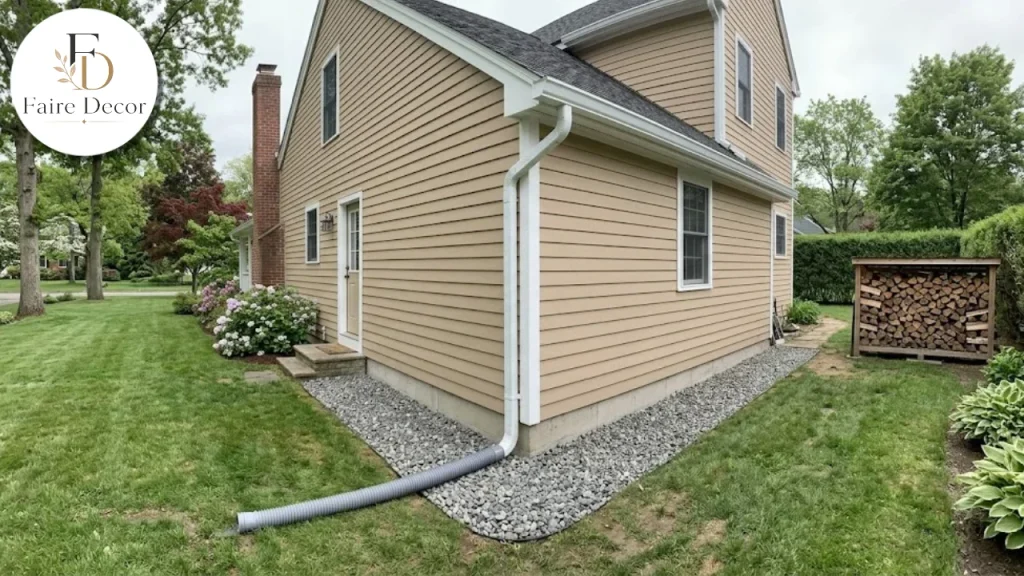
Fix obvious moisture. Repair leaks and improve drainage. UConn recommends gutters, downspouts, and splash blocks that divert water, and soil graded away from the foundation.
Book inspections. Iowa State and UConn both suggest getting at least three estimates from licensed companies.
Read before you sign. NC State advises reading any pest control contract fully.
Keep the evidence in one folder. When inspectors arrive, show them what you found and where. It speeds the visit and helps you compare their findings.
How Professionals Treat Termites
No single treatment is best for every home, according to Iowa State Extension. The method should fit your house and the extent of the problem. Here are the main options described by the sources.
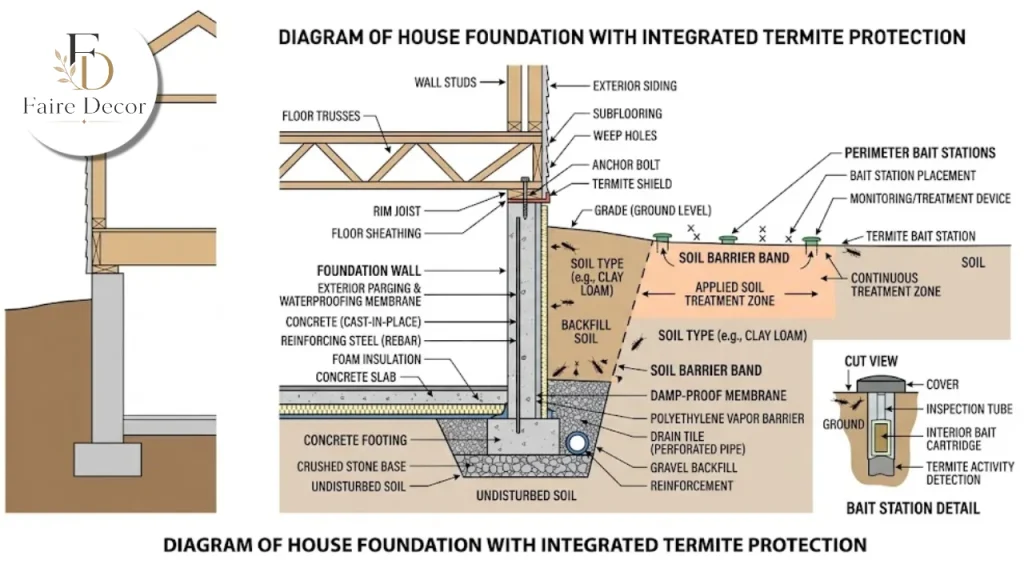
Liquid termiticide barriers. A professional injects a solution into the soil around the foundation and under slabs, often to a depth of 3 to 5 feet, sometimes using hundreds of gallons. Both repellent and non-repellent products are used. Iowa State says barriers typically last about 5 to 10 years before re-treatment may be needed.
Bait systems. Stations are placed around the perimeter, with above-ground stations used indoors where activity is accessible. The baits contain slow-acting insect growth regulators, so control can take months and requires ongoing monitoring.
Combination. A liquid barrier can give faster control while bait stations provide long-term monitoring. Iowa State describes the two as complementary.
Drywood termite options. UC IPM describes whole-structure fumigation with sulfuryl fluoride, which kills drywood termites within several days and can reach hidden infestations. Occupants, pets, and plants must leave for several days, and gas pilots must be extinguished.
Localized or spot treatments are the alternative for limited infestations. UC IPM lists chemical liquids, dusts and foams, plus nonchemical methods such as electrocution, microwaves and wood replacement. Results depend on locating the infestation accurately, and callback treatments are sometimes needed.
| Method | Best for | Time to work | Notes |
|---|---|---|---|
| Liquid soil barrier | Subterranean termites | Faster control | Often lasts about 5 to 10 years |
| Bait stations | Subterranean termites | Months | Needs ongoing monitoring |
| Whole-structure fumigation | Drywood termites | Several days | Household must leave |
| Spot treatment | Limited drywood problems | Varies | May need callbacks |
Methods and availability differ by state, and some products are restricted. Your inspector should explain which applies to you and why.
What Happens During a Treatment Visit
Knowing what to expect makes the process less stressful. The details depend on the method, and your company should explain them in advance.
For a liquid barrier, technicians work around the foundation and may drill through slabs or patios to reach soil beneath. Iowa State describes injections around the foundation and under concrete slabs, so expect some disruption outdoors and possibly indoors.
For bait stations, the visit involves placing stations around the perimeter and in active areas, followed by scheduled checks. The work is quieter, but control takes months.
For fumigation, preparation is substantial. UC IPM says occupants, pets,s and plants must leave for several days and gas pilots must be extinguished. Ask for written preparation instructions and follow them exactly.
Ask who will be on site, how long it will take, what products will be used, and what safety precautions apply to children, pets,ts and anyone with health concerns. Ask to see product labels if you wish. That is general consumer practice.
Keep records of the date, product, method, and warranty terms. You will want them if you sell the home or if activity returns.
How to Choose a Termite Company
Choosing the company matters as much as choosing the method. A few habits from the extension sources make a real difference.
Get at least three inspections, ideally from companies licensed by your state. Iowa State recommends requesting written estimates and references, then comparing the proposals. UConn adds that you should be cautious about prices much higher or lower than the others.
Check each company’s reputation. UConn suggests contacting your local Better Business Bureau. You can also ask for references from recent customers with similar jobs.
Compare more than the first price. Iowa State recommends looking at both the initial price and the renewal fees, because prices and services vary widely. A cheap first treatment with an expensive annual renewal may cost more over time.
Do not rush. Iowa State says to take your time rather than deciding hastily. A calm decision costs less than a panicked one.
Read the contract in full before signing, as NC State advises. Look for what the warranty covers, how long it lasts, who pays for re-treatment and repairs, and what inspections are included. Ask the company to explain anything unclear in writing.
Be wary of anyone who pressures you to sign on the spot, who refuses to put findings in writing, or who proposes a treatment that does not match what the inspection found. That is general consumer advice.
Why DIY Is Risky
Home stores sell termite sprays and bait kits, and it is tempting to try one. The extension sources are consistent here: do not.
Iowa State Extension says treating termites yourself is not recommended and that bait kits are not suitable for whole-house protection. NC State says proper termite treatment is complex and hazardous. UC IPM says home-use products are not effective against drywood termites and does not recommend do-it-yourself treatment.
Treating termites in house walls yourself also carries a risk of misdiagnosis. If you treat what turns out to be carpenter ants or another wood-boring insect, you lose time while the real problem continues.
Where DIY does help is the preventive work: fixing leaks, improving drainage, clearing debris, and moving firewood. That part is yours to do, and it reduces risk for any treatment.
Prevention: Make Your Home Less Attractive
Keeping termites out of house structures comes down to three things: food, moisture, and access. Remove any of the three and the risk drops.
Control moisture. UConn recommends diverting rainwater with gutters, downspouts and splash blocks, and grading soil away from the foundation. Repair leaks and replace “punky” wood. Iowa State likewise says to fix leaks and make sure gutters direct water away from the structure.
Break wood-to-soil contact. UConn says to eliminate direct contact between wood and soil and not to bury wood scraps when backfilling. Iowa State advises avoiding wood-to-ground contact on porches, decks,s and steps. If you have a front porch, check the posts and steps where wood meets the ground.
Keep mulch back. The two sources differ slightly. UConn says to keep wood mulch at least 12 inches from the foundation and use pea stone next to it to keep the area drier. Iowa State says at least 6 inches. Since they differ, going farther is the safer choice. Pea stone is also a design option, as these pea gravel ideas for an outdoor fire pit area show.
Move firewood and clutter. UConn is direct: never store wood or wood products, including firewood, lumber,er or newspaper, next to the foundation or in the crawl space. Iowa State says to stack firewood away from the structure and remove debris and dead stumps.
Tidy the yard. Dead stumps, wood debris, and overgrown beds hold moisture. These tips for keeping a yard looking good can help you keep the perimeter clear.
Inspect on a schedule. I did not find a source for an inspection frequency. Many homeowners check crawl spaces and foundation edges once or twice a year and hire a professional if anything looks suspicious. That is general practice.
After Treatment: Repairs and Monitoring
Treatment stops termites in house framing from feeding, but it does not repair what they ate. Damaged framing may need replacing, and a contractor or structural professional should decide how much.
Plan repairs in the right order. Treat first, then repair. Replacing wood before the colony is under control only gives them fresh material.
If damaged wood is part of a finished space, like a floor, repairs can be extensive. Before you refinish, read these tips on cleaning hardwood floors safely so you do not add moisture to a vulnerable floor.
Built-in shelving and cabinets are common hiding spots because they sit against walls and often hold wood close to the floor. If you are replacing them, this guide to DIY built-ins may help you plan, though you should confirm that the wall behind is sound first.
If damage leads to a larger project, such as rebuilding a room, read about home additions before you commit to a design or budget.
Ask the company what monitoring and follow-up visits are included. Iowa State notes that bait systems need ongoing monitoring, so make sure someone is actually checking them.
Keep your paperwork. Warranties, treatment records, and inspection reports are useful if you sell the house or if termites return.
Common Mistakes
Spraying a swarm and calling it done. The infestation is in the wood and soil, not in the insects you can see.
Ignoring moisture. A treated house with a leaking gutter still invites trouble.
Hiring on price alone. Compare the warranty, the method,d and the renewal fees.
Burying or stacking wood against the house. It gives termites a bridge.
Assuming one calendar fits every region. Swarm timing and species vary.
Starting repairs before treatment. New wood is new food.
Signing without reading. NC State advises reading any contract in full.
Quick Answers
What are the first signs of termites in house structures? Mud tubes on foundation walls or in crawl spaces, winged swarmers indoors, discarded wings, damaged wood, and for drywood termites, six-sided pellets near small kickout holes.
Is it an emergency? Per UConn, finding termites is not an immediate emergency, but call a licensed professional and do not wait months.
Can I treat it myself? Extension sources advise against it. Do the preventive work and hire a licensed professional for treatment.
How many quotes should I get? At least three written estimates from licensed companies, with attention to renewal fees.
How do I keep them away? Control moisture, keep wood off the soil, keep mulch and firewood away from the foundation, and inspect regularly.
FAQs:
What are the first signs of termites in a house?
Tan mud tubes on foundation walls or in crawl spaces, winged swarmers indoors, discarded wings, damaged wood, and for drywood termites, six-sided fecal pellets near tiny kickout holes.
How can I tell termites from flying ants?
Termites have no narrow waist and straight antennae. Ants have a pinched waist and elbowed antennae. Termite swarmers are black and winged, so they are easy to confuse with ants. When unsure, ask your county extension office or an inspector.
Is finding termites an emergency?
UConn Extension says it is not an immediate emergency, because termite damage is slow. Still, call a licensed professional promptly and do not wait months.
Should I spray termites myself?
No. Extension sources advise against do-it-yourself treatment. Spraying swarmers or damaged wood will not stop an infestation. Do the preventive work, such as fixing leaks, and hire a licensed pro.
How do professionals treat termites?
For subterranean termites, typically a liquid soil barrier, bait stations, or both. For drywood termites, whole-structure fumigation or localized treatments. The right method depends on species and the extent of the problem.
How many estimates should I get?
At least three written estimates from licensed companies, comparing the method, warranty and renewal fees.
How do I prevent termites?
Control moisture, keep wood off the soil, keep mulch at least 12 inches from the foundation, store firewood away from the house, and inspect crawl spaces and foundation edges regularly.