

Walk down any street, and you can read the story of each house from its walls. Painted wood from the era of front porches. Brick from builders who wanted permanence.
Fiber cement and vinyl from the decades when homeowners started asking for less upkeep. The walls are not just decoration. They are the outer layer that sheds rain, takes the sun and, in some regions, faces fire.
Choosing siding for homes is therefore a decision about protection, maintenance,e and money long before it is a decision about color.
This guide compares the common materials, shows where each one shines and struggles, covers safety issues that rarely make it into sales brochures, and gives you a checklist for hiring and installation.
Sources are linked. Several come from contractors or manufacturers, and I flag them as such. Prices and lifespans vary by region, so treat every number as a starting point for your own quotes.
What siding actually does
Siding is the outermost layer of the wall, and it works as part of a system. Behind it sit a water-resistive barrier, flashing around windows and doors, and the sheathing.
The panels, boards,ds or masonry shed most of the water and protect that hidden layer from sun and wind. If water gets past a poorly installed wall, it can rot framing for years without you seeing it.
That is why installation matters as much as the material. The Owatonna, Minnesota, vinyl siding guidelines call for a water-resistive barrier over studs or sheathing, with horizontal courses lapped at least 2 inches and joints at least 6 inches, and for rips or holes in the barrier to be repaired before inspection.
That one document is about vinyl in one city, but the principle holds for any cladding: a good wall is a system, not a skin.
The main types of siding for homes
Here is how the common choices of siding for homes stack up. The figures in the table come from a Roofing Calc comparison dated September 2024. It does not name a region, says geography strongly affects cost, and is a commercial site, so use the numbers to compare materials against each other rather than to budget.
| Material | Installed cost per sq ft cited | Lifespan cited | Maintenance |
|---|---|---|---|
| Vinyl | $5.25 to $12.50 | 20 to 30 years | Very low |
| Aluminum and steel | $6.50 to $16.50 | 30 to 50 years | Low; touch up steel scratches |
| Fiber cement and composite | $7.50 to $14.50 | 35 to 50 years | Repaint after 10 to 15 years, then every 3 to 10 |
| Wood | $4.15 to $17.00 | 50+ years with upkeep | High; repaint or restain every 3 to 5 years |
| Stucco | $7.90 to $14.50 | 50+ years with upkeep | Higher maintenance and repair costs |
| Brick and stone veneer | $14.65 to $27.00 | 75+ years | Very low |
| Faux stone | $14.70 to $31.00 | 30 to 50 years | Moderate |
Lifespans are the part to hold loosely. A contractor site, brick&batten, says vinyl can last upwards of 40 years, while Roofing Calc cites 20 to 30. Both are marketing-adjacent, and neither is a test result. Climate, sun, installation quality, and upkeep decide the real number.
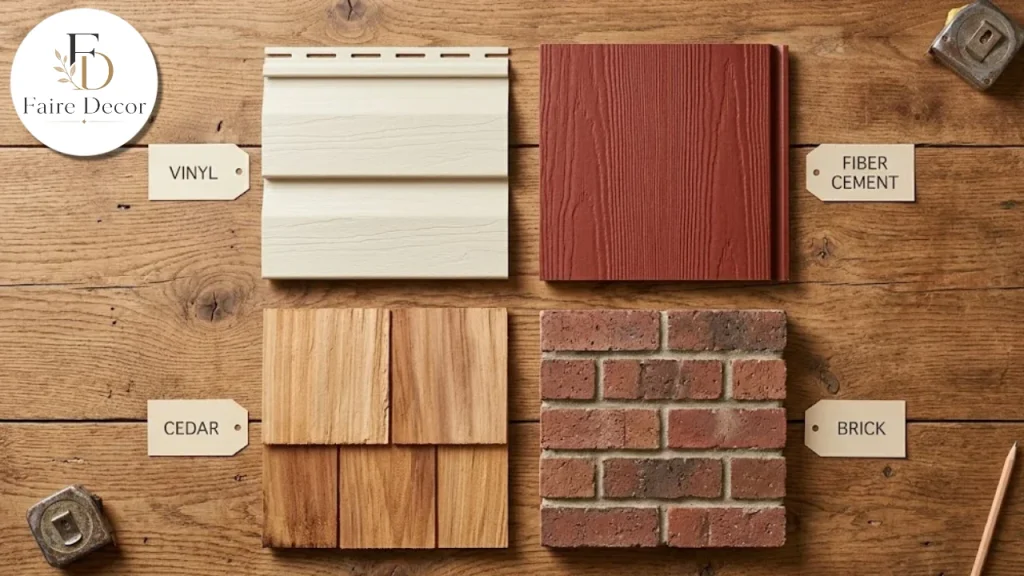
Vinyl
Vinyl is the most common budget choice. Brick&Batten calls it affordable with fast installation, and says it does not peel or chip, so it rarely needs repainting. Roofing Calc lists it as DIY-friendly and moisture-resistant, with downsides: it can become brittle and crack with age or impact.
can leak or buckle if poorly installed, and does not closely mimic wood. The buckling point deserves attention. The Owatonna guidance explains why: vinyl expands and contracts with temperature,
so fasteners must be centered in their slots, left slightly loose, and not driven tight. If you choose vinyl, ask your installer how they handle that.
Fiber cement
Fiber cement is a mix of cement and fibers formed into planks or panels.Brick&Batten calls it durable and low maintenance, resembling wood and resisting mold, pests and insects, and suitable for coastal locations.
It also notes it is much harder to install than lightweight siding like vinyl, so labor drives up cost. Roofing Calc lists a Class A fire rating but also lists drawbacks: scratches show.
Cutting creates hazardous dust, and it can absorb moisture if the core is exposed. We cover the dust issue in its own section below.
Wood and engineered wood
Natural wood offers the most authentic look. Brick&Batten calls it environmentally friendly and easy to stain or paint, but says it requires frequent maintenance, including annual mold and pest inspections, and notes that wood is more flammable than many other siding types,
which it says can raise insurance premiums. I did not verify that insurance claim, so ask your insurer. Roofing Calc agrees wood is vulnerable to insects and moisture without upkeep and has a poor fire rating.
Engineered wood aims for the look with less work. brick&batten describes it as low maintenance, but says it tends to fade over time and the resin may crack or break, and recommends inspecting regularly for moisture buildup.
Metal
Aluminum and steel siding suit modern and rural styles. Brick&Batten calls metal one of the most durable options, with low upkeep and pest and moisture resistance, and says it reflects heat.
It is also one of the more challenging types to install and a high-priced upgrade. Roofing Calc adds that steel rusts if scratched and left untouched, dents easily, and is louder in rain or hail.
Brick, stone and stucco
Brick is durable and very low maintenance, according to Brick & Batten, but outpaces almost every other material on cost, and because it is porous, it can be susceptible to moisture damage over time.
Stucco is fire-resistant and can last decades when cared for, but is very challenging to repair and prone to cracks as a house settles or when exposed to extreme moisture.
Roofing Calc also flags stucco as a poor fit for wet climates. Stone veneer and faux stone give the look of masonry at different prices, though Roofing Calc notes cheap faux versions scratch easily and can crack with freeze-thaw cycles.
Match the material to your house
Style, climate, and budget all pull in different directions, and the best siding for homes of one style can look wrong on another. A few matches to consider:
Ranch homes. Their low, horizontal lines suit simple lap siding. See our look at the ranch-style home.
Spanish and Mediterranean styles. Smooth stucco finishes fit. Our guide to Spanish-style homes shows how walls and openings work together.
Coastal houses. Brick & batten says fiber cement suits coastal locations. See our coastal kitchen ideas for a matching palette.
Modern and prefab homes. Metal, fiber cement, and engineered panels are common. Our posts on prefab homes and the container home show how cladding choices shape a modern look.
Additions. New walls should meet old ones convincingly. Read about home additions before choosing a profile you cannot match later.
Climate and fire: choose for where you live
Climate changes the ranking. A material that does well in dry heat can struggle in a wet, coastal, or freezing place.
Wet or humid climates. Roofing Calc notes stucco is a poor fit for wet climates, and wood needs diligent upkeep.
Salt air. Roofing Calc notes steel rusts if scratched and left untouched, so protect coatings near the coast. I did not find a source specific to salt air, so ask the manufacturer.
Freeze-thaw. Roofing Calc warns cheap faux stone can crack in freeze-thaw cycles.
Wildfire zones. This deserves a closer look.
A Green Builder Media article on noncombustible siding cites Insurance Institute for Business and Home Safety research that noncombustible cladding eliminates the chance of flame exposure to the wall, noting that wood siding burns easily and vinyl siding can melt quickly.
It also notes that fiber cement’s fire resistance does not extend to applied paints or coatings. That article promotes James Hardie products and compares no other brands, so read it as one source, not a verdict. It also points to details beyond the siding:
a 6-inch vertical clearance protects a wall from embers, smooth non-vented soffit panels reduce ember danger, and exposed eaves are at risk when adjacent siding burns.
If you live where wildfires occur, ask your local fire authority and your building department about requirements. I did not open a code table, so I am not quoting rules by region.
Safety: lead, asbestos, and silica
Replacing siding means disturbing what is under it. Three hazards come up often.
Lead paint. EPA says that anyone paid to do work that disturbs painted surfaces in pre-1978 homes must be certified in lead-safe work practices, and it recommends hiring a certified contractor for such work.
The rule generally does not apply to work you do yourself in your own pre-1978 home, though EPA recommends lead-safe practices anyway. If your house is older, ask any bidder for proof of certification.
Asbestos-cement shingles. A North Carolina state brochure explains that intact asbestos-cement siding keeps fibers bound within the cement, and that the danger comes when it is disturbed or broken.
It advises against cutting, sanding, sawing, or abrading it, and recommends testing suspect material through an accredited inspector. Rules vary by state and county, so call your local environmental agency before work starts.
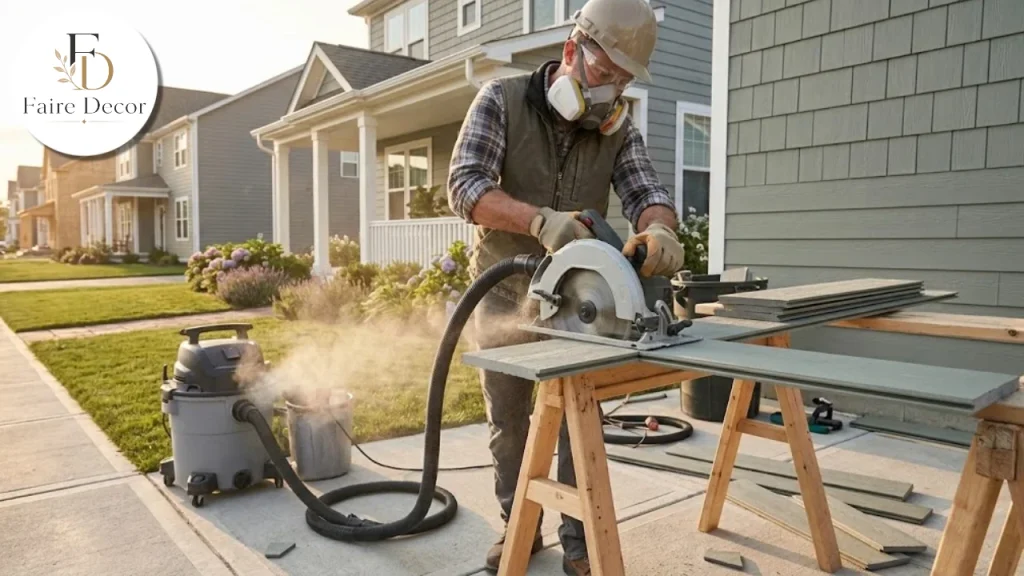
Silica dust from fiber cement. An eLCOSH document summarizing NIOSH guidance warns that dust from cutting fiber cement can contain respirable crystalline silica, which can lead to silicosis, and that these products can contain as much as 50 percent crystalline silica.
In one study, uncontrolled cutting reached up to 3.4 times the NIOSH-recommended exposure limit. The main control it recommends is a dust-collecting circular saw connected to a shop vacuum, with diamond-tipped blades made for fiber cement,
N95 or better respirators as a supplement, cutting outdoors where practical, and no dry sweeping or compressed air cleanup. Ask your installer how they cut fiber cement, and keep children and pets away from the work area.
General information only, not safety or legal advice. Confirm requirements with your local building department and a licensed contractor.
Permits, HOAs and historic districts
Rules vary widely. St. Louis, Missouri, lists installing new aluminum, steel, or vinyl siding with no change to existing openings as not requiring a permit, and requires approval in historic districts for items such as windows, doors, and painting.
Owatonna, by contrast, requires a building permit for re-siding residential dwellings. Same project, different rule. Call your building department, check your HOA covenants for color and material limits, and confirm any historic-district review before you order.
Color and curb appeal
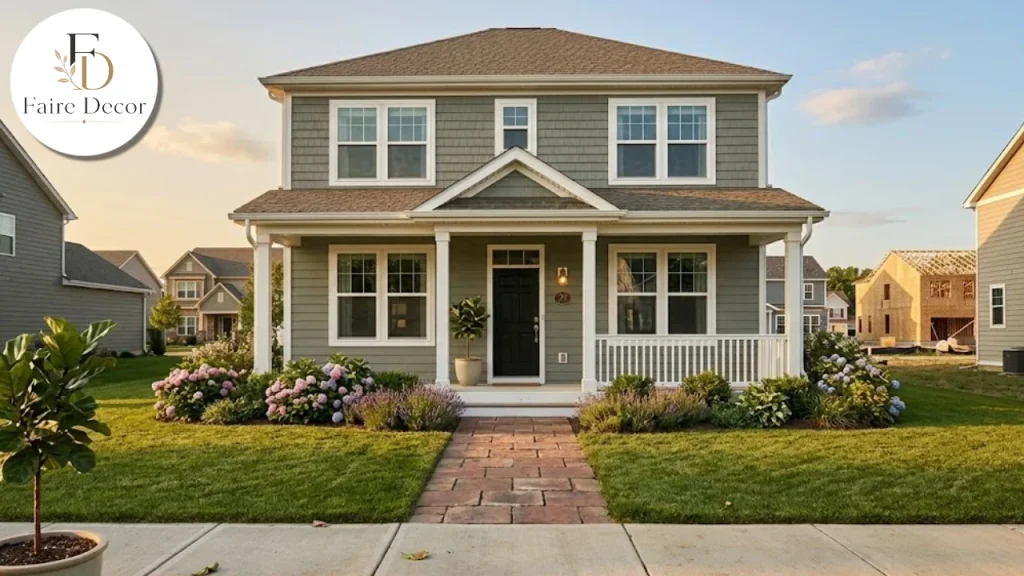
Color is the most visible choice and the easiest to regret.
Test large samples on the actual wall and look at them in morning, midday,y and evening light.
Work with fixed elements such as roof, brick, and stone, which will not change.
Pick a trim contrast. Trim a shade lighter or darker than the walls frames the house.
Think about the entry. A refreshed front porch and a confident door color anchor the facade.
Mind the windows. Dark window frames are a popular accent; see our guide to black windows and our overview of awning windows for another style option.
Try soft natural tones. Our gray-green paint guide helps you test undertones.
See a finished example. Our gray house post shows how a single color family can carry a whole home.
If a deep, dark shade tempts you, ask the manufacturer whether that exact color is approved for the product and covered by the warranty, and get the answer in writing. I could not verify a general rule here.
What drives the price
I am not printing a project budget. The Roofing Calc table above shows 2024 per-square-foot ranges that overlap heavily, and it notes that totals combine materials, trim, and installation supplies with professional labor. Several things move the total:
Material and profile. Premium panels and complex profiles cost more.
Wall area and complexity. Gables, corners, dormers,s and many windows add labor.
Removal and disposal of old siding, including any hazardous material found.
Repairs to sheathing, framing,ng and flashing once the wall is open.
Trim, soffit, and fascia.
Permits and inspections.
Local labor rates and season.
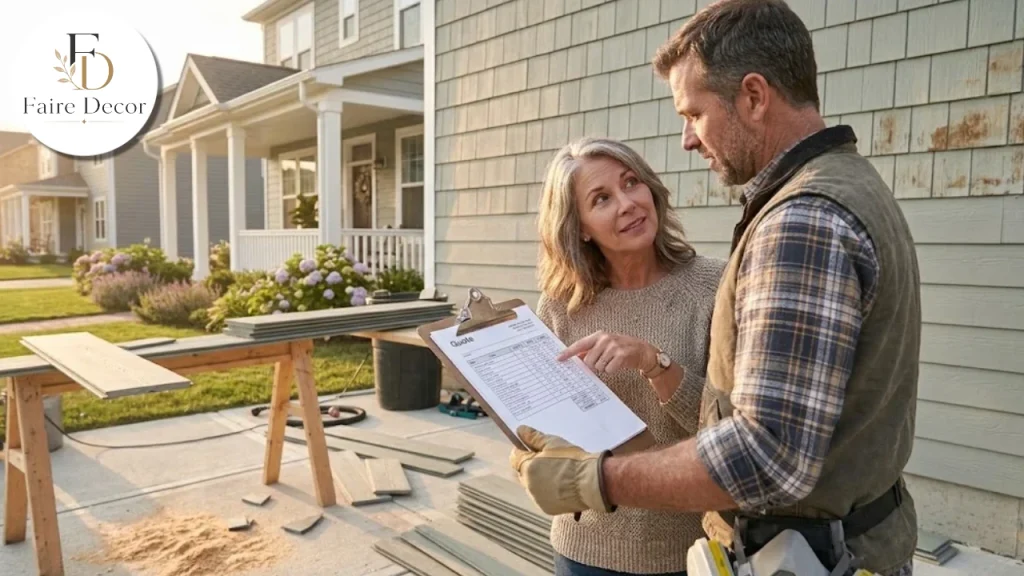
Roofing Calc advises against choosing the cheapest installer, since installation quality strongly affects both appearance and performance. Get at least three itemized written quotes.
For renovation budgeting more broadly, our renovation tips and shower renovation cost guides show how to plan for surprises, and our gutter installation cost calculator post covers an item that is often replaced at the same time.
How to hire a siding contractor
Because installation is half the result, hiring is half the decision when you buy siding for homes.
Verify license and insurance, then confirm with the issuer.
Ask about lead-safe certification for homes built before 1978.
Ask for references and photos of similar jobs in your climate.
Compare itemized quotes. Each should name the product, water-resistive barrier, flashing, trim, fasteners, disposal, and who pulls permits.
Ask how hidden damage is handled. The answer should explain how rot repair is priced and approved before work starts.
Ask how they cut and fasten your chosen material. For vinyl, ask about fastener placement. For fiber cement, ask about dust control.
Get warranties in writing, both from the manufacturer and from the installer.
Ask what the schedule is, including a plan for weather delays.
Walk the site on the day the old siding comes off. Seeing the sheathing yourself is the best protection you have. If you find roof or flashing trouble, our roof leaks guide explains how water problems show up in walls.
Reading a siding warranty
Warranties sound reassuring and read differently on paper. These questions are general good practice rather than sourced guidance, so adapt them to the actual document.
Who is promising what? The manufacturer usually covers the product. The installer covers workmanship. They are separate promises.
What voids it? Improper installation, missing flashing, paint that is not approved,d or using the wrong fasteners can matter. The Vinyl Siding Institute’s installer brochure says poor installation is a leading cause of siding problems and can even void manufacturer warranties.
Is it transferable if you sell the house?
What does it pay for? Replacement panels only, or labor too?
What is the claim process, and how long do you have to report a problem?
Does it cover fading and color? Many warranties limit color claims to a measured change.
Where is it written? Keep the signed copy with your receipts and photos.
If a salesperson describes a warranty as lifetime or transferable, ask to see the paragraph that says so before you sign anything.
Maintenance by material
Vinyl. Rinse with a hose and soft brush. Check for cracked or loose panels after storms.
Fiber cement. Roofing Calc says to repaint after 10 to 15 years, then every 3 to 10 depending on climate. Keep caulk intact so edges do not absorb moisture.
Wood. Roofing Calc cites repainting or restaining every 3 to 5 years. Inspect for mold and pests, as brick&batten advises.
Metal. Touch up scratches on steel quickly to prevent rust.
Stucco. Watch for cracks and repair them promptly, since brick&batten says repairs are difficult and need an experienced professional.
Brick. Check mortar joints and look for moisture damage, since brick is porous.
Keep shrubs trimmed back so air can move along the wall, and keep soil and mulch off the lower courses. Our guide to a low-maintenance backyard shows planting that protects your walls instead of crowding them.
Selling, insurance and long-term value
Siding affects how a home presents to buyers and how it ages. Zonda’s 2024 Cost vs. Value report lists fiber-cement siding replacement recouping 88 percent of its $20,619 average job cost and vinyl siding replacement 80 percent of $17,410, with the editor saying exterior replacement projects
continue to make the most sense for resale value. Those are 2024 national averages from one report, and I did not find a newer edition. If selling is your goal, our how to sell your home fast guide covers other steps.
Also ask your insurer how siding material affects your policy, since brick-and-batten says wood can raise premiums and I could not verify that independently.
Mistakes to avoid
Most disappointments with siding for homes come from avoidable errors.
Choosing by color only. Check fire, moisture, and maintenance fit first.
Skipping the wall system. The barrier and flashing matter as much as the panels.
Ignoring local rules. Permits, HOAs,s and historic review vary.
Not testing for old hazards. Lead and asbestos need handling before demolition.
Letting dust fly. Fiber cement cutting needs controls.
Hiring on price alone. Roofing Calc warns against it.
Forgetting maintenance costs. A cheap wall that needs repainting every few years may cost more than an expensive one that does not.
Skipping samples. Colors change in real light.
Quick decision guide
Lowest upfront cost and low upkeep: vinyl, with careful installation.
Wood look with lower maintenance: fiber cement or engineered wood.
Highest durability and low upkeep, higher cost: brick, or metal in the right setting.
Fire exposure: noncombustible choices such as fiber cement, with attention to vents, soffits, and clearances.
Authentic character and willingness to maintain: wood.
Warm, classic texture in dry climates: stucco, installed by someone experienced.
Final thoughts on siding for homes
The best siding for homes is the one that suits your climate, your house,e and your appetite for upkeep, installed by someone who understands the wall behind it. Compare materials honestly, check the safety issues before demolition, confirm local rules, and get itemized quotes.
Then choose colors in real light and keep records of everything. A well-built wall quietly protects the house for decades, which is exactly what you want from it.
This article is general information, not construction, legal, or safety advice. Confirm requirements with your building department and a licensed contractor before you start.
FAQs:
What is the most common type of siding for homes?
Vinyl is the budget-friendly choice most often cited. brick&batten describes it as affordable with fast installation, and Roofing Calc lists it as DIY-friendly. Both sources also flag that it can crack or buckle if impacted or poorly installed.
How long does siding last?
Sources disagree. Brick&Batten says vinyl can last upwards of 40 years, while Roofing Calc cites 20 to 30. Roofing Calc cites 35 to 50 years for fiber cement, 30 to 50 for metal, and 75+ for brick. Climate, installation quality,y and upkeep decide the real number.
Which siding is best for wildfire areas?
A Green Builder Media article citing IBHS research says noncombustible cladding eliminates the chance of flame exposure to the wall, and that wood burns easily while vinyl can melt quickly. It also stresses vents, soffits and clearances. Ask your local fire authority and building department for requirements.
Is fiber cement dangerous to cut?
Dust from cutting it can contain respirable crystalline silica, according to an eLCOSH summary of NIOSH guidance. Recommended controls include a dust-collecting saw connected to a shop vacuum, diamond-tipped blades, respirators as a supplement, and no dry sweeping. Ask your installer how they cut it.
Do I need a permit to replace siding?
It depends on where you live. St. Louis lists some siding replacements as not requiring a permit, while Owatonna requires one for re-siding. Call your building department and check HOA or historic-district rules.
What should I check before removing old siding?
For homes built before 1978, EPA says paid contractors must be certified in lead-safe work practices. If the siding may be asbestos-cement, a North Carolina state brochure advises against cutting or sanding it and recommends testing through an accredited inspector.