

Walk through a garden center in spring, and you will see flats of petunias, mums, and poinsettias that are compact, dark green, and sturdy. Part of that tidy look can come from a product called B-Nine, a plant growth regulator that keeps ornamental plants short without changing what they are.
This guide explains what B-Nine is, how it works, where its label allows it and how the sources differ on rates and safety. I name each source and flag the commercial ones. The label limits this product to commercial and research growing, so treat the article as background reading rather than a how-to for a home garden.
What is B-Nine?
B-Nine is a brand name. Envu, the manufacturer, says the active ingredient is daminozide. The product sold in the United States is B-Nine WSG, a water-soluble granule, according to a retailer listing. The label gives the active ingredient as daminozide at 85.0 percent, with 15.0 percent inert ingredients.
Envu describes B-Nine as a plant growth regulator that shortens the stature of ornamental plants by decreasing internode length. The internode is the stretch of stem between two leaves, so shorter internodes mean a shorter, denser plant. Purdue’s pocket reference lists the trade names as B-Nine and Dazide.
How it works
Envu’s page says the product is absorbed into the leaves and moves to the growing points, where it inhibits gibberellin synthesis. Gibberellins are plant hormones that drive stem stretching, so less of them means less stretching.
That mechanism comes from the manufacturer, which is marketing the product, and the university pages I opened do not describe it in detail.
Purdue’s guide groups daminozide with the growth-retarding regulators and explains that many of these products reduce internode elongation, which decreases plant height. UMass Extension classifies it as a plant growth retardant and rates its activity as low.
Low activity, short effect
Low activity is a defining feature of B-Nine. UMass says plants treated with low-activity regulators are not greatly affected by variations in spray or drench volume, and that the effect lasts only about two to three weeks. Envu says daminozide has the lowest activity among growth regulators and needs relatively higher concentrations.
Purdue agrees on the rating. It marks daminozide low, the same as chlormequat chloride and ethephon, while flurprimidol, paclobutrazol, uniconazole, and gibberellic acid are rated high. A low rating is not a flaw. It means the product is more forgiving and also shorter-lived than the strong options.
Spray only
One point appears in every source: B-Nine is a foliar product. UMass states that drench applications of B-Nine have no effect on plants. Purdue lists d-aminopyralid as a spray with no drench use. The label adds that the product must not be applied through any type of irrigation system.
For anyone used to watering in other products, this matters. Pouring it on the soil does nothing useful according to UMass, and the label forbids sending it through irrigation lines.
Where the label allows it
The label is the controlling document, and it is narrow. It says the product is for use only on ornamentals grown in commercial or research greenhouses, shadehouses, and nurseries. In outdoor areas not under cover, the label restricts use to containerized ornamentals.
The label does not say “not for food crops” in those words, but its ornamentals-only wording makes the point. Bear that in mind if you come across advice that suggests using it on vegetables or herbs. The label does not support it.
Envu states that the product is federally registered in all continental US states, and a footer on the same page adds that not all products are registered in all states. Check with your state’s pesticide regulator before use.
Crops named on the label
The label and Envu list azaleas, bedding plants and plugs, chrysanthemums, foliage plants, gardenias, hydrangeas and poinsettias. The label also names kalanchoe and gerbera, and gives ficus, pothos and philodendron as foliage examples. Envu adds that the list is not limited to those crops.
For plants not on the label, the label advises testing a small number of plants before treating large numbers. Purdue makes a similar point more generally: plant response varies with species and cultivar.
What growers say it does
Envu claims more compact plants with darker green color, better resistance to breakage during shipping,g and few documented incidences of phytotoxicity or over-stunting. A retailer listing repeats the same benefits. These are manufacturer and seller claims, and I did not find an independent source that tests them.
The university pages I opened do not discuss leaf color or flowering effects for this product. If those effects matter to you, ask a local extension service for trial results on your species.
Rates in the sources
Rates are measured in parts per million, written n ppm, which describes the strength of the spray solution. The sources give different ranges, and each is for a different purpose.
| Source | Rate or range | Context |
|---|---|---|
| UMass Extension | 1,500 to 2,500 ppm | Plugs |
| UMass Extension | 2,500 to 5,000 ppm | Flats, pots and baskets |
| Purdue Extension | 1,250 to 2,500 ppm | Annuals |
| Retailer listing (Hummert) | 1,000 to 7,500 ppm | Listing says lower or higher may be used |
| Label example | 0.25 percent is about 2,500 ppm | Dilution example |
The spread is wide, which tells you something. Rates depend on the crop, the stage, and the grower’s goals. The retailer’s range is the widest, and it is a commercial listing, so the label and your extension service are better guides.
UMass gives a spray coverage of 2 quarts per 100 square feet. The label says to apply about 1 gallon of spray solution per 200 square feet, to run off. Those two figures describe the same volume per area, since 2 quarts per 100 square feet equals 1 gallon per 200 square feet, which is a pleasing cross-check.
The label also says two applications at one-half to two-thirds of the full rate may work better than one full-rate application. UMass recommends testing the lowest rates first when running a trial.
Making sense of the ppm numbers
The label gives one conversion: 0.25 percent is about 2,500 ppm. Since 1 percent equals 10,000 ppm, the same arithmetic gives the figures below. This is my own math from that one label example, so check it against the label’s dilution table.
| ppm | Percent of solution |
|---|---|
| 1,000 | 0.1 |
| 1,250 | 0.125 |
| 2,500 | 0.25 |
| 5,000 | 0.5 |
| 7,500 | 0.75 |
Seen this way, the retailer’s widest range spans from a tenth of a percent to three quarters of a percent. That is a reminder of how much room there is between crops, and why a trial on a few plants comes first.
How much to trust each source
Not every page carries equal weight, so here is how I weighed them.
The label is the legal document and decides any conflict.
UMass and Purdue are university extension sources written for growers. The UMass text is marked revised 2012, and the Purdue pocket reference is dated 3/11, so both are older than the label.
Envu is the manufacturer, so its claims are marketing.
The retailer listing is a commercial page, and its per-gallon figures are garbled on the page.
The older extension pages are still useful for how the product behaves, but check anything numeric against the current label.
Timing
UMass says timing depends on the plant’s stage of development, not on weeks since seeding or transplanting. Plugs are generally treated after the first set of true leaves, and transplants when they begin to grow or reach about 2 inches tall or wide. UMass advises checking the product label for species-specific timing.
Purdue says to apply early in the morning or late in the evening for best uptake, and notes that activity relates to temperature. The retailer listing gives the same morning-or-evening advice.
UMass adds that regulators are normally applied in cloudy weather and that sprays work better when conditions favor slow evaporation. Plants should be fully turgid, meaning well watered, when sprayed. Purdue adds that you should not apply to stressed plants.
Preparing and applying the spray
The label gives general directions that are worth reading in full. These are the points I took from it.
Dilute to the target concentration using the label’s dilution table.
Add the product to the tank, then water. Stir for 3 to 5 minutes until dissolved.
Water plants well first, and spray only dry foliage.
Avoid overspray and syringing for 18 to 24 hours after application.
Use the solution within 24 hours. Do not store spray solutions.
Purdue agrees on the 24-hour overhead irrigation wait and says to mix and apply on the same day. The label separately warns against applying in a way that contacts workers or other people, directly or through drift.
What not to mix
The label is firm on mixing. It says not to tank mix with copper-containing products or apply within 7 days before or after them. It also says not to add wetting agents or mix with insecticides, fungicides, or foliar fertilizers.
Purdue repeats the copper warning and does not recommend a spreader sticker. UMass says to use a spreader sticker only if the label directs it. The retailer listing says leaf burn may result from copper use within the seven-day window.
Safety and protective gear
The label’s signal word is CAUTION. It says the product causes moderate eye irritation, so avoid contact with eyes and clothing and wash thoroughly with soap and water after handling.
For protective gear, the label calls for applicators and handlers to wear a long-sleeved shirt, long pants, waterproof gloves, and shoes plus socks. For early entry into a treated area, it adds coveralls over the long-sleeved shirt and long pants, waterproof gloves, and chemical-resistant footwear plus socks.
Other label precautions are plain common sense. Wash hands before eating, drinking, smoking, or using the toilet, and change clothing promptly if the product gets inside it. Keep it out of the reach of children, and do not use or store it near heat or open flame.
If someone is exposed, the label gives first aid steps and tells you to call a poison control center or a doctor. For eyes or skin, it says to rinse for 15 to 20 minutes.
Re-entry interval: a conflict

The sources disagree on the re-entry interval, the time before people may enter a treated area. Envu’s marketing page says 12 hours. The label itself says 24 hours. UMass says 24 hours and calls it the longest of the regulators it lists. Purdue says 24 hours as well.
I would follow the label, which is the legal document, and treat the 12-hour figure as a likely error or outdated claim. The disagreement is a good reminder of why you read the label rather than a promotional page.
Storage and disposal
The label says to keep the product only in its original container, tightly closed, in a secure, temperate, dry place. High humidity and moisture cause it to harden. It says not to contaminate water when disposing of equipment washwater.
If you hold a partial container, check the date and condition before use. I did not find a source for shelf life, so I am not giving one.
What it cannot do
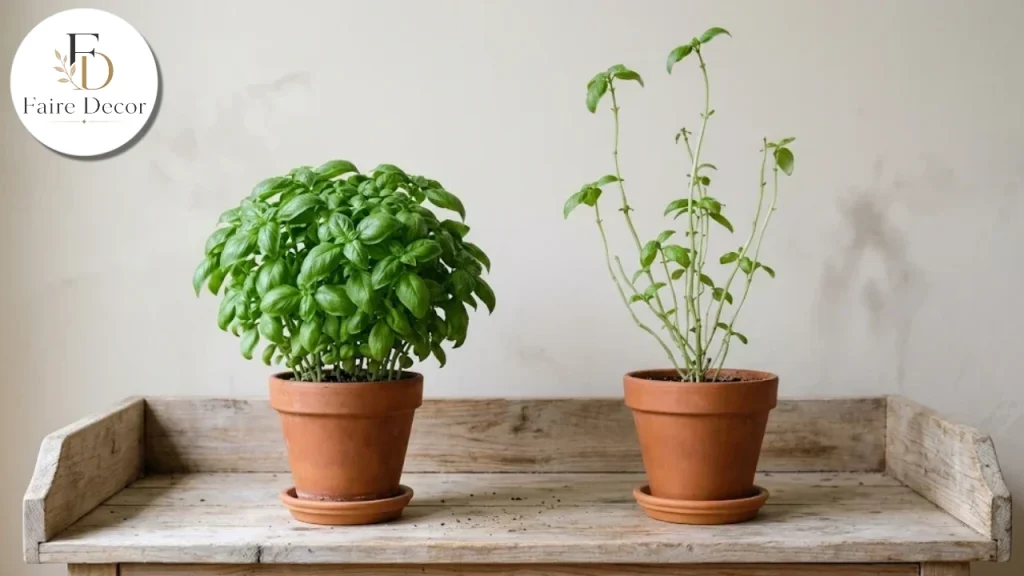
UMass is blunt on one point: regulators cannot shrink plants that are already overgrown. They work best when applied at the right stage, early, to keep a plant from stretching.
That means timing is the main skill. Spraying a leggy plant late will not reverse the stretch, and it may not help at all. If a plant has already grown tall, trimming and good light are separate topics for your local extension service.
How it compares with other regulators
Purdue’s table gives a handy comparison, and I have kept to what it says.
| Product class | Activity rating (Purdue) | Notes |
|---|---|---|
| Daminozide (B-Nine) | Low | Spray only, 24-hour REI, no spreader sticker |
| Chlormequat chloride | Low | Spray range 800 to 1,500 ppm |
| Ethephon | Low | REI 48 hours |
| Ancymidol, dikegulac-sodium | Medium | Listed as medium in the table |
| Flurprimidol, paclobutrazol, uniconazole, gibberellic acid | High | Much lower spray ranges, such as 1 to 50 ppm for uniconazole |
The pattern is clear. Low-activity products need high concentrations, and high-activity products work at tiny ones. That is why B-Nine is often described as forgiving and why UMass says volume mistakes matter less with it.
A short glossary
The terms below come up in every source, so it helps to know them before you read a label. The meanings are standard usage that I am summarizing, not quotes.
Internode: the stretch of stem between two leaves.
Gibberellin: a plant hormone that drives stem stretching.
Foliar: applied to the leaves, as in a spray.
ppm: parts per million, the strength of a spray solution.
REI: the re-entry interval, the time before people may enter a treated area.
Phytotoxicity: plant damage caused by a product.
Turgid: full of water, which is how UMass says plants should be when sprayed.
Knowing these words makes B-Nine pages much easier to follow, because every source uses them without explanation.
How to read a B-Nine label
A pesticide label is long, and the order matters. Start at the top and work down, in this sequence.
Use sites and crops. Check that your setting and plant are listed. This is where the commercial and research limit appears.
Restrictions. Look for irrigation, mixing, and copper warnings.
Directions. Find the dilution table, the spray volume,e and the timing notes.
Protective gear and first aid. Note what handlers must wear and what to do after exposure.
Storage and disposal. Check the container, moisture and washwater notes.
If a promotional page, a retailer listing and the label disagree, the label wins. The re-entry conflict earlier in this article is a good example.
Questions the sources leave open
Several things I could not answer from the pages I opened, and I would rather say so than guess.
Effects on flowering and leaf color. The university pages do not describe them.
Which species respond best? UMass points to the label and a regional recommendations guide.
Shelf life. No source gave one.
Home garden use. The label does not cover it.
If any of these matter to you, a local extension office is the right place to ask.
Questions for a grower or supplier
If you work with a greenhouse, nursery, or supplier, ask these before you rely on any regulator.
- Is the product registered in my state, and for my crop?
- What does the label say about my species and stage?
- What rate do you use, and what is the trial result on this cultivar?
- How do you handle re-entry and protective gear?
- What do you do about copper products in the same program?
- How do you store partial containers?
Write down the answers and compare them with the label and your extension service.
A look at the plants we buy
Compact, sturdy plants matter to anyone who decorates with them. A well-shaped porch pot or window box sets the tone for an entry, and our guide to a front porch has ideas for styling one. Our front door entryway living room combo ideas post shows how to carry plants through the doorway.
If you grow plants on a small patio or balcony, our balcony railing article covers a few ways to keep the space tidy. For privacy around a seating area, our havenlydiy privacy screen guide is a useful read.
For a low-effort garden overall, our guide to designing a low-maintenance backyard is a good companion. If you have pets, our post on keeping your yard looking good when you have dogs is worth reading before you plant.
Bringing plants into the room
Well-grown plants also work indoors. Our home decor ideas that actually work have quick ways to add greenery to a room, and our guide to how to decorate walls shows where a shelf of plants can sit.
For softer light around houseplants, see our guide to custom curtains. If you are planning a larger refresh, our renovation tips article is a good starting point.
Our havenlydiy gray house post shows how a quiet exterior lets plant color stand out, and our havenlydiy deck company guide can help if you plan a deck for container gardening.
A B-Nine reading checklist
Use this list when you read about B-Nine or any growth regulator, whether it is a label, an extension page,ge or a supplier sheet.
- Read the current label, not a promotional page
- Confirm the product is registered in your state
- Confirm your crop and site are on the label
- Check the rate against the label and extension guidance
- Check timing for the plant stage
- Note the re-entry interval and protective gear
- Note what must not be mixed, especially copper
- Plan storage and disposal
Mistakes to avoid
A few errors come up in the sources, and each is easy to prevent.
Drenching. UMass says drench applications have no effect.
Using irrigation lines. The label forbids applying it through any irrigation system.
Mixing with copper. The label forbids tank mixing and spraying within 7 days either side.
Spraying stressed or dry plants. Purdue and UMass both advise against it.
Trusting promotional claims. The 12-hour re-entry figure conflicts with the label.
Final thoughts on B-Nine
B-Nine is a low-activity daminozide spray that shortens internodes on ornamentals, and it is labeled for commercial and research greenhouses, shadehouses,ses and nurseries. The sources agree that itspray-onlyonly and short-lived, and they differ on rates and re-entry time.
If you are a grower, the label and your local extension service are your authorities. If you are a home gardener, the label does not cover home use, so treat this article as background for understanding the compact plants you buy.
This article is general information, not professional horticultural or pesticide advice. Confirm product registration, rates, and safety steps with the current label, your state regulator,r and a local extension office before any use.

FAQs:
What is B-Nine?
B-Nine is a plant growth regulator whose active ingredient is daminozide. Envu says it shortens ornamental plants by decreasing internode length.
Can B-Nine be used as a soil drench?
No. UMass Extension says drench applications have no effect on plants, and the label says not to apply it through any irrigation system.
Where is B-Nine allowed to be used?
The label says it is for ornamentals grown in commercial or research greenhouses, shadehous,es and nurseries. Outdoors, use is restricted to containerized ornamentals.
How long does B-Nine last?
UMass says the effect of low-activity regulators lasts only about two to three weeks.
What is the re-entry interval for B-Nine?
TThe label UMass, and Purdue say 24 hours. Envu’s marketing page says 12 hours, so follow the label.
What should not be mixed with B-Nine?
The label says not to tank mix with copper-containing products or apply within 7 days before or after them, and not to add wetting agents or mix with insecticides, fungicides, or foliar fertilizers.