

If you’ve ever stepped into a finished basement that felt cold, musty, and completely uninviting, you know exactly why choosing the right floor matters more down there than anywhere else in your home.
Here’s the truth most flooring salespeople won’t tell you upfront: not all floors are built to survive underground. Moisture seeps through concrete slabs. Temperatures swing dramatically between seasons. And when the wrong floor buckles, warps, or grows mold after a rainy week — you don’t just lose money, you lose the entire room. That’s exactly why best LVP flooring for basement projects have become the #1 question homeowners ask before tackling any below-grade renovation.
Luxury vinyl plank has quietly become the gold standard for basement floors, and for good reason. It’s waterproof (not just water-resistant), incredibly durable underfoot, and it looks genuinely beautiful — especially in warmer wood tones like the ever-popular Lifeproof Dusk Cherry. But with hundreds of options flooding the market, how do you know which vinyl plank flooring for basement use is actually worth your money?
In this guide, we’ve done the heavy lifting for you. You’ll find real-world picks, side-by-side comparisons, installation insights, and the honest pros and cons that most product pages leave out. Whether you’re starting fresh or replacing a flooring disaster, this is the only guide you’ll need.
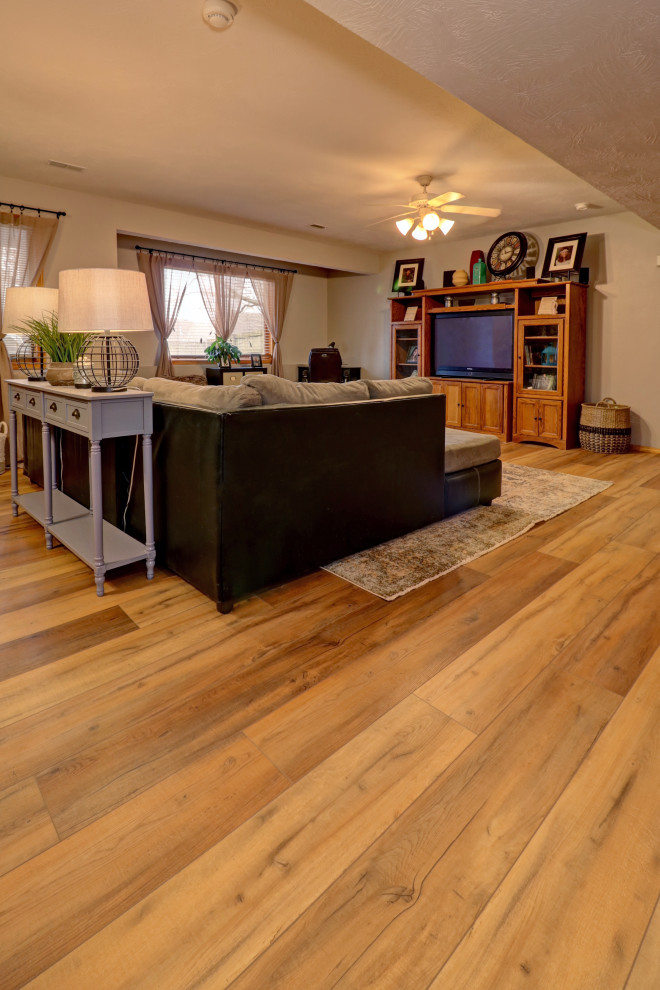
A beautifully finished basement featuring warm-toned luxury vinyl plank flooring — the kind of transformation the right LVP makes possible.
Why Basements Demand a Different Kind of Floor
Walk into any home improvement store and you’ll find flooring marketed as “suitable for below grade.” But there’s a significant difference between a floor that technically tolerates basement conditions and one that genuinely thrives in them. Basements are uniquely punishing environments — and understanding why helps you pick smarter.
The Moisture Problem Every Basement Homeowner Faces
Concrete is porous. Even a slab that appears perfectly dry to the naked eye is constantly exchanging moisture with the ground below it. This phenomenon — called vapor transmission — happens whether you live in Seattle or Phoenix. According to the Portland Cement Association, nearly all concrete slabs have some level of moisture vapor emission. In humid climates, this can become severe enough to destroy hardwood, laminate, or carpet within a single season.
Waterproof vinyl flooring for basement projects is not a luxury — it’s a baseline requirement. Any floor installed below grade should have a 100% waterproof core, not just a waterproof surface layer. This is the single most important spec to check before buying anything.
Beyond moisture, basements also deal with subfloor imperfections. Unlike upper-level floors, concrete slabs crack, heave, and settle in ways that wood subfloors don’t. A rigid flooring material like ceramic tile or even hardwood can crack or create trip hazards over time. LVP basement flooring, by contrast, is flexible enough to move slightly with these imperfections while maintaining its appearance.
Temperature Fluctuations and Why They Matter
Basements are also among the most temperature-variable rooms in any home. Unfinished or partially conditioned basements can drop below 55°F in winter and climb into the mid-70s in summer — sometimes within the same week during seasonal transitions. This thermal cycling causes materials to expand and contract repeatedly, which is why flooring with a floating installation (rather than glued-down) typically performs better in these conditions.
Most high-quality luxury vinyl plank flooring basement products are engineered specifically to handle this. Look for products rated for temperature ranges of at least 55°F–85°F, and always check whether the product can be installed below grade — some vinyl planks technically can’t.
What Makes the Best LVP Flooring for Basement Projects
Not every spec on the box matters equally. Here are the factors that actually determine whether a vinyl basement flooring product will perform — and look good — five years from now.
KEY LVP SPECS DECODED — What Actually Matters for Basements
| Wear Layer 12 mil min; 20 mil+ for heavy traffic | Total Thickness 6mm min; 8–12mm ideal | Core Type WPC or SPC — both 100% waterproof | Temp Range Must be rated for below-grade use | Locking System Click-lock floating installs best | Texture Embossed-in-register mimics real wood best |
WPC vs. SPC: Which Core Is Better for Basements?
This is one of the most debated questions in the LVP in basement community, and the answer isn’t one-size-fits-all. WPC (Wood Plastic Composite) cores contain a foamed polymer layer that provides exceptional softness underfoot — great if you’re finishing a basement rec room or home gym where people will be standing for long periods. SPC (Stone Plastic Composite) cores are denser, harder, and slightly more resistant to extreme temperature swings, making them ideal if your basement is unconditioned or if you have an active slab.
For most finished, climate-controlled basements, either core type works beautifully. The real differentiator is the wear layer thickness — a thicker wear layer (12–20 mil) means better scratch and scuff resistance, which matters if you have pets, kids, or plan on using the basement frequently.
Wear Layer: Don’t Compromise Here
If you’re shopping for best vinyl plank flooring for basement use, the wear layer is the number you should be most focused on. This clear, protective top coating is what stands between your floor’s printed design layer and everything life throws at it — pet claws, furniture legs, dropped tools, toy trucks.
Budget LVP products often come with 6–8 mil wear layers. These might look identical in the store but will show wear noticeably faster in high-traffic basement spaces. For a basement that doubles as a playroom, entertainment area, or home office, aim for at least 12 mil — and 20 mil if you want a floor that lasts a decade without refinishing.
Top Picks: Best Vinyl Plank Flooring for Basement Spaces in 2025
After comparing dozens of products across performance, price, aesthetics, and real customer experiences, here are the standout choices for vinyl plank flooring basement installations this year.
1. Lifeproof Dusk Cherry — The Fan Favorite
LifeProof Dusk Cherry Luxury Vinyl Plank
4.7/5 Stars — Thousands of Home Depot Reviews | EDITOR’S PICK | BEST OVERALL | BELOW-GRADE APPROVED
Ask any flooring forum about best LVP for basement installations, and Lifeproof Dusk Cherry comes up more than almost any other product. The warm, reddish-brown tones of this plank have a way of transforming even the coldest, dingiest basement into a space that feels genuinely warm and welcoming.
Dusk Cherry Lifeproof features a 12 mil wear layer, an 8mm overall thickness, and a 100% waterproof rigid core construction. It installs with a click-lock floating system — no glue required — making it manageable for motivated DIYers. The dusk cherry lifeproof flooring is officially rated for below-grade installation, which is non-negotiable for any basement floor.
What customers rave about in Lifeproof Dusk Cherry reviews is how well the color holds up over time and how realistic the embossed texture feels underfoot. The dusk cherry lifeproof pictures you’ll find online barely do it justice — in person, the grain pattern has real depth and variation that reads as genuine hardwood to most guests.
The one caveat: as a medium-reddish tone, dusk cherry vinyl flooring pairs best with neutral or warm wall colors. It can feel slightly overwhelming in very small, low-ceiling basements — but in open-plan spaces, it’s genuinely stunning.
PRO TIP: Lifeproof Dusk Cherry Transition Strips
The Lifeproof Dusk Cherry transition strips are sold separately. Order them at the same time as your planks — matching transitions are harder to source later, and a mismatched transition strip at a doorway is one of the most distracting visual elements in any flooring installation.
2. Shaw Floortee Pro 5 Series — The Performance Workhorse
Shaw Floortee Pro 5 Series LVP
4.5/5 Stars — Excellent for active, below-grade spaces | TOP PERFORMER | 20 mil WEAR LAYER
For basements that see serious daily use — think active kids, large dogs, or a dedicated fitness area — the Shaw Floortee Pro 5 is arguably the most durable luxury vinyl plank flooring for basement spaces available at a non-commercial price point. Its 20 mil wear layer is twice that of many competitors, and the SPC core provides exceptional stability even in basements with minor slab movement.
The design catalog is extensive, with over 40 colorways spanning everything from light Scandinavian grays to deeper, more traditional tones. Thickness comes in at 8mm with an attached underlayment that provides meaningful cushion and noise reduction — a genuine comfort upgrade for basement spaces used as media rooms or playrooms.
3. COREtec Plus Enhanced HD — Premium Comfort Pick
COREtec Plus Enhanced HD
4.6/5 Stars — Best for comfort-focused basements | PREMIUM CHOICE | WPC CORE
COREtec is often described as the gold standard for luxury vinyl flooring for basement spaces where comfort is the priority. The WPC core creates a warmer, slightly softer feel than SPC alternatives — a meaningful difference if your basement is a barefoot-living space. The attached cork underlayment adds insulation from the cold concrete below, which is a genuinely underrated feature in basement installations.
At a slightly higher price per square foot than Lifeproof, COREtec is a worthwhile investment if you’re finishing a basement bedroom, home office, or yoga room where comfort and acoustic performance matter.
4. Pergo Outlast+ — Budget-Friendly Waterproof Option
Pergo Outlast+ Waterproof LVP
4.2/5 Stars — Best value for budget-conscious renovators | BEST VALUE
Technically straddling the line between laminate and LVP with its waterproof engineering, Pergo Outlast+ is one of the best value options for basement vinyl plank flooring on a tight budget. It’s rated for below-grade use, comes in a wide variety of looks, and installs quickly with an easy snap-together system.
It won’t match the durability of a 20 mil SPC plank in high-traffic areas, but for a guest room, hobby space, or low-traffic basement recreation area, Pergo Outlast+ delivers a beautiful result at a fraction of the cost of premium brands.
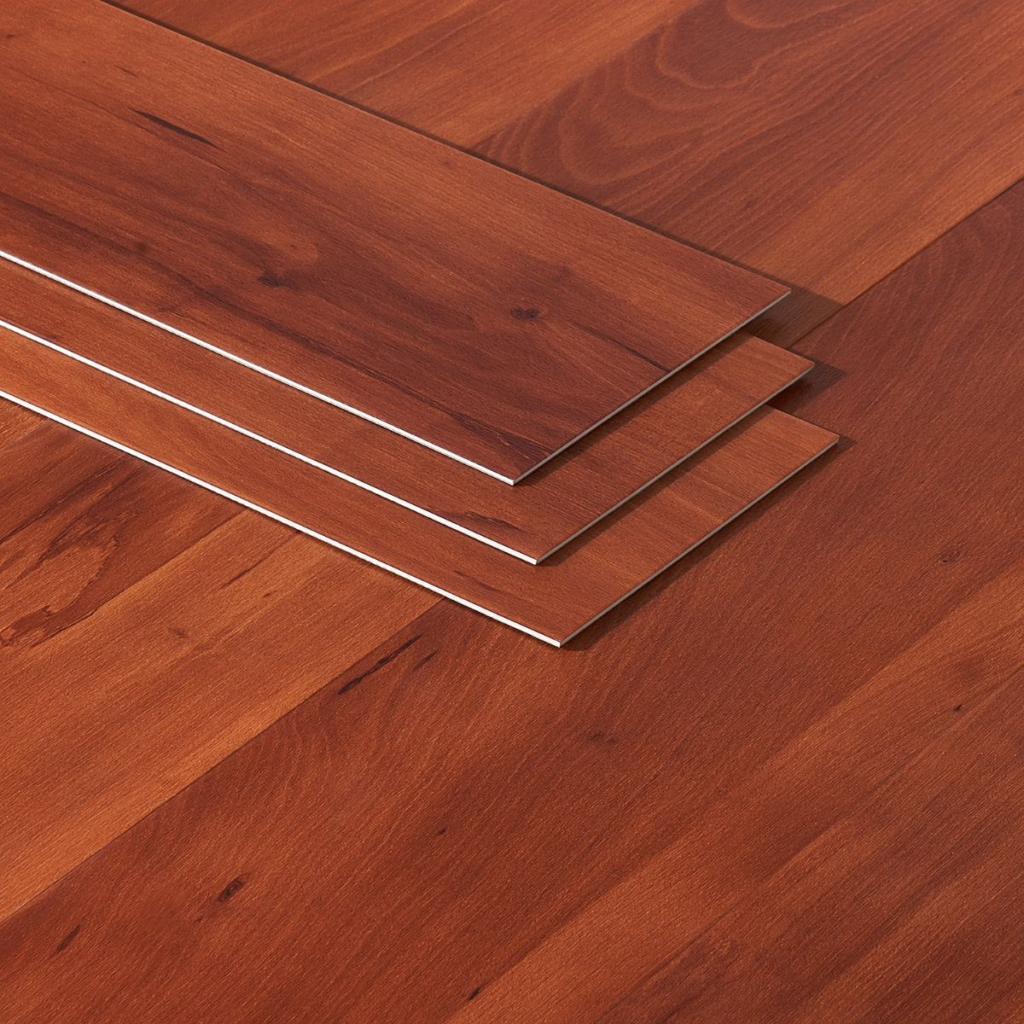
LVP samples showing realistic wood-grain textures — warm tones like cherry and oak are perennial favorites for basement spaces.
Quick Comparison: Top LVP Picks for Basements
| Product | Core | Wear Layer | Thickness | Below-Grade | Best For |
| Lifeproof Dusk Cherry | Rigid WPC | 12 mil | 8mm | Yes | Overall best / aesthetics |
| Shaw Floortee Pro 5 | SPC | 20 mil | 8mm | Yes | Heavy traffic / durability |
| COREtec Plus Enhanced HD | WPC+Cork | 12 mil | 8.5mm | Yes | Comfort / bedrooms |
| Pergo Outlast+ | HydroSeal | 10 mil | 7.5mm | Yes | Budget / light use |
LVP vs. Other Flooring: The Honest Comparison for Basements
Carpet or LVP in Basement: Which Wins?
This is one of the most hotly debated choices homeowners face. Carpet or LVP in basement use comes down to moisture, maintenance, and the specific purpose of the space.
| Pros Warmer and softer underfootBetter sound absorptionLower upfront costCozy feel for bedroom/TV spaces | Cons Traps moisture — mold riskDifficult to clean thoroughlyNot pet-friendly long-termLoses value faster in damp spaces |
For most basements — especially in humid climates, or those with any history of moisture issues — lvp flooring in basement spaces consistently outperforms carpet on every practical metric. The only genuine advantage carpet has is warmth and softness, both of which can be addressed by choosing a thicker LVP with an attached cork or foam underlayment.
LVT in Basement vs. LVP: Is There a Difference?
A common point of confusion: LVT in basement versus LVP. LVT (Luxury Vinyl Tile) comes in square or rectangular tiles that mimic stone, slate, or ceramic. LVP (Luxury Vinyl Plank) comes in longer planks that mimic wood. Both are equally waterproof and suitable for basement use — the choice is purely aesthetic. LVT basement flooring works especially well in basement bathrooms, laundry rooms, or any space where a stone-look tile aesthetic makes more design sense than wood.
Vinyl Flooring in Basement: Pros and Cons
Here’s the full picture of vinyl flooring in basement pros and cons so you can make a fully informed decision.
| Pros 100% waterproof coreHandles moisture and vaporComfortable and warm underfootEasy DIY installationRealistic wood and stone looksDurable and scratch-resistantEasy to clean and maintain | Cons Can dent under heavy point loadsLower resale value vs hardwoodMay feel hollow on uneven slabsNot environmentally neutralSome cheap products off-gas VOCs |
Lifeproof Flooring for Basement Use: Colors, Options & What to Expect
Lifeproof flooring basement installations have exploded in popularity, largely due to the brand’s wide availability at The Home Depot and its consistently strong performance ratings. But beyond Lifeproof Dusk Cherry, the brand offers a broad palette worth knowing.
Best Lifeproof Flooring Colors for Basements
When it comes to Lifeproof colors for basements specifically, warm and medium tones tend to work best. Basements often have limited natural light, and a very light, cool-toned floor can make the space feel more clinical rather than cozy. The best Lifeproof flooring colors for below-grade spaces include:
- Dusk Cherry LVP — warm reddish-brown; best-seller for good reason
- Trail Oak — medium gray-brown; neutral and versatile
- Montrose Oak — lighter beige-brown; brightens darker spaces
- Antique Linen Oak — off-white and gray; contemporary and open-feeling
- Jatoba — dark, rich brown; dramatic and luxurious-feeling
All Lifeproof LVP colors share the same core construction and are rated for below-grade installation. The Lifeproof floor colors collection is updated periodically, so it’s worth checking The Home Depot’s website for the most current lineup. Cherry LVP tones in general — not just the Lifeproof line — remain among the most searched-for options, largely because they bring warmth to a space that otherwise risks feeling cold.
Lifeproof cherry dusk (sometimes listed differently in various retailers) is the same colorway as Dusk Cherry, just noted under an alternate name in some catalogs. If you’re comparing products and see both names, they refer to the same floor. The dusk cherry floor tones are consistent across production runs, which customers frequently praise in dusk cherry lifeproof reviews — important when buying in multiple batches.
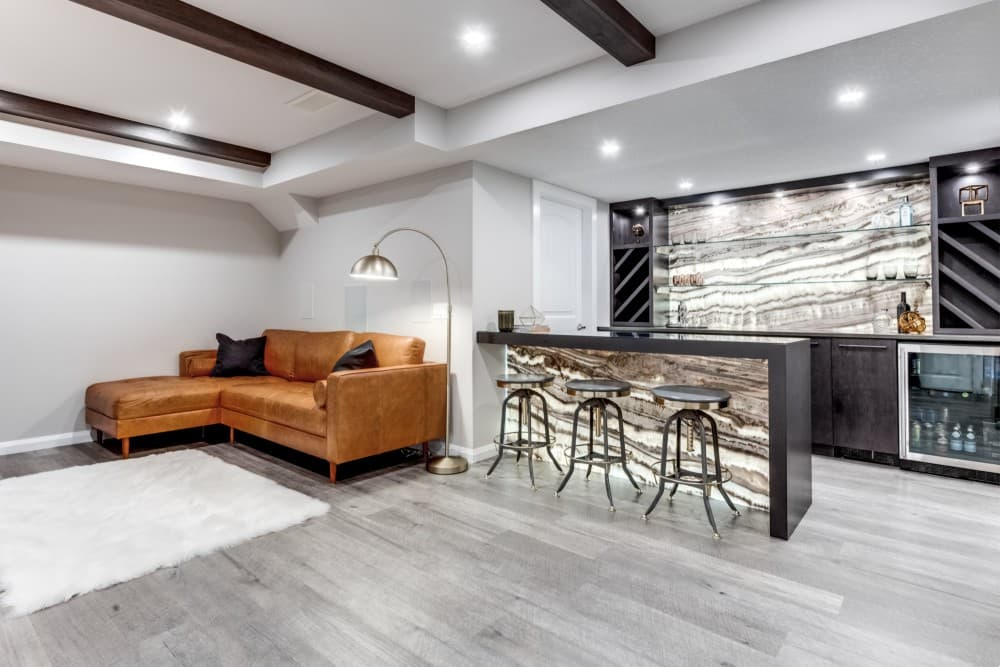
A finished basement with warm-toned LVP flooring and modern furnishings — an achievable transformation with the right product choice.
Installing LVP Flooring in Basement Spaces: What You Need to Know
Even the best vinyl flooring on concrete basement slabs will underperform if installed incorrectly. Here’s what matters most.
Prep Work: The Step Most DIYers Skip
Concrete subfloor preparation is the single most critical factor in a successful basement luxury vinyl plank installation. The slab must be:
- Clean: Free of debris, adhesive residue, paint, and oil
- Dry: Moisture testing recommended; readings above 75% RH may require a moisture barrier
- Flat: Within 3/16 inch over 10 feet — use self-leveling compound for low spots
- Structurally sound: Cracks wider than 1/8 inch should be filled before installation
Skipping moisture testing is the most common mistake in vinyl plank in basement installations. Even a floor that looks and feels dry can have elevated vapor emission that will eventually compromise the click-lock joints or cause cupping at the plank edges.
Do You Need an Underlayment?
Most premium luxury vinyl plank basement products come with an attached underlayment, which handles both cushioning and minor subfloor imperfections. If your LVP doesn’t include an attached pad, a thin (2–3mm) foam or cork underlayment is recommended for basement concrete installations — it adds comfort, reduces sound transmission, and provides minimal thermal insulation from the cold slab below.
Important: Never double-stack underlayments. If your basement vinyl plank flooring already has an attached pad, do not add a second layer underneath — this creates an overly spongy base that can stress and eventually compromise the click-lock joints.
Expansion Gaps and Transitions
Floating LVP on basement floor installations always require expansion gaps around the perimeter — typically 1/4 inch — to allow for seasonal movement. This gap should be maintained consistently and covered with base molding or quarter-round at the end of the installation. At doorways, use an appropriate Lifeproof Dusk Cherry transition strip or reducer to create a clean visual break between rooms.
Maintaining Your Basement Vinyl Flooring Long-Term
One of the great advantages of luxury vinyl basement flooring is how little maintenance it actually needs. Unlike hardwood or carpet, vinyl flooring basement upkeep is refreshingly simple.
Daily and Weekly Care
- Sweep or dust mop regularly to remove grit that can scratch the wear layer
- Damp mop with a pH-neutral cleaner — avoid vinegar, which can dull the finish over time
- Clean spills promptly to prevent liquid from seeping into seams
- Use felt pads under furniture legs to prevent indentation
- Avoid steam mops — the heat and moisture combination can damage the locking joints
Protecting Your Investment
Place a moisture-absorbing mat at basement entry points to catch water tracked in during rainy weather. If you’re using the basement as a home gym, place rubber gym flooring tiles or mats under heavy equipment — while luxury vinyl tile basement and plank products are durable, concentrated point loads from barbells or treadmill feet can eventually cause permanent indentation.
Frequently Asked Questions
Is LVP flooring good for basements?
Yes — LVP flooring for basement use is one of the best choices available. Its 100% waterproof core handles the moisture and temperature variations common in below-grade spaces, while its floating installation allows for the slight movement that concrete slabs undergo. It’s more durable than carpet, more comfortable than ceramic tile, and more moisture-safe than hardwood or laminate.
Can you install LVP directly on concrete in a basement?
Yes, most vinyl flooring in basement products can be installed directly on concrete without a separate subfloor. The key requirements are that the concrete must be clean, dry, and flat (within 3/16 inch over 10 feet). Always perform a moisture test on the slab before installation and consider a thin underlayment if your LVP doesn’t have one attached.
Is Lifeproof Dusk Cherry a good choice for basements?
Lifeproof Dusk Cherry is among the most popular and highly rated lvp basement products available. It features a 100% waterproof rigid core, a 12 mil wear layer, and is officially approved for below-grade installation. The warm reddish-brown tones work especially well in basements where you want to counteract the naturally cool and dim atmosphere.
What thickness of LVP is best for basements?
For best lvp flooring for basement installations, 8mm is generally considered the ideal thickness. Thicker planks (8–12mm) provide better resistance to subfloor imperfections and feel more substantial underfoot. Anything below 6mm will be noticeably less comfortable on hard concrete and more likely to telegraph minor subfloor irregularities.
What’s the difference between LVP and LVT for basement use?
LVT basement flooring and LVP flooring basement products are both 100% waterproof and suitable for below-grade use. The difference is purely aesthetic: LVT comes in square or rectangular tiles (great for stone looks), while LVP comes in longer planks (ideal for wood looks). Performance-wise, both are equally well-suited for basement environments.
Should I use carpet or LVP in my basement?
For most homeowners, lvp in basement spaces is the more practical long-term choice. While carpet offers more warmth and softness initially, it’s highly susceptible to moisture damage, mold growth, and is much harder to fully clean once wet. LVP is waterproof, easy to maintain, and — with a quality underlayment — can be nearly as comfortable underfoot as carpet.
What is the best waterproof vinyl flooring for basements?
The best waterproof vinyl flooring for basement spaces includes Lifeproof Dusk Cherry, Shaw Floortee Pro 5, and COREtec Plus Enhanced HD. All three feature 100% waterproof cores, are rated for below-grade installation, and have strong real-world performance records. For heavy-use spaces, prioritize products with a 20 mil wear layer like the Shaw Floortee Pro 5.
Do Lifeproof colors hold up well over time in basements?
Lifeproof LVP colors are printed under a protective wear layer that resists fading, scuffing, and staining over time. Dusk Cherry lifeproof in particular receives consistent praise in long-term reviews for maintaining its color depth and warmth even after years of use. As with all LVP, keeping it clean and avoiding abrasive cleaning products will maximize its lifespan.
Conclusion
Choosing the best lvp flooring for basement spaces isn’t about finding the cheapest option or the most expensive one — it’s about matching the right product to the specific demands of your space. Basements are genuinely challenging environments, but today’s luxury vinyl plank technology is built precisely for that challenge.
If you want one recommendation you can act on today: Lifeproof Dusk Cherry remains the single best combination of performance, aesthetics, availability, and value for most residential basement projects. It’s easy to install, genuinely beautiful, and has the real-world track record to back up its reputation.
For heavy-use spaces, step up to the Shaw Floortee Pro 5’s 20 mil wear layer. For ultimate comfort in a basement bedroom or home office, COREtec’s cork-backed planks are worth every extra dollar. And if budget is tight, Pergo Outlast+ will serve a lightly used space admirably without breaking the bank.
Whichever direction you go, prioritize a 100% waterproof core, proper slab preparation, and at least 8mm of total thickness. Get those three things right, and your basement vinyl flooring will look great and perform flawlessly for a decade or more.