

Christmas Trees Near Me: How to Find, Choose and Care for the Perfect Tree
Searching for Christmas trees near me usually turns up four kinds of sellers: choose-and-cut farms, pop-up tree lots, garden centers, and big-box stores. Each one suits a different budget, schedule, and kind of holiday outing.
The best one for you depends on how fresh you want the tree, how much time you have, and whether the trip itself is part of the tradition.
This guide walks you through finding sellers in your area, choosing the right type of tree, spotting a fresh one in under a minute, getting it home safely, and keeping it green until the New Year.
Where to buy a Christmas tree near you
The four main options feel very different, even when the trees themselves are similar.
| Where to buy | Freshness | Best for | Trade-offs |
|---|---|---|---|
| Choose-and-cut farm | Freshest; cut the day you buy | Families, traditions, photos | Drive to the countryside, walking in the cold, limited hours |
| Pre-cut tree lot | Good if the lot keeps trees cool and watered | Convenience close to home | Trees were cut days or weeks earlier |
| Garden center or nursery | Usually good; staff often know their stock | Advice, stands and accessories in one trip | Prices can be higher |
| Big-box store or supermarket | Varies widely | Lowest prices, longest hours | Trees often stored tightly netted; check carefully |
None of these is wrong. A well-run lot with shaded, watered trees can sell a fresher tree than a careless farm.
Choose-and-cut farms
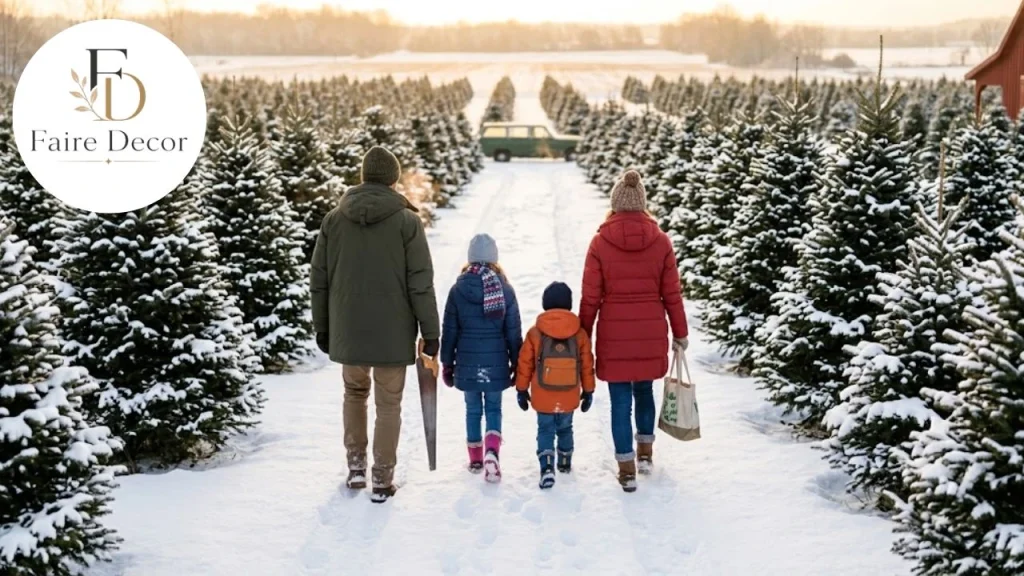
A choose-and-cut farm lets you walk the rows, pick a standing tree and cut it yourself, or have staff cut it for you. It’s the freshest option, because the tree goes from soil to your car in under an hour.
Many farms add hayrides, hot drinks, wreath shops, and visits with Santa, which turns the purchase into a day out. Most provide saws, then shake and bale the tree for the drive home.
Pre-cut lots and pop-up stands
Temporary lots appear in parking areas, church grounds,s and school fields from late November. Many are run by nonprofits, scout troops or local groups, so your purchase may support a good cause.
These trees were cut earlier, often on farms in other states. Freshness depends on how the lot stores them, so look for trees kept in shade, out of the wind,nd and ideally standing in water.
Garden centers and nurseries
Garden centers often get regular deliveries and know how to handle plants. They’re a good middle ground, and they usually sell stands, lights, wreaths, and potted living trees in the same place.
Big-box stores and supermarkets
These are the most convenient and often the cheapest options. Trees may arrive tightly netted and stacked on pallets, so open the netting if you can and inspect the needles closely before buying.
How to find Christmas tree farms and lots in your area
Typing Christmas trees near me into Google or Maps is the quickest start. The map results show farms and lots with opening hours, photos, and reviews, which tell you a lot about freshness and service.
To widen the search, try a few other approaches.
Search state grower associations. Many US states have a Christmas tree growers’ association with a member-farm directory.
Use the National Christmas Tree Association. Its consumer site has information on real trees and points shoppers toward growers.
Check local news and community pages. Town social media groups and local news sites often list pop-up lots, especially charity sales.
Ask your garden center. Staff usually know which nearby farms grow well-shaped trees.
Look at opening dates. Many choose-and-cut farms open the day after Thanksgiving and close early once they sell out.
Before you drive, check the farm’s website or social media for that day’s hours. Weather closes farms more often than people expect, and popular farms can run low on tall trees by mid-December.
When to buy your Christmas tree
Most US families buy their tree around Thanksgiving weekend or in the first two weeks of December. Buying early gives you the best choice of shapes and sizes.
How long a cut tree lasts depends mainly on care and species. A fresh tree, kept in water every day, often stays in good condition for four weeks or more.
If you want the tree up the weekend after Thanksgiving, choose a species known for good needle retention, such as Fraser fir or Nordmann fir. If you prefer to decorate later, you can buy from a lot in mid-December, but expect less choice.
Which type of Christmas tree should you get?
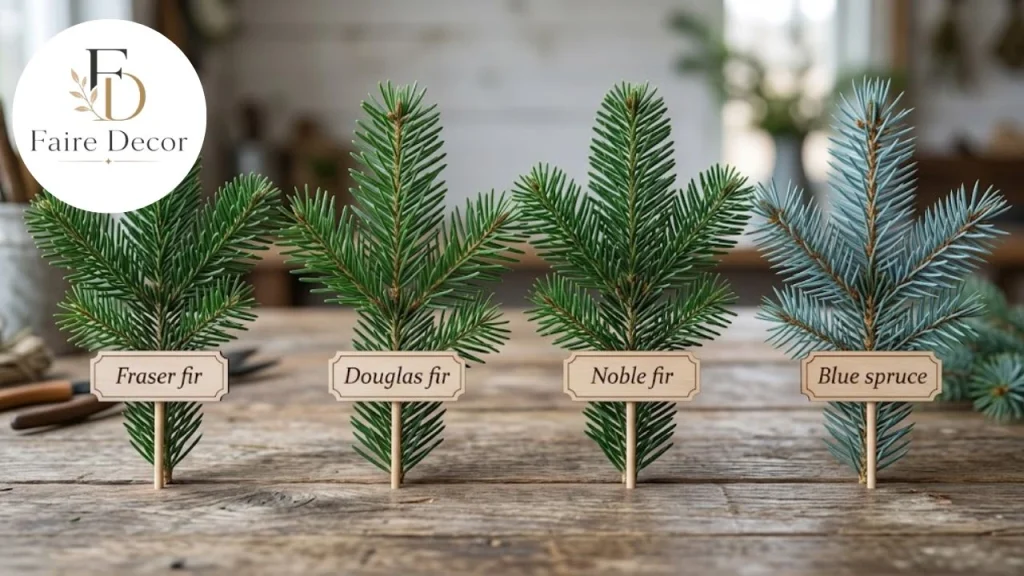
There are more than 20 species grown as Christmas trees in the US, but a handful dominate what you’ll see on lots and farms.
| Tree | Needles and scent | Branches | Good to know |
|---|---|---|---|
| Fraser fir | Soft, dark green, silvery underside; pleasant scent | Strong, upturned; holds heavy ornaments | Very popular; good needle retention |
| Balsam fir | Dark green, very fragrant | Flexible, slightly softer | Classic Christmas scent |
| Douglas fir | Soft, sweet-smelling, blue-green to dark green | Fuller, softer; better for lighter ornaments | Widely grown and often affordable |
| Noble fir | Blue-green, short needles | Stiff, well-spaced tiers; great for ornaments | Long-lasting; also used for wreaths |
| Nordmann fir | Glossy, dark green; little scent | Sturdy, full | Excellent needle retention; good for pets and allergy-prone homes |
| Scotch pine | Stiff, sharp; mild scent | Strong | Holds needles even when dry |
| White pine | Long, soft, blue-green; little scent | Flexible; too soft for heavy ornaments | Good for families with young children |
| Blue spruce | Sharp, silvery-blue | Very stiff, symmetrical | Beautiful color but prickly; can shed when dry |
If you want one simple rule, it’s this. Firs are the safe all-rounders, pines last well but feel different, and spruces look stunning but drop needles faster indoors.
Think about your ornaments too. Heavy glass baubles need stiff branches, like Fraser fir, Noble fi,r or Blue spruce. Lighter decorations look lovely on softer trees like Douglas fir or White pine.
How to choose the right size
Measure before you go. It’s the most common mistake people make, because trees look smaller outdoors than in a living room.
Measure your ceiling height. Subtract about 12 inches for the tree topper and the height of the stand.
Measure the width of your space. A 7-foot tree is often 4 to 5 feet wide at the base, which takes up more floor than you’d expect.
Check your doorways. A very full tree can get stuck in a narrow hallway.
Bring a tape measure. Most farms and lots have measuring poles, but your own tape is faster.
As a rough guide, a 6- to 7-foot tree suits most rooms with standard 8-foot ceilings. Taller trees look spectacular in rooms with vaulted ceilings, like many ranch-style homes, but need a sturdier stand.
How to tell if a Christmas tree is fresh
Freshness matters more than species. A fresh tree is safer, smells better, and keeps its needles longer. These quick checks take under a minute.
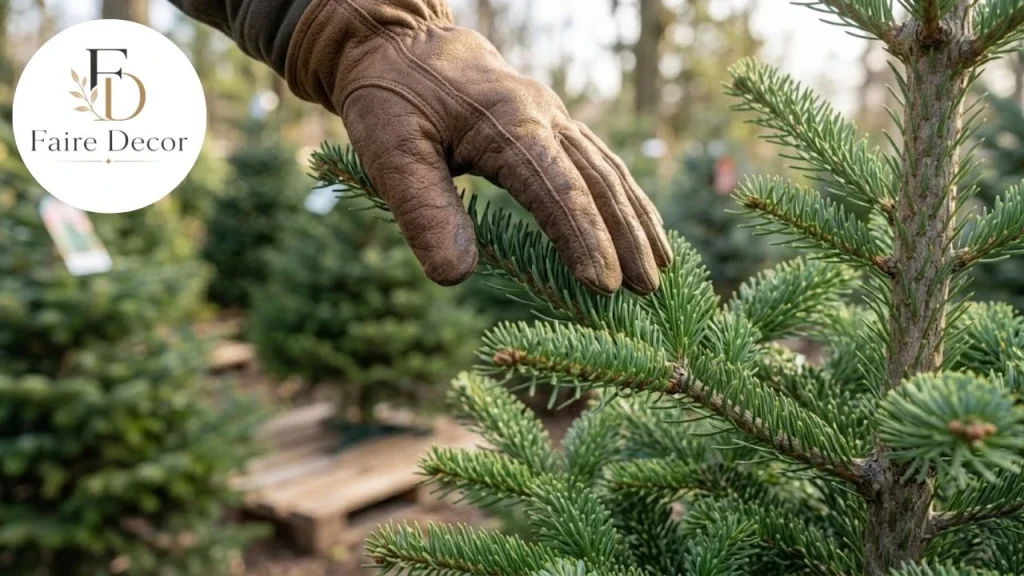
The needle test. Run a branch gently through your closed hand. Fresh needles bend and stay put. If they snap or fall off in your hand, the tree is drying out.
The bounce test. Lift the tree a few inches and drop it on its trunk. A few brown inner needles falling is normal, but a shower of green needles is a warning sign.
The color check. Look for a deep, consistent color. Dull, gray-green or browning needles, especially at the branch tips, mean the tree has lost moisture.
The scent check. Crush a few needles between your fingers. A strong, fresh scent is a good sign. Little or no scent can mean the tree is old.
The trunk check. The cut end should look sticky with sap, not dry and cracked.
Don’t be shy about asking when the trees arrived at a lot. A good seller will tell you, and many keep their freshest stock at the back.
Questions to ask the seller
A friendly seller is one of the best freshness tools you have. These quick questions tell you more than any label.
When were these trees cut, and when did they arrive? Trees that arrived this week are a safer bet than ones that have sat on the lot since late November.
Where were they grown? Local trees usually spend less time in transit.
Will you make a fresh cut for me? Many lots and farms will trim the base before you leave, which helps if you’re driving straight home.
Do you shake and net the tree? Shaking removes loose needles and debris, and netting makes the trip home easier.
Do you deliver or set up? Some sellers will bring the tree home and put it in your stand for a small fee.
What’s your returns or replacement policy? A few sellers will replace a tree that dries out unusually fast if it’s been watered correctly.
What a real Christmas tree costs
Prices vary a lot by species, height, region, and seller, so there’s no single average. The Real Christmas Tree Board says it can’t provide one either.
Price is usually set by height. Taller trees and premium species like Fraser or Noble fir cost more than Douglas fir or pine of the same height.
Choose-and-cut farms may charge a flat price per tree or price by the foot. Lots and stores usually price individual trees by height and species. Budget a little extra for a new stand, netting, delivery, or the farm’s hot chocolate.
The good news is that most buyers feel they get fair value. In the Real Christmas Tree Board’s 2025 holiday survey, 91% of real tree buyers said their tree was worth the price, and 56% said it cost less than they expected (Real Christmas Tree Board).
Getting your tree home safely
A Christmas tree is heavy, awkwar,d and surprisingly easy to lose on a highway. Plan the trip before you leave.
Ask for netting or baling. It compresses the branches and makes the tree much easier to carry and tie down.
Protect your car. Lay an old blanket or tarp on the roof to prevent scratches and sap stains.
Point the trunk forward. On a roof rack, the trunk faces the front of the car, so wind doesn’t catch the branches.
Tie it down properly. Use strong rope or straps through the car’s doors or the roof rack, not just through open windows.
Drive slowly. Highway speeds put a lot of force on a tree on the roof. Take quieter roads if you can.
Many farms and lots offer delivery for an extra fee. That’s worth considering for very large trees or if you don’t have a roof rack.
Setting up your tree
What you do in the first hour after getting home sets how long the tree lasts.
Make a fresh cut. The National Christmas Tree Association advises removing a disk about half an inch thick from the base of the trunk, cutting straight across (NCTA). This opens up the wood so the tree can drink.
Get it into water quickly. The NCTA says most species can wait 6 to 8 hours after cutting and still take up water, but sooner is better. If you can’t decorate right away, stand the tree in a bucket of water in a cool garage or porch.
Use a big enough stand. The NCTA recommends 1 quart of water per inch of trunk diameter. A tree with a 4-inch trunk needs a stand holding at least a gallon.
Don’t shave the trunk to fit. The outer layers are the ones that absorb the most water. Choose a stand that fits the trunk as it is.
Pick the right spot. Keep the tree away from fireplaces, heaters, vents, and direct sun, which dry it out quickly.
Christmas tree safety basics
A well-watered tree is far less likely to catch fire, but a few other habits matter too.
Keep the tree at least a few feet from any heat source, including fireplaces, radiators, space heater,s and candles. The Real Christmas Tree Board also advises keeping trees away from flame and avoiding overloaded electrical circuits.
Check light strings before hanging them. Throw away any with frayed wires, broken sockets, or loose connections, and follow the maker’s guidance on how many sets to connect together.
Never use lit candles on or near the tree. Battery-powered candles give the same glow without the risk.
Make sure the tree doesn’t block doorways or exits, and that a working smoke alarm sits nearby. These small checks keep the holiday about celebration, not emergencies.
Keeping your Christmas tree fresh until New Year
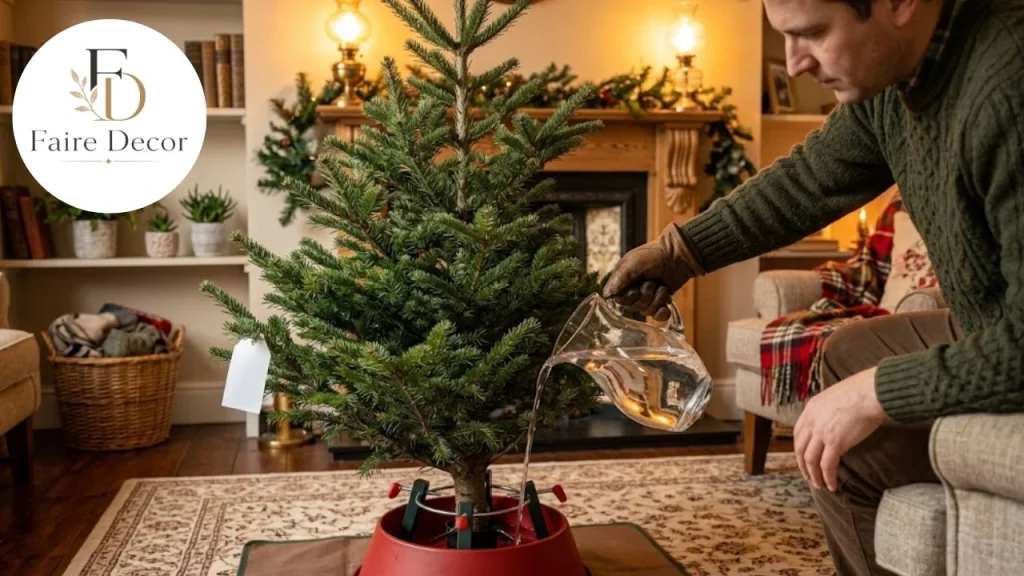
Daily watering is the single most important habit. A fresh tree can drink a surprising amount of water in the first few days.
Check the stand every morning, and top it up so the base of the trunk always stays underwater. If the water drops below the cut, a seal of sap can form, and the tree may stop drinking, even after you refill it.
Use LED or miniature lights, which give off less heat and help slow drying. Turn the lights off when you go to bed or leave the house.
Plain water works well. Additives, aspirin, suga,r and other home remedies aren’t needed; steady, clean water does the job.
If your tree starts dropping lots of needles or the branches become brittle, it’s time to take it down. A dry tree is a fire risk, and the NCTA advises removing it from the house once it becomes very dry.
Real trees with kids, pets and allergies
Real trees are a joy for most households, but a few small steps help.
With pets, secure the tree to a wall or window frame with fishing line so it can’t be knocked over. Cover the stand so pets can’t drink the water, and keep fragile or edible ornaments higher up.
With young children, hang breakable ornaments, small decoratio,ns and electrical cords out of reach. Softer trees like White pine are gentler on small hands.
With allergies, some people react to mold or pollen carried on trees rather than the tree itself. The Real Christmas Tree Board suggests asking the seller to shake the tree, or shaking it outside at home, then vacuuming after setup. Nordmann fir, with little scent, is a common choice for sensitive households.
Living Christmas trees you can plant
Some nurseries and farms also sell living trees, either in pots or with their roots wrapped in burlap. After the holidays, you plant them in the garden.
They’re a lovely idea, but they need planning. The NCTA notes that a six-foot balled-and-burlapped tree can weigh up to 250 pounds, so smaller trees are far more practical.
Living trees can’t stay indoors for long. Keep them inside for only about a week to ten days, in the coolest room you have, or the warmth can break their winter dormancy.
Prepare before you buy. In cold climates, dig the planting hole in autumn while the ground is still soft, and store the soil somewhere it won’t freeze.
Choose a species that grows well where you live, and a spot with room for it to reach full size. A cute 4-foot spruce can become a 50-foot tree.
Smaller potted trees, like dwarf Alberta spruce or Norfolk Island pine, are easier still. They can sit on a table or a porch and come back out year after year.
Real or artificial: which is better?
Both have a place, and the right answer depends on your priorities.
Real trees are grown as a crop, much like pumpkins or corn. The National Christmas Tree Association notes that 1 to 3 seedlings are planted for every tree harvested, and that farms keep about 350,000 acres in production across the US. Real trees are also compostable and widely recycled.
Artificial trees are reusable and convenient, with no watering or needles. But most are made from plastic and metal, and they need many years of reuse to balance their environmental footprint.
If you love the scent, the out,ing and the tradition, a real tree is hard to beat. If you prefer to store one tree and reuse it for a decade, artificial makes sense.
What to do with your tree after Christmas
Real trees are easy to recycle. The NCTA counts more than 4,000 local Christmas tree recycling programs across the US.
Curbside collection. Many cities pick up trees in early January. Remove every light, hook, and ornament first.
Drop-off points. Parks departments often run collection sites that turn trees into mulch.
Garden use. Cut branches into pieces to cover perennials over winter, or let the tree break down in a backyard brush pile for birds.
Ponds and lakes. Some wildlife agencies sink old trees to create fish habitat. Check locally before trying this.
Never burn a Christmas tree in a fireplace or wood stove. The dry needles and sap burn very fast and can cause dangerous flare-ups and chimney fires.
Decorating your tree to suit your home
Once your tree is up, the fun starts. Match the decorations to your room so the tree feels like part of your home, not a separate showpiece.
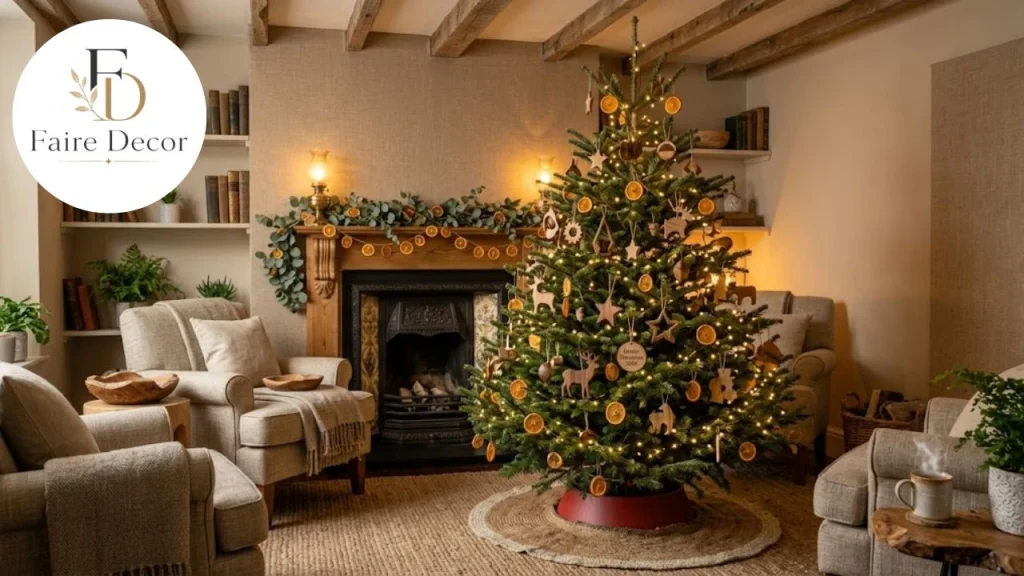
Calm, natural rooms look beautiful with wooden ornaments, dried orange slices, and warm white lights. Our earthy bedroom ideas use the same palette and work just as well for holiday decor.
For a bolder look, a mix of vintage and modern ornaments suits modern eclectic interiors. If you’re unsure about colors, our home color combinations guide helps you pick a scheme that ties the tree to the rest of the room.
Don’t forget the entrance. A small potted tree or a fresh wreath on the front porch welcomes guests before they even reach the living room.
Planning your tree trip
Finding Christmas trees near me is easier when you have a short plan. Run through this list before you head out.
Measure your ceiling, floor space, and doorway.
Check the stand you own, or buy one that holds enough water.
Search for Christmas trees near me and check reviews and opening hours.
Bring gloves, a tape measure, rope or straps, and a blanket for the car.
Test freshness before you pay.
Make a fresh cut and get the tree into water as soon as you’re home.
The bottom line
The best place to find Christmas trees near me is the one that fits your holiday: a choose-and-cut farm for the freshest tree and the full experience, or a lot or store for convenience. Pick a species that suits your ornaments and household, test freshness before you buy, and water the tree every single day.
Do that, and your tree will stay green, fragrant, and safe all season. When you search for Christmas trees near me again next year, you’ll know exactly what to look for.
FAQs:
Where can I buy a real Christmas tree near me?
Choose-and-cut farms, pop-up tree lots, garden center,s and big-box stores all sell real trees. Search your maps app, or check your state’s Christmas tree growers’ association for member farms.
When do Christmas tree farms open?
Many open the weekend of Thanksgiving, and some open earlier for tagging trees. Hours va,ry and farms may close early once they sell out, so check before you go.
What is the best type of Christmas tree?
Fraser fir is a popular all-rounder, with soft needles, strong branc,hes and good needle retention. Nordmann fir holds needles very well, and Balsam fir has the strongest classic scent.
How long does a real Christmas tree last?
A fresh tree that’s watered every day often stays in good condition for four weeks or more. Species and room temperature affect how long it lasts.
How can I tell if a Christmas tree is fresh?
Run a branch through your hand. Fresh needles bend and stay attached. Also look for deep green color, a strong scent, and a sticky, sap-covered cut on the trunk.
How much water does a Christmas tree need?
The National Christmas Tree Association recommends a stand that holds 1 quart of water per inch of trunk diameter. Check the level every day, and never let it drop below the base of the trunk.
How do I recycle my Christmas tree?
Remove all decorations, then use your city’s curbside collection or a local drop-off point. Many programs turn trees into mulch.