

You know that feeling when you pull into a driveway and the yard just works? Nothing looks forced, nothing looks empty, and somehow every bench, plant, and light fixture seems to belong exactly where it is. That feeling has a name in the design world now, and it’s decoradyard — a practical approach to outdoor decorating that focuses on function first and style second, instead of the other way around.
If your backyard currently looks more like a storage lot for old patio furniture than a place you’d want to spend a Saturday afternoon, you’re not alone. Most homeowners don’t struggle with taste — they struggle with a plan. That’s the real problem this method solves. It isn’t a rigid style you have to copy from a magazine. It’s a way of thinking about outdoor space that any homeowner, renter, or weekend DIYer can apply, regardless of budget or yard size.
This guide walks through what decoradyard actually means, why so many outdoor makeovers fail before they even start, and how to fix the most common yard problems using layout, lighting, greenery, and a handful of smart material choices. By the end, you’ll have a clear, step-by-step way to look at your own backyard and know exactly where to begin.
What Is Decoradyard, Really?
At its core, decoradyard is the idea that an outdoor space should be decorated the same thoughtful way you’d decorate a living room — with attention to flow, purpose, and visual balance — rather than treated as an afterthought once the indoor renovations are finished.
Traditional yard decorating advice tends to focus on individual purchases: buy this planter, add that string light, install a fountain. This approach flips that order. It starts with a question — how do you actually want to use this space? — and lets every decision after that follow from the answer. A yard meant for hosting dinners needs different furniture, lighting, and traffic flow than a yard meant for quiet morning coffee or for kids to play in.
This matters because most backyard disappointments aren’t about bad taste. They’re about mismatched intentions. Someone buys a beautiful outdoor sofa set, but it sits in the wrong spot, blocks the path to the garden hose, and gets abandoned within a season. A decoradyard mindset prevents that by making planning the first step, not an afterthought squeezed in after the shopping is done.
Why This Approach Solves a Real Problem
Research on home improvement spending consistently shows that a large share of outdoor purchases go unused or get returned within a year, and the most common reason cited by homeowners is that the item “didn’t fit the space the way I expected.” That’s a planning failure, not a taste failure. A layout-first strategy — measure first, define zones second, decorate third — directly targets that exact failure point, and it’s the foundation everything else in this guide builds on.
Start With Zones, Not Purchases
Before you buy a single planter or string light, walk your yard and mentally divide it into zones based on activity: a dining zone, a lounging zone, a garden or greenery zone, and a walking path that connects them.
- Dining zone — near the kitchen door or grill, with hard, level ground underneath
- Lounging zone — a quieter corner, ideally with some shade or a pergola
- Green zone — raised beds, potted plants, or a small lawn area
- Play or open zone — flexible open space for kids, pets, or games
- Transition paths — the walkways that connect everything without cutting through seating areas
Once these zones are marked out, even mentally with stakes or chalk, the rest of the decorating process becomes far easier. This zoning step is the single biggest differentiator between a yard that feels random and one that feels intentional — and it’s the first practical move behind any successful decoradyard project.
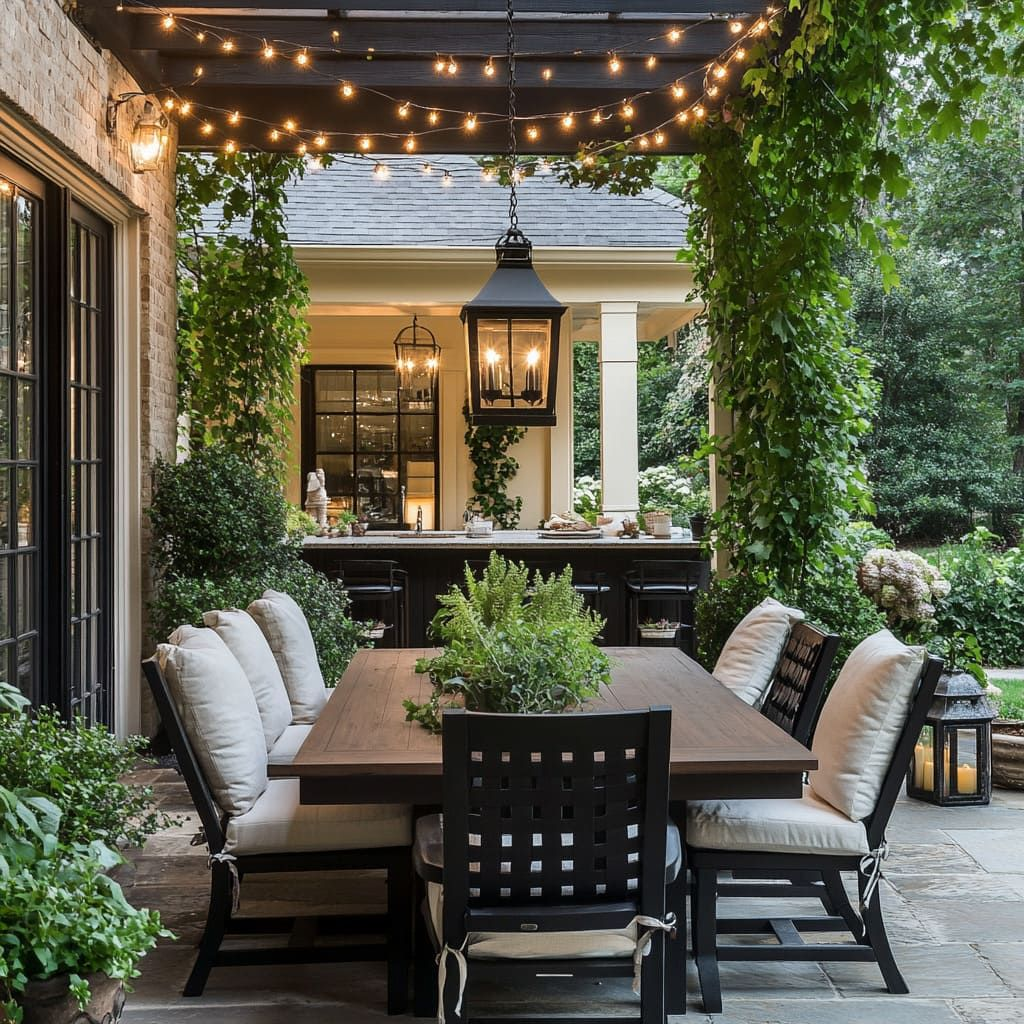
Defining a dedicated dining zone before buying furniture keeps a backyard from feeling cluttered or mismatched.
Leave Breathing Room
One mistake shows up again and again in outdoor design: cramming too much into too little space. A yard doesn’t need to be full to feel finished. Leaving open, walkable space between furniture groupings actually makes a small yard look larger, not emptier. As a rough guide, aim to keep at least 30–36 inches of clear walking space around any seating area, and resist the urge to fill every corner just because the corner is there.
Furniture and Seating That Actually Get Used
Furniture is where most outdoor budgets go, and it’s also where most mistakes happen. Oversized sectional sofas look stunning in showroom photos but overwhelm an average-sized patio. Before buying anything, measure the intended zone and mark it out with painter’s tape or rope so you can see exactly how much furniture will realistically fit.
A few guidelines that consistently work well in outdoor spaces:
- Choose weather-resistant materials — teak, powder-coated aluminum, and all-weather wicker hold up far longer than untreated wood or basic plastic resin.
- Prioritize multi-use pieces, like storage benches or ottomans that double as extra seating.
- Keep a consistent color family across cushions and frames so the seating area reads as one cohesive set, not a mismatched collection.
- Leave a clear sightline from the seating area back toward the house — it makes the space feel connected rather than isolated.
Furniture that matches the scale of the yard, rather than the scale of the showroom, is one of the quieter lessons inside most decoradyard case studies — and it’s often the difference between a patio set that gets used daily and one that becomes a storage spot for gardening tools by midsummer.
Lighting: The Detail Most Yards Get Wrong
Lighting does more work than almost any other decorating decision, and it’s frequently the last thing homeowners think about. A yard that looks pleasant at noon can feel flat, unsafe, or unusable after sunset without a lighting plan.
Layered lighting — rather than a single floodlight — creates the kind of ambiance most people associate with a professionally designed outdoor space:
- Pathway lighting for safety along walkways and steps
- String or bistro lights overhead for a warm, gathering-friendly glow
- Accent lighting aimed at trees, water features, or architectural details
- Task lighting near grills, outdoor kitchens, or reading nooks
Solar-powered fixtures have improved significantly in recent years and now offer a genuinely low-maintenance option for pathway and accent lighting, without the cost of running new electrical lines. Layering two or three of these lighting types is a hallmark of the decoradyard method, because it treats the yard as a space that needs to function well both day and night, not just in photographs taken at noon.
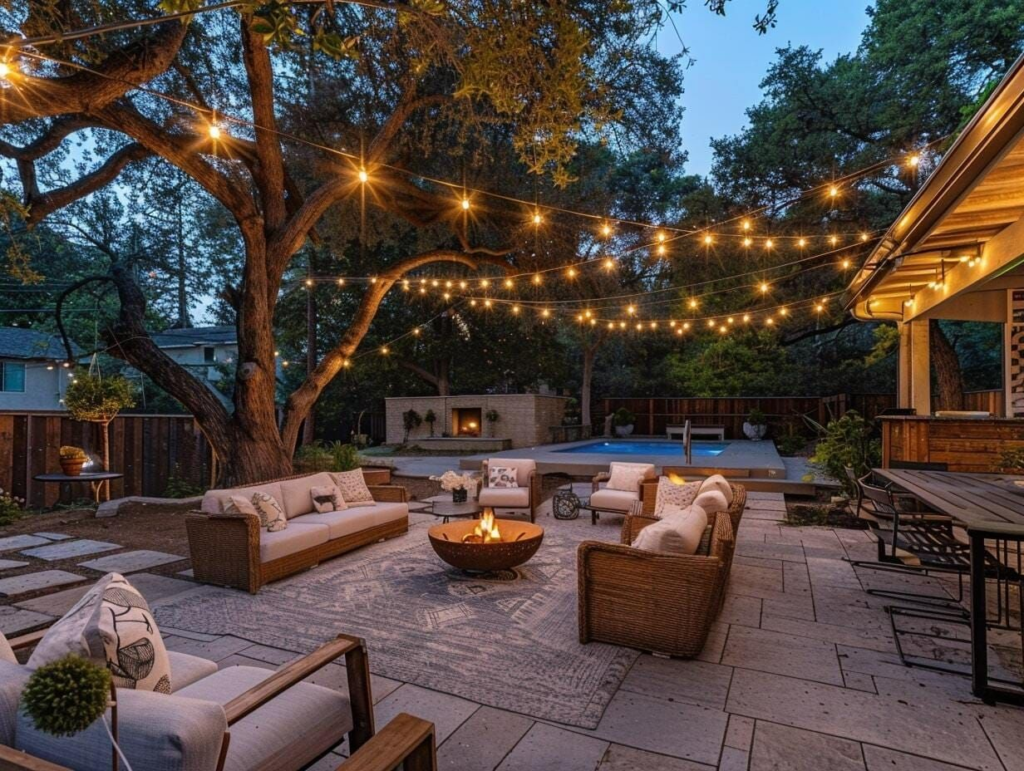
Layered lighting — pathway, overhead, and accent — is what makes a decoradyard-style yard usable well after sunset.
Greenery and Plant Choices That Fit Your Climate
Plants bring life to any outdoor space, but the biggest mistake homeowners make is choosing greenery based on looks alone rather than climate suitability. A plant that struggles against your region’s heat, humidity, or frost will need constant replacement, driving up long-term costs and frustration.
A simple framework for plant selection:
- Structure plants — shrubs or small trees that anchor a bed and provide year-round shape
- Filler plants — mid-height flowering perennials that add seasonal color
- Edge plants — low ground cover or border plants that define the edges of a bed cleanly
- Container plants — flexible, movable greenery for patios, porches, or rented properties
Native and drought-tolerant species are worth prioritizing wherever possible. They typically require less water, less fertilizer, and less overall maintenance than imported ornamental varieties, which supports the low-upkeep philosophy that runs through most decoradyard planning guides. A good rule of thumb: if a plant needs daily babying to survive your climate, it’s fighting the space instead of belonging to it.
Materials, Durability, and Long-Term Maintenance
A backyard that looks great on installation day but falls apart within two seasons isn’t a good investment, no matter how attractive the initial photos are. Material choice matters as much as style.
Hardscaping Materials Worth Considering
| Material | Best For | Maintenance Level |
|---|---|---|
| Natural stone pavers | Pathways, patios | Low |
| Composite decking | Decks, raised platforms | Very low |
| Gravel | Budget pathways, drainage | Low-medium |
| Untreated wood | Temporary structures | High |
| Powder-coated metal | Furniture frames, fencing | Very low |
Choosing durable materials upfront costs more initially but saves significant money and effort over a five-year horizon, since replacements and repairs on cheap materials tend to add up quickly. This kind of realistic, upkeep-aware planning is exactly the sustainability angle experienced designers highlight when discussing decoradyard projects for busy households who want results without a weekly maintenance chore list.
A Simple Seasonal Maintenance Rhythm
Even the most durable materials benefit from a light seasonal check-in rather than a once-a-year scramble. In spring, focus on clearing winter debris, checking irrigation lines, and refreshing any mulch that’s thinned out. Summer maintenance is mostly about watering consistency and trimming back anything that’s grown past its intended boundary. Fall is the right time to store or cover delicate furniture, clean out gutters near patio roofs, and plant anything that needs a head start before the ground freezes. Winter, in most climates, is largely a rest period — a good time to plan next year’s changes rather than execute new ones. Spreading maintenance across four small check-ins, instead of one exhausting weekend, keeps the whole space looking cared for year-round without turning yard work into a second job.
Adding a Focal Point: Fire Pits and Water Features
Every well-designed yard tends to have one feature that draws the eye and anchors the whole layout. Fire pits and small water features are two of the most popular choices, and both work well because they naturally create a gathering point without requiring much square footage.
A simple gas or wood-burning fire pit, surrounded by four or five weather-resistant chairs, instantly turns an empty corner into a destination. Water features — even a small tabletop fountain — add ambient sound that helps mask street noise and creates a calmer, more private feeling in the yard. Neither requires a large budget; the key is placing the feature where it naturally fits one of your existing activity zones rather than bolting it onto the plan as an afterthought.
Local fire codes and homeowners’ association rules vary quite a bit, so it’s worth a quick check before installing a permanent fire feature — portable, freestanding fire bowls are often a safer starting point if you’re unsure about restrictions in your area. For water features, even a modest solar-powered pump can circulate a small basin without adding to your electric bill, which keeps the ongoing cost close to zero once the initial piece is purchased. Whichever focal point you choose, resist the temptation to add a second one right away; a single strong anchor tends to read as more intentional than two competing features fighting for attention in the same yard.
Small Yard? Here’s What Actually Works
Not everyone has a sprawling lot to work with, and a lot of general decorating advice quietly assumes you do. Small yards need a slightly different set of rules:
- Use vertical space — wall-mounted planters, trellises, and hanging baskets add greenery without eating floor space
- Choose furniture with a smaller footprint, like bistro sets instead of full sectionals
- Stick to one or two dominant colors to avoid visual clutter
- Use mirrors or reflective surfaces on fences to create the illusion of depth
- Keep pathways narrow but clearly defined, rather than skipping them altogether
Small-space decoradyard techniques prove that square footage isn’t the limiting factor most people assume it is — thoughtful layout consistently outperforms sheer size, and some of the most photographed patios in recent design features are under 150 square feet.
Budget-Friendly Ways to Get Started
You don’t need a full renovation budget to see real results. Some of the most effective upgrades cost very little:
- Repaint or refinish existing furniture instead of replacing it
- Add a $20 strand of solar string lights for immediate atmosphere
- Repurpose old containers as planters
- Shop end-of-season sales for outdoor cushions and decor
- Swap a single overgrown or dying plant for a native, low-maintenance alternative
Small, consistent upgrades compound over time, and this incremental approach is often more sustainable — financially and physically — than one large weekend project that drains your savings and your energy at the same time.
A Sample Weekend Walkthrough
To see how these pieces fit together, imagine a fairly typical suburban backyard: a rectangular lawn, a concrete slab patio, one struggling shrub near the fence, and a single overhead floodlight.
Saturday morning starts with measuring the space and marking out three zones — a dining area near the slab, a lounging corner in the shadiest part of the yard, and a narrow planting bed along the fence line. Saturday afternoon is spent adding a secondhand bistro set to the dining zone, two weather-resistant chairs and a small side table to the lounging corner, and a string of solar lights strung between the fence posts. Sunday is reserved for planting — a few drought-tolerant shrubs for structure, some low-cost annuals for color, and a couple of potted herbs near the kitchen door for convenience.
By Sunday evening, nothing has been demolished, no contractor has been hired, and the total spend is well under a few hundred dollars — yet the yard already reads as organized, lit, and genuinely usable after dark. That’s the practical payoff of planning zones before shopping for decor.
Common Mistakes to Avoid
- Skipping the measuring step. Guessing at furniture size almost always leads to a cramped or awkward layout.
- Ignoring drainage. Water pooling near seating areas or foundations causes long-term damage and discourages use.
- Overplanting. Too many species crammed together creates visual chaos and competition for nutrients.
- Buying trend pieces first. Trendy items age quickly and rarely match the rest of an evolving space.
- Forgetting nighttime use. A yard without a lighting plan effectively shuts down at sunset.
Bringing It All Together
The most successful outdoor spaces don’t happen by accident, and they rarely happen in a single weekend either. They happen through a sequence of intentional decisions — zones before purchases, function before style, durable materials before trendy ones. That sequence is the real backbone of the decoradyard philosophy, and it’s repeatable regardless of whether you’re working with a sprawling backyard or a modest apartment patio.
Frequently Asked Questions
What does decoradyard actually mean?
Decoradyard refers to a practical, function-first approach to decorating outdoor spaces. Instead of buying decor items first, it prioritizes planning zones, traffic flow, and usability, then layers in furniture, lighting, and plants afterward.
Is this approach only useful for large backyards?
No. The core principles — zoning, scale, and layered lighting — apply just as well to small patios, balconies, and townhouse yards as they do to large properties. Small spaces often benefit even more from this level of planning.
How much does a typical outdoor makeover cost using this method?
Costs vary widely depending on scope. A basic refresh using existing furniture, new lighting, and a few plants can cost under $200, while a full hardscape and furniture overhaul can run into several thousand dollars. The framework works at any budget level because it’s a planning method, not a fixed shopping list.
What’s the first step in getting started?
Start by walking your yard and identifying how you actually want to use it — dining, lounging, gardening, or play. Mark rough zones before buying anything, since this single step prevents most of the common layout mistakes.
Do I need professional help to apply these principles?
Not necessarily. Most of the framework — zoning, furniture scale, layered lighting, and climate-appropriate plants — can be applied by homeowners without hiring a designer. Larger hardscaping or drainage work may still benefit from a professional.
What plants work best in this style of layout?
A mix of structure plants (shrubs or small trees), seasonal filler plants, and low-maintenance ground cover generally works best. Prioritizing native or drought-tolerant species reduces long-term watering and maintenance needs.
How important is lighting compared to furniture or plants?
Lighting is often underrated but has an outsized impact, since it determines whether a yard is usable after sunset. Layered lighting — pathway, overhead, and accent — is considered one of the higher-impact, lower-cost upgrades in most outdoor renovation plans.
Can renters use these ideas too?
Yes. Container plants, portable furniture, solar lights, and movable rugs allow renters to apply most of these principles without making permanent changes to a rented property.
Final Thoughts
A backyard doesn’t need an unlimited budget or a professional design team to feel finished. What it needs is a plan that respects how the space will actually be used, paired with materials and plants that hold up over time. That’s the practical promise behind decoradyard — not a single fixed look, but a repeatable way of thinking that turns an ordinary yard into a space people genuinely want to spend time in, one season at a time.