

Ever walked into someone’s backyard and felt like you’d stepped into a completely different, more relaxed version of life? That feeling isn’t luck — it’s the result of a few smart choices, and it’s exactly what good decoration tips decoradyard advice is meant to help you achieve. Your backyard is arguably the most underused room in your house, and with the right approach, it can become the space everyone in your family actually fights over.
Most homeowners spend years staring at a patchy lawn, a sagging fence, or a patio set that’s seen better days, telling themselves they’ll “get to it eventually.” The truth is, backyard upgrades don’t have to be expensive or overwhelming. A handful of thoughtful changes — some lighting here, a fresh planting bed there — can completely change how a space feels and functions.
That’s really what this guide is about: practical, real-world tips decoradyard style, pulled together from design research, gardening science, and plain old trial and error. Whether you’re working with a sprawling half-acre lot or a modest apartment patio, there’s something here you can use this weekend.
Outdoor living isn’t a passing trend, either. Recent housing surveys show that a large majority of homeowners — well over 80% in some studies — are planning at least one outdoor upgrade this year, and patios and decks remain among the most requested projects nationwide. People aren’t just decorating for guests anymore; they’re building spaces they actually want to live in every single day.
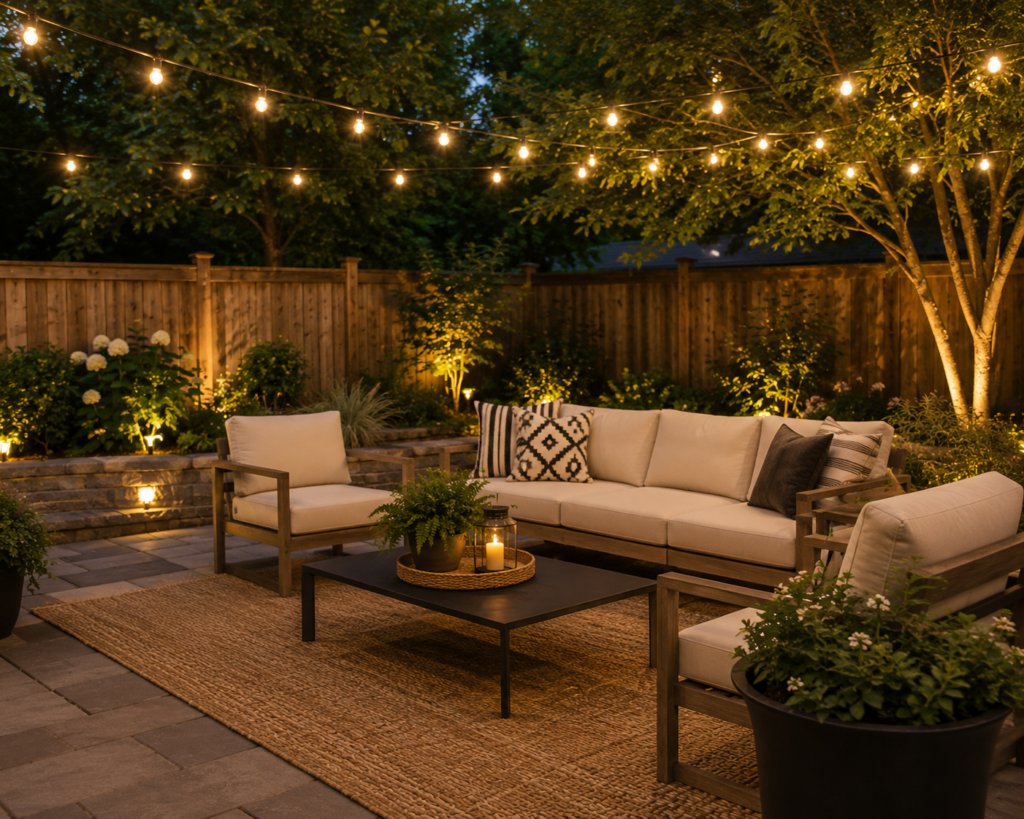
Cozy backyard patio with string lights and outdoor seating
Why Your Backyard Deserves More Attention Than It Gets
It’s easy to pour money and energy into the inside of a house while the backyard sits neglected. But outdoor spaces do something interior rooms can’t: they connect you to fresh air, natural light, and a sense of openness that’s genuinely good for mental health.
The Psychology of Outdoor Spaces
There’s a reason spending time in a well-designed garden feels calming. Natural elements — greenery, water, natural textures like wood and stone — lower stress responses and help people feel more grounded. A backyard that’s cluttered, dark, or poorly organized has the opposite effect; it becomes a space you avoid rather than enjoy.
This is where decoration tips decoradyard guidance becomes genuinely useful. It’s not about chasing trends for the sake of it — it’s about making a space that supports how you actually want to feel when you step outside.
Getting Started With Decoration Tips Decoradyard
Before buying a single planter or string light, it helps to slow down and actually look at your space with fresh eyes. Most backyard makeovers fail not because of bad taste, but because people skip this step entirely.
Assessing Your Space Before You Buy Anything
Walk your yard at three different times of day — morning, midday, and evening. Notice where the sun lingers, where shade pools, and where wind tends to funnel through. These details matter more than color schemes when it comes to long-term satisfaction with your setup.
Ask yourself a few honest questions:
- Do you want a space for entertaining, quiet relaxation, or both?
- How much maintenance are you realistically willing to do each week?
- Are there existing features (a mature tree, a slope, a fence line) you should work with instead of against?
- What’s your true budget, including a buffer for surprises?
Setting a Realistic Budget
One of the most common mistakes is treating a backyard project like a single purchase instead of a series of smaller decisions. Industry cost studies show that a basic patio-and-pathway refresh can run anywhere from a few thousand dollars into the tens of thousands, depending on materials and labor, while a full outdoor transformation with a kitchen, lighting, and hardscaping can climb much higher. The good news is that plenty of the most impactful decoration tips and tricks decoradyard offers don’t require anywhere near that kind of spend — often it’s the layering of small, inexpensive details that makes the biggest visual difference.
Decoration Tips And Tricks Decoradyard For Every Season
A backyard that only looks good in July isn’t really finished. The most satisfying outdoor spaces are designed to shift with the seasons rather than get boxed away in a shed every October.
Spring Refresh Ideas
Spring is the reset button. Start by clearing winter debris, checking your soil, and repainting or restaining any wood furniture that’s faded. Adding early-blooming bulbs like tulips or daffodils gives you color weeks before most perennials wake up. This is also the ideal time to test irrigation systems and repair anything that leaked or cracked over winter.
Summer Entertaining Setups
Summer is when your outdoor space earns its keep. Shade becomes non-negotiable — whether that’s a pergola, a large umbrella, or a simple sail shade stretched between posts. Layer in a mix of seating heights (lounge chairs, a dining set, floor cushions) so the space can flex between a quiet afternoon and a full backyard party.
Fall and Winter Coziness
Cooler months don’t mean your backyard has to go dormant. A fire pit, warm outdoor rugs, and weatherproof blankets can extend usability well into autumn. Evergreen shrubs and ornamental grasses keep the space from looking bare once the flowers fade, which is a detail a lot of casual decoration ideas decoradyard lists tend to skip.
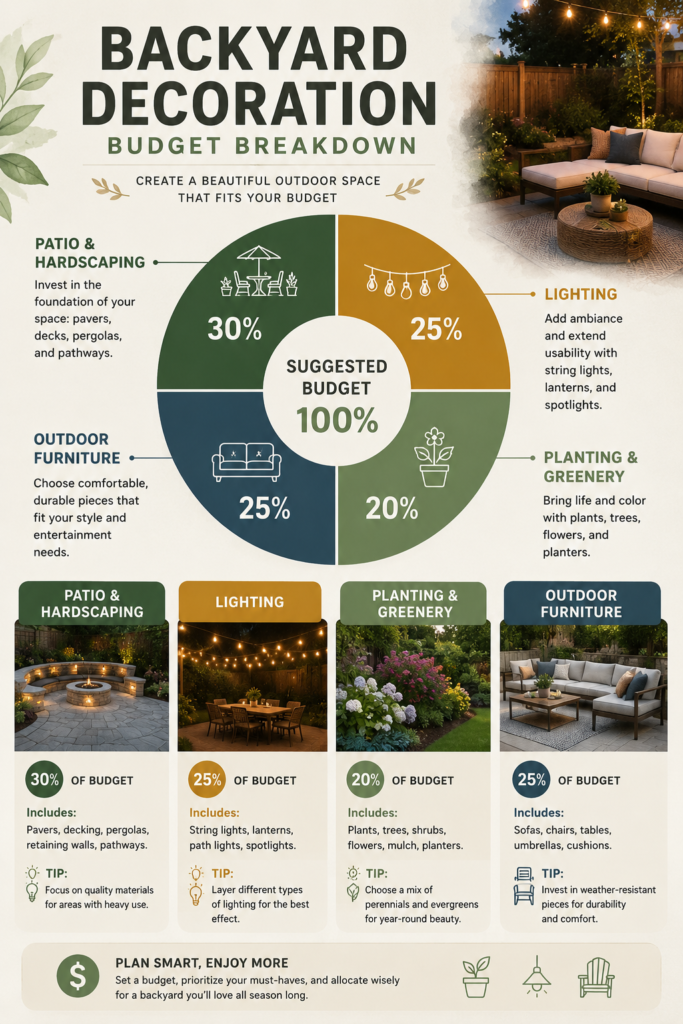
Infographic: Backyard Decoration Budget Breakdown (patio, lighting, planting, furniture)
Backyard Renovation Decoradyard: Bigger Projects Worth Considering
Sometimes small touches aren’t enough, and it’s time to think about structural changes. This is where a genuine backyard renovation decoradyard approach comes into play — projects that take more planning but pay off in daily use for years.
Decking and Patios
Patios remain one of the most requested backyard upgrades in the country, and for good reason: they create a defined, usable “outdoor room” that anchors everything else you add later. Pressure-treated wood decking tends to be the cheaper upfront option but needs annual staining, while composite materials cost more initially but require far less upkeep over time. Paver patios, in particular, are consistently cited as one of the highest-value hardscape investments a homeowner can make, both for daily enjoyment and eventual resale.
Lighting That Changes Everything
If there’s one upgrade that consistently surprises people with how much impact it has, it’s lighting. A backyard that looks flat and forgettable at noon can feel like an entirely different place once string lights, path lighting, and a few well-placed spotlights are added after dark.
Solar vs Wired Lighting
Solar fixtures are the easiest entry point — no wiring, no electrician, just stick them in the ground and let the sun do the work. They’re ideal for pathway markers and accent lighting. Wired, low-voltage systems cost more to install but offer brighter, more reliable light and are worth it for spaces used for entertaining after sunset.
Decoration Ideas Decoradyard for Small Spaces
Not everyone has a sprawling yard to work with, and honestly, some of the most charming outdoor spaces are the tiniest ones. Small-space decoration ideas decoradyard solutions rely on a simple principle: use every surface, not just the floor.
Vertical Gardens and Wall Planters
When square footage is tight, look up. Wall-mounted planters, trellises, and hanging baskets let you grow herbs, flowers, and even small vegetables without eating into seating space. A vertical herb wall near a grill or outdoor kitchen area is both decorative and genuinely useful.
Multi-Functional Furniture
Benches with hidden storage, folding tables, and stackable chairs let a small patio serve multiple purposes throughout the week. The goal is flexibility — a space that can host four people comfortably on Tuesday and twelve on Saturday without feeling cramped either time.
Garden Tips: From Decoratoradvice Decoration Ideas Decoradyard
Plants are where most backyard projects either come together beautifully or quietly fall apart. Good from decoratoradvice decoration ideas decoradyard guidance always starts with the soil, not the flowers.
Soil Health Basics
Healthy soil is the foundation of every thriving garden bed, yet it’s the step most beginners skip entirely. A simple soil test — available cheaply from most garden centers — tells you the pH and nutrient levels of your beds before you plant anything. Amending compacted or nutrient-poor soil with compost before planting saves you from replacing dying plants twice a year.
Choosing Plants That Actually Survive
It’s tempting to buy whatever looks prettiest at the nursery, but matching plants to your actual sun exposure, soil type, and climate zone is what separates a garden that thrives from one that limps along. Grouping plants with similar water needs together also makes irrigation far simpler and reduces waste.
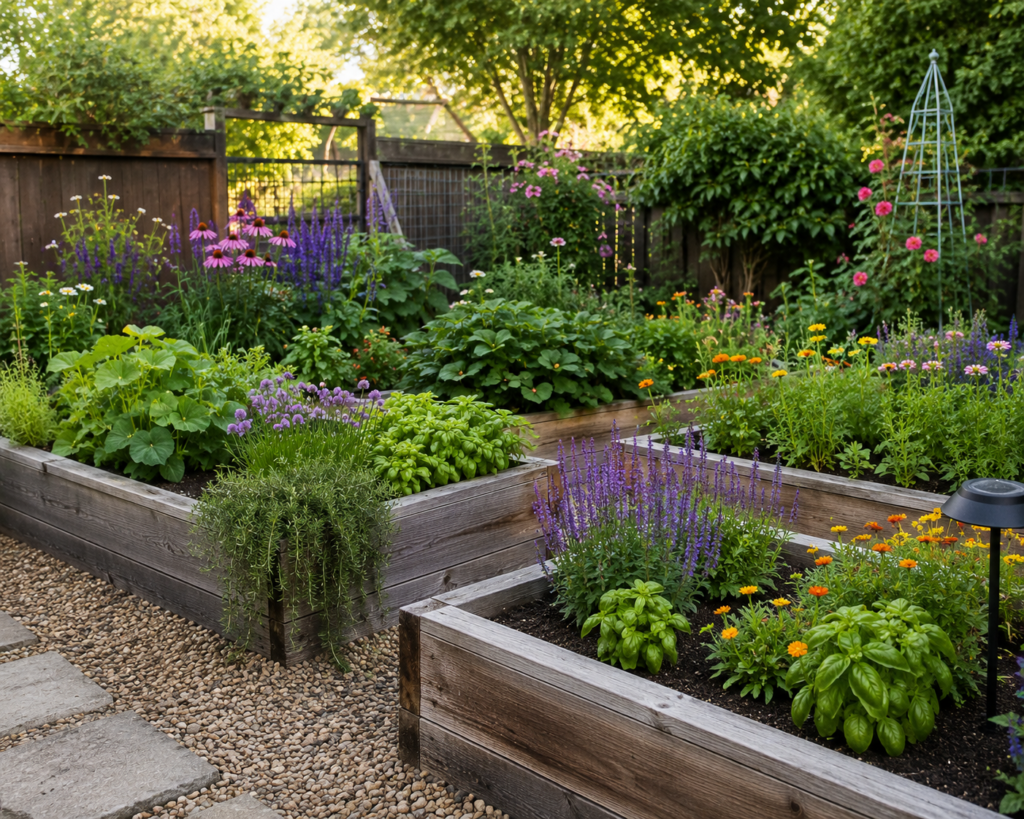
Raised garden beds with a variety of flowering plants and herbs
Decoradyard Garden Tips By Decoratoradvice: Sustainable Choices
Sustainability isn’t just a buzzword in outdoor design anymore — it’s becoming a practical necessity, especially in regions dealing with water restrictions and unpredictable weather. These decoradyard garden tips by decoratoradvice focus on choices that are better for the environment and, often, easier on your wallet long-term.
Native Plants and Pollinators
Roughly 80% of the world’s flowering crop plants depend on pollinators to reproduce, which makes pollinator-friendly gardening far more than a nice-to-have. Native plants tend to require less water and fewer chemical inputs once established, largely because they’ve adapted to local rainfall and soil conditions over thousands of years. They also tend to develop deeper root systems than many non-native ornamentals, which helps with erosion control and stormwater absorption during heavy rain. Mixing in a majority of native species alongside a few well-chosen non-natives tends to give the best results for supporting local bees, butterflies, and birds.
Water-Wise Gardening
Grouping plants by water needs (a practice sometimes called hydrozoning) prevents overwatering drought-tolerant plants while underwatering thirstier ones. Mulching garden beds reduces evaporation significantly and suppresses weeds at the same time, cutting down on both your water bill and your weekend chores.
Budget-Friendly Decoration Tips Decoradyard Anyone Can Use
Not every upgrade needs a contractor or a weekend of demolition. Some of the most effective decoration tips decoradyard readers rely on are the cheapest ones — the kind you can knock out in an afternoon with a trip to the hardware store and a little elbow grease.
Repurpose Before You Replace
An old wooden ladder becomes a plant stand. A chipped ceramic pot gets a coat of exterior paint and a second life. Reclaimed pallets turn into a compost bin or a simple bench with a couple of cushions on top. This kind of resourcefulness doesn’t just save money — it gives a backyard a personality that store-bought sets rarely achieve.
Layer Textures, Not Just Colors
A common trap in outdoor decorating is thinking only in terms of paint colors and fabric patterns. Texture matters just as much. Mixing rough stone, smooth ceramic, woven rattan, and soft greenery creates visual depth even in a fairly neutral color palette. It’s a trick borrowed from interior designers that translates surprisingly well outdoors.
Frame the Space With Greenery
Even a modest budget stretches further when plants do the heavy lifting. A row of potted grasses along a fence line, a climbing vine trained up a trellis, or a single well-placed shade tree can make a yard feel finished in a way that furniture alone never quite manages. This is one of those quiet decoration tips decoradyard experts return to again and again, because greenery ages better and costs less than most hardscaping.
Outdoor Kitchens and Dining Areas Worth Considering
For households that entertain often, an outdoor kitchen or dedicated dining nook can change how the whole backyard gets used. It doesn’t have to mean a full built-in grill station with plumbing — a simple cart-based setup with a grill, a small prep counter, and a couple of storage bins can deliver most of the convenience at a fraction of the cost.
Keep the Layout Functional First
Before choosing finishes, map out the “work triangle” the same way you would in an indoor kitchen: grill, prep space, and serving area should sit close enough together that nobody’s making three trips across the yard for a spatula. A shaded pergola over this zone keeps both the cook and the food more comfortable during peak summer heat.
Dining That Doubles as Décor
A well-chosen outdoor table does double duty as both furniture and focal point. Weather-resistant materials like teak, powder-coated aluminum, or HDPE resin hold up to sun and rain far better than untreated wood, and they tend to look better for longer with minimal upkeep — which matters when the whole point of good decoration tips decoradyard planning is to reduce, not add to, your weekend chore list.
Common Mistakes People Make in Backyard Design
Even with the best intentions, certain missteps show up again and again in backyard projects. Recognizing them early can save you from an expensive redo.
Overcrowding the Space
It’s tempting to add every planter, statue, and furniture piece you love, but a cluttered yard reads as chaotic rather than cozy. Leave breathing room between elements so the eye has somewhere to rest.
Ignoring Maintenance Realities
A gorgeous rose garden looks incredible in photos and considerably less incredible after three weeks of neglect. Before committing to high-maintenance features, be honest about the time you’ll realistically dedicate to upkeep each week. Choosing lower-maintenance plants and materials up front is one of the simplest decoration tips decoradyard strategies for keeping a space looking good year-round instead of only for the first month.
Skipping the Plan Entirely
Buying furniture and plants piecemeal, without a rough layout in mind, often leads to a yard that feels disjointed. Even a simple sketch on paper — marking seating areas, planting beds, and walkways — prevents a lot of wasted money and second-guessing later.
FAQ Section
What is the most affordable way to start decorating a backyard?
Start with things you can move or reposition without major cost — outdoor rugs, cushions, potted plants, and solar lights. These low-commitment changes let you test what you like before investing in permanent hardscaping.
How much does a full backyard renovation typically cost?
Costs vary widely by region and scope, but basic patio and pathway projects often start in the low five figures, while full-scale transformations with kitchens, lighting, and premium hardscaping can run well into six figures. Setting a tiered budget and prioritizing the elements you’ll use daily is the smartest approach.
What plants are best for beginners?
Low-maintenance perennials suited to your specific climate zone are usually the safest bet. Native wildflowers, ornamental grasses, and drought-tolerant shrubs tend to forgive minor neglect far better than delicate annuals.
How can I make a small backyard feel bigger?
Use vertical space with trellises and wall planters, choose furniture that’s proportional to the area, and stick to a limited color palette. Mirrors or reflective surfaces on fences can also create an illusion of extra depth.
Do I need a professional for backyard lighting?
Solar and plug-in options are simple enough for most homeowners to install themselves. Wired, low-voltage systems are usually best left to an electrician or landscape lighting specialist, especially if they connect to your home’s electrical panel.
How often should garden soil be tested?
Testing every two to three years is generally sufficient for established beds, though it’s worth testing sooner if plants seem to be struggling despite proper watering and sunlight.
What’s the difference between a deck and a patio?
A deck is typically an elevated wooden or composite structure attached to the house, while a patio is a ground-level surface made of concrete, pavers, or stone. Sloped yards often favor decks, while flat yards work well with either.
Are native plants really better for pollinators than exotic ones?
Research generally supports native plants as strong performers for supporting local pollinator populations, though a diverse mix that includes some non-native flowering plants can extend blooming seasons and still provide meaningful benefits.
How do I keep an outdoor space usable in colder months?
Add a fire pit or heater, invest in weatherproof cushions and blankets, and keep some structural greenery like evergreens in the mix so the space doesn’t look empty once flowers die back.
How long does it take for a new garden bed to establish?
Perennials and native plants often take two to three growing seasons to reach their full size and impact, so patience matters more than most people expect going in.
Wrapping It Up
A backyard that feels intentional doesn’t happen by accident, but it also doesn’t require a massive budget or a professional design degree. It comes from paying attention — to sunlight, to how you actually use the space, to which plants will still be alive next summer. Start small if you need to. Move a chair, add a planter, test a string of lights on a Friday evening and see how the space feels. The rest tends to follow once you know what you’re building toward.