

Few openings change a room as much as tall glass that swings wide. A French window lets in light, opens up a view, and, when both sashes are thrown open, lets fresh air flow through the whole room.
It also sits in a confusing corner of the vocabulary, because sellers and writers use the words “French window” and “French door” in different ways.
This guide explains what a French window is, how the sources define it, what frames and glazing to consider, and where security and sizing need care. I name each source and flag the sellers. Some pages quote prices in pounds or dollars for French doors, and I mark those clearly because they are not prices for French windows.
What is a French window?
Magic Window, a Canadian window and door seller, defines a French window as essentially a double casement window with no central mullion. In its words, it is “a tall double casement window with two hinged sashes that open from the centre without a fixed mullion.”
The page, posted in May 2026, adds that it uses window hardware and slimmer frames than a French door. It also describes a “flying” mullion on one sash that moves aside when both sashes open. That detail matters, because it explains the clear opening you get when both sides swing wide.
A short history
The same page traces the design to the Renaissance, when French architects adopted Italian ideas about symmetry, proportion,n and light. Early versions were floor-to-ceiling openings that worked as both windows and passageways to balconies or gardens.
It says the originals had wood frames, wrought iron hardware,re and single glazing. Today, French window designs keep the proportions and swap in modern glass and locks. I did not find a second source for the history, so treat the Renaissance story as one seller’s account.
A short glossary
These terms appear in the sources, and knowing them makes quotes easier to read. The meanings are plain-language summaries.
Casement: a window hinged at the side, which swings open like a door.
Sash: the moving frame that holds the glass.
Mullion: the vertical bar between two sashes. A French window has no fixed mullion.
Espagnolette: a locking rod that fastens a sash at several points.
Threshold: the floor-level strip at the base of a door opening.
Low-e: a low-emissivity coating on glass that reduces heat loss.
U-value: a measure of heat loss, where lower is better.
Juliette balcony: a shallow railing across an opening, with no standing platform.
Knowing these words helps you compare a French window quote with a door quote, since the hardware lists differ.
French window vs French door
This is the question most readers ask about a French window. Magic Window draws these lines.
| Feature | French window | French door |
|---|---|---|
| Threshold | None | Floor-level threshold for step-through access |
| Hardware | Espagnolette window locks | Multi-point door locks and full handles |
| Typical use | Upper floors and secondary openings | Primary ground-floor access |
| Size (seller’s table) | Often under 1500 mm wide | Often 1500 mm or wider |
Those lines are one seller’s view. Other pages treat the terms differently. Which?, a UK consumer publication, lists French doors as units that open outwards like casement windows, where either leaf can open alone.
Dunster House, a UK seller, sells “uPVC French windows” with multi-point espagnolette locking. In practice, the words overlap, so always check what a product actually is before you order.
Why the terms get muddled
Reading the sources side by side, the same words describe different products. Magic Window, in Canada, keeps French windows and French doors apart by threshold and hardware. Which?, in the UK, lists French doors among the door types and describes them as opening outwards like casement windows.
Dunster House, also UK, sells “French windows” in uPVC with espagnolette locks. Angi, in the US, writes only about French doors.
My reading, which is an observation rather than a sourced rule, is that usage varies by country and by seller. So when you shop, ask for the drawing, the threshold detail, and the hardware list instead of relying on the name alone.
Where people use them
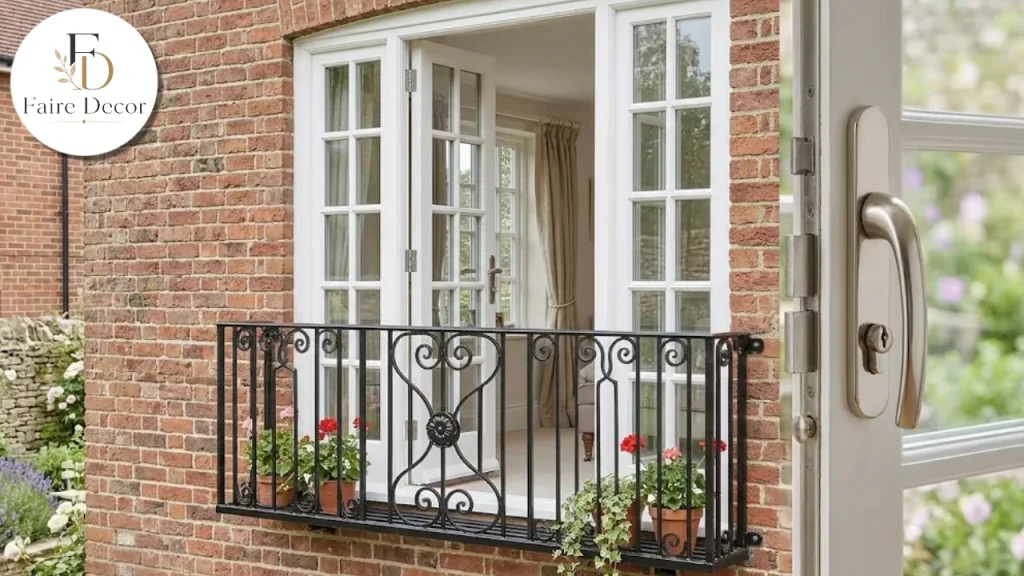
Magic Window says French windows are often used on upper floors with Juliette balconies. At ground level,l they can open living rooms or kitchens onto patios and gardens. That range is useful: the same style can be a balcony feature upstairs and a garden opening below.
If you are planning a balcony opening, our guide to balcony railing covers the safety and style choices that go with it. For a ground-floor opening to a porch, see our front porch article.
Benefits
Magic Window lists several advantages, and because it is a seller, I treat them as claims that match common sense rather than test results.
Natural light and cross-ventilation when both sashes open.
A wide opening and easier access to both sides of the glass for cleaning.
A fit for traditional and minimalist facades.
A possible secondary escape route where building codes allow.
On the last point, check your local code. I did not find a code source, so I cannot say when it applies.
Drawbacks
The same page lists the downsides, which are worth reading carefully.
The meeting point of the sashes can be a weak spot if locks are basic, so security needs more planning.
Inward-opening sashes limit furniture placement, and outward-opening sashes can interfere with balconies or walkways.
Larger openings are more complex to install and may need structural support.
They cost more than many conventional window types.
If you are weighing a larger structural change, our renovation tips article is a good place to think about order of work, and our HavenlyDIY home additions guide covers bigger changes.
Frame materials compared
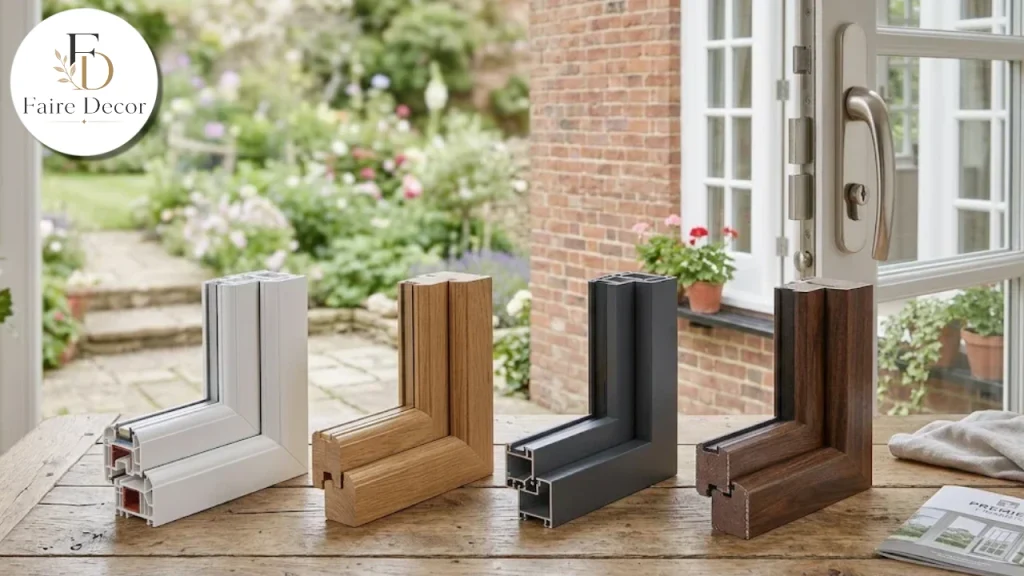
Frames affect looks, upkeep, and heat loss. Three sources describe the main options.
| Material | Which? | Magic Window | FMB Home Picks |
|---|---|---|---|
| uPVC (vinyl) | Most common; durable, energy-efficient, easy to clean; up to three times cheaper than wood | Low maintenance but bulky profiles | Low-maintenance and cost-effective |
| Timber | Costs more; needs maintenance; suits period homes | Popular but needs maintenance | Traditional and natural-looking |
| Aluminium | Strong, slim, light, low-maintenance | Strong and slim but less energy-efficient | Strong with slim frames |
| Composite | Not covered | Multi-material frames recommended | Woodgrain-style, low-maintenance |
The pages broadly agree. uPVC is practical and affordable, timber is traditional and needs care, and aluminium gives slim lines. Magic Window’s remark that aluminium is less energy-efficient is a seller’s view, and Which? does not make that point.
FMB Home Picks, the Federation of Master Builders’ consumer site, estimates that most doors and windows last 20 to 25 years. It says aluminium can last 30 to 40 years if maintained, and wood can exceed 50 years in some cases with regular upkeep. The page discloses that it earns affiliate commissions.
Glazing
Magic Window recommends at least double glazing and mentions low-e coatings and decorative glazing bars. It recommends triple glazing for northern Canada.
Which? asked nine Trusted Traders installers whether triple glazing is worth the extra cost, and “The unanimous answer was: no.” They said it may suit very noisy, cold or windy locations but is usually unnecessary. FMB Home Picks agrees that the extra benefit of triple glazing is “very minimal.”
Dunster House describes a sealed unit 28 mm thick, with two 4 mm panes and a 20 mm air gap, a warm edge spacer and low-emissivity glass. It gives a U-value of 1.4 W/m2 for its A-rated windows. These are one seller’s specifications, so compare them with the product you are quoted.
Security
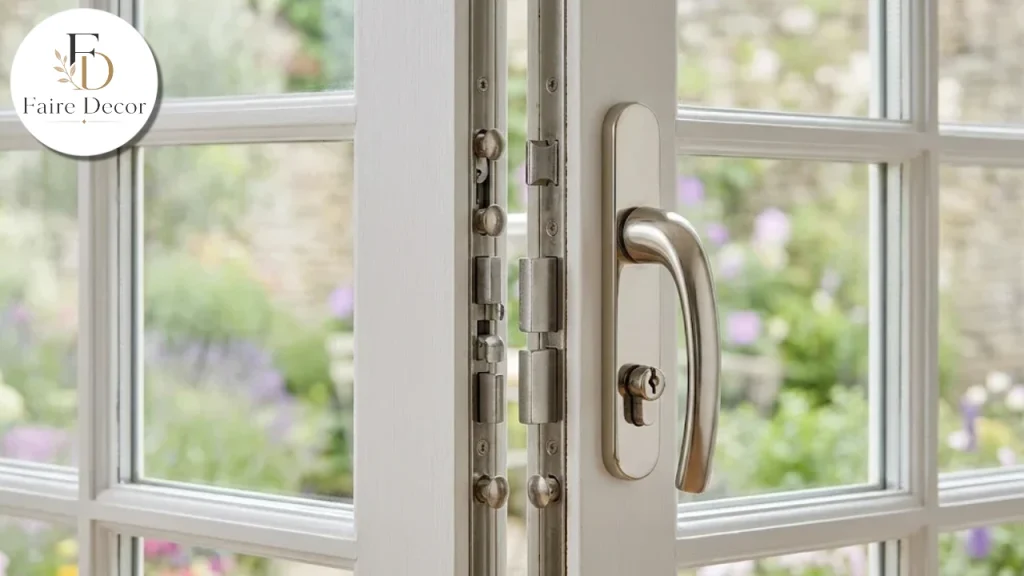
Security is the main worry with a pair of sashes that meet in the middle. Magic Window says the meeting point can be a weak spot if locks are basic. It suggests multi-point locks and laminated or toughened glass for modern designs.
Dunster House describes a multi-point locking system with espagnolette locks and metal keeps, plus anti-jemmy riser blocks that stop the sash being pushed sideways to release the locks. It also uses internal beading, so the glass unit is harder to remove from outside.
Angi, which publishes a French door article, makes a related point. It says out-swinging doors have exposed hinges and are less secure. It adds that French doors are more secure than sliding and all-glass doors, but only with true divided lites, which are now uncommon. That page is about doors, not windows, so apply it with care.
Opening direction
Which direction a French window opens changes how you use the room. Magic Window notes that inward-opening sashes can limit furniture placement. Outward-opening sashes can interfere with balconies or walkways.
Which? says casement windows usually open inwards, which makes cleaning easier but limits what can sit on the sill. It says French doors open outwards, and suggests using stays so they do not slam in the wind.
Before you choose, stand where the sashes will swing and picture a sofa, a plant or a curtain track in the way. Our guide to custom curtains covers window treatments that work around opening sashes.
Sizes
Sizes are where the sources differ most because they describe different products. Magic Window’s table gives “often under 1500 mm wide” for French windows and “often 1500 mm or wider” for French doors.
Angi, writing about French doors, says pairs usually total 60 to 80 inches wide, with each door about 30 to 40 inches, and 80 inches tall. It also says a typical 36-inch door needs a 72-inch wall opening.
Dunster House lists no overall window dimensions on the page and points buyers to a measurement sheet and an online quote tool. I would measure the actual opening and ask the supplier for exact sizes.
| Source | What it describes | Size given |
|---|---|---|
| Magic Window | French windows | Often under 1500 mm wide |
| Magic Window | French doors | Often 1500 mm or wider |
| Angi | French door pairs | 60 to 80 in wide, 80 in tall |
| Dunster House | uPVC French windows | None on the page |
What the sources say about cost
I did not find a sourced price for a French window itself. The figures below are for French doors, so use them only as a rough context for a related product.
FMB Home Picks lists French doors at £725 to £2,580 and patio doors at £825 to £3,305, as estimated ranges. Angi says French doors cost “$500 for low-end options and $4,000” for pre-designed, custom, or larger units, with professional labor of $400 to $1,400.
Those are US and UK figures in different currencies, and the FMB page’s price date postdates its January 2026 publication date, which is odd, so confirm with local quotes.
Magic Window says French windows cost more than many conventional window types, but gives no figure. Dunster House shows no price and sends buyers to an instant quote.
Light, air and privacy
Tall glass brings light, and it also brings views in both directions. Magic Window says French windows bring in natural light and improve cross-ventilation when both sashes open. It also mentions decorative glazing bars and laminated or toughened glass as options.
Angi notes that clear glass is standard on French doors, with opaque or decorative options available. Those options may also apply to windows, but I did not find a window source that says so, so ask your supplier.
For privacy, there are a few common routes, and these are my own suggestions.
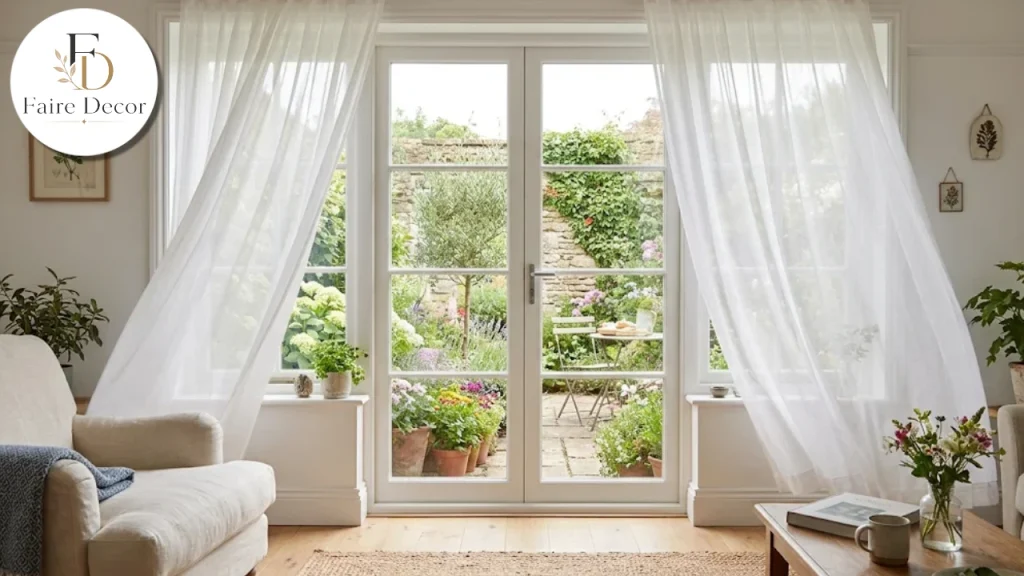
Sheer curtains soften the view while keeping light.
Blinds or shades give control through the day.
Frosted or patterned glass on the lower panes keeps the upper view clear.
Planting or a privacy screen outside, such as the ideas in our havenlydiy privacy screen guide.
Think about the room’s orientation too. A west-facing opening may need more shading in the afternoon, though I have no sourced figure for how much.
Installation and quotes
Larger openings are more complex to install and may need structural support, according to Magic Window. FMB Home Picks says costs depend largely on installation days, so fitting doors and windows together may save money. It recommends getting several quotes.
Which? lists installer routes: national firms, independent local firms, builders or joiners already on your project and DIY stores. It points to Which? Trusted Traders as a search tool for vetted independent installers.
If a project involves an attic or upper floor, our guide to a 200 window attic renovation is a useful read, and it shows how window choices shape an upper room.
Building rules and permission
I did not find a source that covers building approval for replacing or adding a French window, and rules vary by country and by local authority.
FMB Home Picks mentions fire ratings for external doors in shared communal spaces, such as a flat block’s hallway, and says external doors that are not in shared spaces do not need a fire rating. That is about doors, not windows.
The safe step is to ask your installer and your local building authority before you order. Ask about structural openings, escape requirements,s and any heritage rules.
Style: matching the house
A French window suits some home styles better than others. Our guide to Spanish style homes shows an architecture where tall glazed openings feel natural, and our ranch style home post covers a single-story layout where glass doors and windows open the house to the yard.
For frame color, our post on black windows shows a bold look, and our guide to awning windows covers another window type to pair with tall units. For a neutral exterior, see our Havenly DIY gray house post.
Styling around the opening
Once the window is in, the surrounding room matters. Our home decor ideas that actually work have quick ways to style a bright room, and our guide to how to decorate walls helps with the wall space beside tall glass.
Keep furniture clear of the swing, use sheer layers for privacy,y and choose curtain rods that sit above and beyond the frame. These are my own styling suggestions rather than sourced rules.
How to measure the opening
Suppliers will usually survey the opening, but a careful first measure helps you compare quotes. These steps are my own suggestions, not rules from the sources.
Measure the width at the top, middle,le and bottom, and note the smallest figure.
Measure the height at the left, middle, and right, and note the smallest figure.
Check for square by measuring both diagonals. A large difference means the opening is out of true.
Note the depth of the wall, so the frame and any trim fit.
Mark the swing on the floor with tape and test it against furniture.
Write the numbers down and share them with each supplier so the quotes match. A French window that arrives a few millimeters off is a costly mistake, so confirm sizes in writing.
Upkeep by material
Maintenance should shape your choice as much as looks. The sources give a clear picture.
uPVC: Which? says it is easy to clean, and FMB Home Picks calls it low-maintenance.
Timber: Which? and Magic Window both say it needs maintenance. Which? adds that it can last a long time if looked after.
Aluminium: Which? calls it low-maintenance, and FMB says aluminium can last 30 to 40 years if maintained.
Magic Window points out that French windows give easier access to both sides of the glass for cleaning when the sashes open fully. That is a small but real daily benefit, and it is worth testing in a showroom.
Questions to ask a supplier
Bring these to your first conversation and write down the answers.
- Is this a French window or a French door, and what is the threshold?
- Do the sashes open inward or outward?
- What locking system does it use, and where are the lock points?
- What glass is fitted, and is it toughened or laminated?
- What is the U-value or energy rating?
- What frame material is used, and what does maintenance involve?
- What is the lead time, and who handles installation?
A french window checklist
Use this list as a final pass on your French window plan before you order.
- Opening measured on site, width and height
- Inward or outward opening chosen and clearance checked
- Frame material chosen for look and upkeep
- Glazing level confirmed, at least double
- Multi-point locking and glass type confirmed
- Building rules checked with the local authority
- Several quotes collected, including installation
- Curtain and furniture plan made around the swing
Mistakes to avoid
A few errors come up often, and each is easy to prevent with a plan.
Mixing up windows and doors. Check the threshold and the hardware before you order.
Ignoring the swing. Furniture and balcony rails can block opening sashes.
Skipping lock detail. The meeting point is the weak spot, per Magic Window.
Trusting one price. The cost figures here are for doors and use different currencies.
Paying for triple glazing by default. Installers told Which? it is usually unnecessary.
Most of these come down to one habit: ask exactly what you are buying and how it opens.
Final thoughts on French windows
A French window gives you tall glass, wide openings, and a classic look, and it works best when you know what you are buying. The sources agree on the basic idea of two hinged sashes meeting in the middle, and they differ on sizes, thresholds,s and terms, which mostly reflects what each seller offers.
Measure your opening, choose a frame and glazing that suit your climate, and check the locks and the swing before you commit. This article is general information, not professional building or security advice.
Confirm product details, building rules and safety requirements with a qualified installer, supplier or local building authority before you buy or build.
FAQs:
What is a French window?
Magic Window, a seller, defines it as a tall double casement window with two hinged sashes that open from the centre without a fixed mullion.
What is the difference between a French window and a French door?
Magic Window says French doors have a floor-level threshold and multi-point door locks, while French windows have no threshold and use espagnolette window locks. Other sellers use the terms differently, so check the product drawing.
Is triple glazing worth it?
Which? asked nine Trusted Traders installers, and the unanimous answer was no. FMB Home Picks says the extra benefit is very minimal.
Are French windows secure?
Magic Window says the meeting point of the sashes can be a weak spot if locks are basic. It suggests multi-point locks and laminated or toughened glass.
How wide is a French window?
Magic Window’s table says often under 1500 mm wide. Dunster House lists no overall dimensions, so measure your opening and ask the supplier.
How much does a French window cost?
I found no sourced price for a French window. FMB Home Picks gives £725 to £2,580 for French doors, so get local quotes.