

Turn even the most oversized, echoing room into a warm, inviting retreat with these expert-backed furniture and décor strategies.
There’s a particular kind of defeat you feel when you stand in a beautiful, generously sized living room and realize it feels… cold. Not temperature cold — just empty. Lifeless. Like a hotel lobby that forgot to add the guests. If that sounds familiar, you’re far from alone. Knowing exactly how to create a cozy living room with furniture is one of the most searched-for interior design challenges online, and with good reason: size doesn’t automatically equal comfort, and square footage doesn’t come with a warmth guarantee.
Whether you’re dealing with a large living room, a massive living room, or a big open living room that swallows furniture whole, this guide is going to walk you through everything — from how to arrange furniture, create conversation zones, add layered textures, and use rugs and lighting to make even the most giant living room feel genuinely inviting. No fluff, no filler — just what actually works.
Interior design research consistently shows that human beings feel most comfortable in spaces that feel proportional to their body, not the architecture around them. A 2019 study published in the Journal of Environmental Psychology found that people rated smaller, well-furnished rooms as significantly more “welcoming” and “comfortable” than larger rooms with sparse furniture — even when objective space was greater. The lesson? Cozy is an arrangement, not an accident.
So let’s get into it. Whether this is your first home or your fifth renovation, here’s the definitive playbook for transforming any large living room into a space you’ll actually never want to leave.
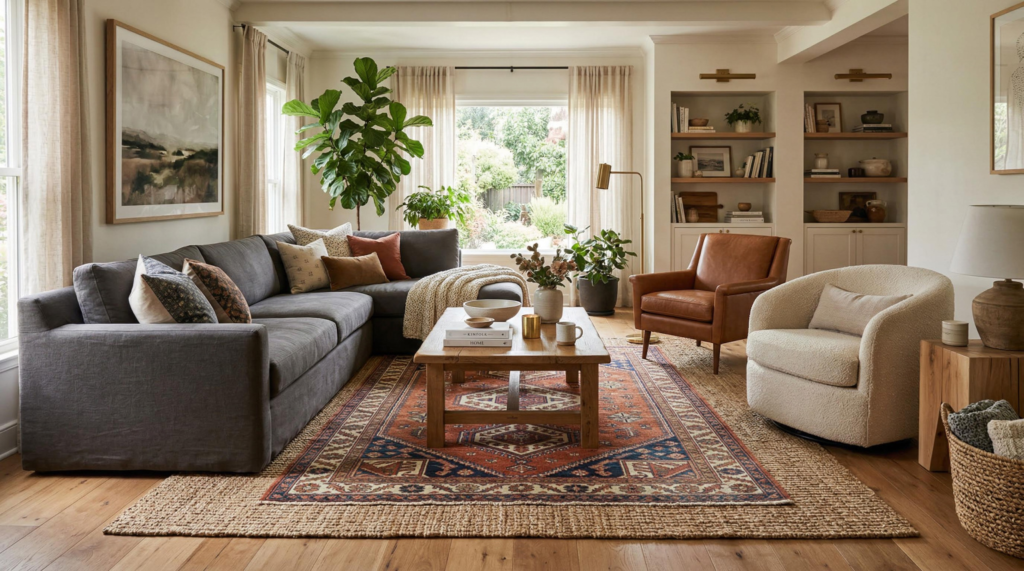
A well-arranged large living room uses furniture clusters and warm lighting to create an intimate, cozy atmosphere despite the generous floor plan.
Why Large Rooms Feel Empty — And How Furniture Fixes That
Before you move a single sofa, it helps to understand why large rooms feel uncomfortable in the first place. Most spacious living rooms feel cold because furniture is pushed against walls — a near-universal instinct that actually backfires completely. When you line sofas along the perimeter of a big living room, you create a visual “race track” effect where the eye sprints around the room’s edges and finds nothing worth stopping at in the center. The result is a space that feels like a waiting room.
The fix is deceptively simple: pull furniture away from the walls. Research from the American Society of Interior Designers (ASID) confirms that floating furniture arrangements — where pieces are grouped toward the center of a room — are consistently rated as more intimate and more functional than wall-hugging arrangements. This single shift is the single most impactful change you can make in any large living room design.
Understanding the Scale Problem in a Large Living Room
Another key issue is scale. In a large room, undersized furniture looks like it’s been placed there by mistake. A loveseat that looks charming in a small apartment becomes a visual hiccup in an oversized living room. The same goes for coffee tables, rugs, and accent chairs. When you’re furnishing a large living room, you have permission — and frankly, a design obligation — to go bigger than you think. Large sectionals, oversized coffee tables, statement armchairs, and full-sized area rugs are your best friends here.
A common mistake interior designers see constantly: people buying a 5×8 rug for a large living room and wondering why the space still feels disconnected. As a rule of thumb, your area rug should be large enough that the front legs of all major seating pieces can rest on it simultaneously. For most large living room layouts, that means a 9×12 rug — minimum.
💡 Designer Rule In a large room, always size up on rugs, sofas, and coffee tables. A single well-scaled piece does more for coziness than five undersized ones scattered around.
How to Arrange Furniture in a Large Living Room the Right Way
Learning how to arrange furniture in a large living room is less about rigid rules and more about understanding how people actually use a room. Start by identifying the room’s focal point — most often a fireplace, a large window with a view, or a television wall. Every good furniture arrangement anchors itself to a focal point, creating visual purpose in the layout.
The Conversation Circle Method
One of the most effective living room furniture layouts for large spaces is the conversation circle. Place your primary sofa facing the focal point, then flank it with two accent chairs at 45-degree angles, and ground everything with a large area rug. This creates a natural, organic gathering zone — the kind of setup that makes people want to sit down and stay. For large family room ideas, this method works especially well because it scales beautifully with sectionals and additional seating.
According to the National Association of Home Builders, the average large living room size in newer American homes runs between 330 and 400 square feet. At that scale, you can comfortably accommodate two distinct seating areas without the room feeling crowded — which brings us to one of the most powerful tools in your arsenal.
How to Divide a Large Living Room Into Zones
Knowing how to divide a large living room effectively is what separates a thoughtfully designed space from one that just has a lot of furniture in it. Zoning means creating distinct, intentional areas within a single room — a primary conversation zone, a reading nook, a game table corner, or even a small home office alcove. When done well, dividing a living room into two seating areas doesn’t make the room feel smaller; it makes it feel more purposeful and more lived-in.
The three most effective zone-dividers don’t require walls or partitions:
- Area rugs — A separate rug for each zone visually separates the spaces while keeping the room airy and open. This is the most popular method for split living room ideas.
- Bookshelves and open shelving units — Placed perpendicular to the wall, a tall open bookcase creates a soft barrier between zones while adding storage and display space.
- Sofa backs as dividers — A sofa placed with its back to the room’s center creates a natural wall between the primary seating area and a secondary zone behind it. This works brilliantly for large family room furniture layout configurations.
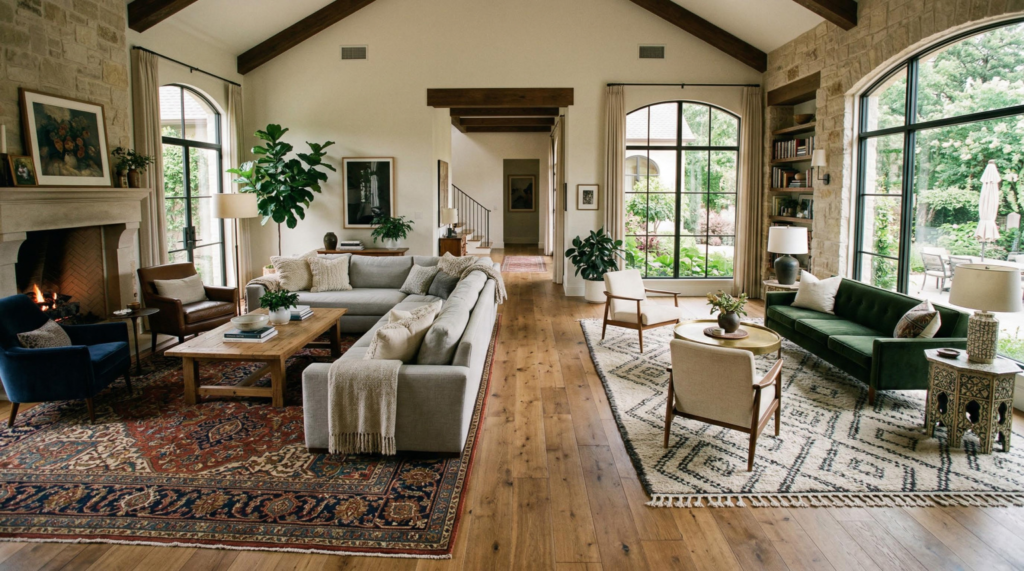
Using two coordinating area rugs to define a living room with two seating areas — a primary conversation zone and a reading nook — in a single open space.
Great Room Furniture Layout Ideas That Actually Work
The great room — that open-plan combination of living, dining, and sometimes kitchen — is the most common format for large living room challenges today. Great room furniture layout ideas need to account for traffic flow, sightlines, and multiple functions all happening in one continuous space. The goal isn’t to separate everything rigidly, but to create a visual flow that guides people through the space naturally.
Tried-and-True Great Room Layout Ideas
For large great room ideas, interior designers consistently recommend the “L-shape anchor” approach: position a large L-shaped sectional or an L-shaped furniture grouping at the living room end of the open plan, then use a console table or low credenza behind the sofa to create a visual transition point before the dining area begins. This works because it defines the living zone without breaking the visual flow of the open floor plan.
Some additional great room layouts that work for large great room furniture layout planning:
- The U-shape arrangement: A central sofa, two facing chairs, and an anchor coffee table. Works best for square or nearly square large living room layouts.
- The parallel sofa layout: Two sofas facing each other across a coffee table. Elegant and symmetrical, ideal for formal sitting area arrangements in wider rooms.
- The angled conversation pit: Diagonal furniture placement adds dynamism and makes a rectangular long family room feel less like a corridor.
Pro Tip for Wide Living Rooms: In a wide living room layout, resist the urge to spread furniture across the full width. Create a defined, narrower grouping in the center and use side tables, floor lamps, and plants to fill the peripheral space without adding bulky seating. This is the secret to making a wide living room feel warm rather than sprawling.
📐 Large Living Room Layout Cheat Sheet
🛋️Float the Furniture
Pull sofas 18–24″ away from walls to create intimate groupings and improve traffic flow.
🏠Anchor With a Rug
Use a 9×12 rug minimum. Front legs of all seating should rest on the rug for visual cohesion.
💡Layer Your Lighting
Combine overhead, floor lamps, table lamps, and candles to eliminate harsh shadows in a large space.
🗺️Create Two Zones
A primary conversation area and a secondary reading or activity zone makes large rooms feel purposeful.
🪴Add Organic Shapes
Large plants, curved furniture, and round coffee tables soften the hard geometry of a big space.
🎨Warm Your Palette
Warm whites, creams, terracottas, and wood tones make a large room feel cozy and human-scaled.
How to Make a Large Living Room Cozy: Texture, Color, and Warmth
Understanding how to make a large living room cozy goes well beyond furniture placement. Once your layout is sorted, it’s the sensory details — textures, colors, scents, and lighting — that do the heavy lifting of making people feel comfortable the moment they walk in. This is what separates a well-arranged room from a genuinely cozy one.
The Layered Textile Approach
Nothing transforms a big living room faster than layered textiles. Think of it as building warmth from the floor up: start with a large, plush area rug, add throw blankets draped casually over sofas and chairs, then layer in decorative cushions in varying textures — velvet, linen, knit. This approach is backed by research on “tactile comfort” — the brain genuinely registers soft, touchable surfaces as signals of warmth and safety, which is why big cozy living room designs almost always feature an abundance of soft textures.
Window treatments are equally crucial, and often overlooked in large room decor ideas. Floor-to-ceiling curtains in warm, heavy fabrics like velvet or linen not only look luxurious — they physically absorb sound, which dramatically reduces the echoey quality that makes large rooms feel cold and institutional. For large living room with fireplace setups, framing the fireplace with symmetrical floor-length drapes creates one of the most classic and comforting visual arrangements in interior design.
Color Psychology in Large Spaces
When thinking about large living room interior design, color choice is strategic, not just aesthetic. Warm tones — terracotta, amber, warm beige, deep forest green, and earthy burgundy — visually advance walls, making a large room feel less cavernous. Cool tones like pale blue and stark white, while beautiful, tend to amplify the feeling of space rather than cozy it down. If you love cool tones, ground them with warm wood furniture, amber lighting, and natural fiber rugs.
A study from the University of Texas at Austin found that warm-colored rooms were consistently associated with feelings of comfort and social ease, while cool-colored rooms were associated with calm and productivity — useful data when designing a space meant for relaxing and gathering. For large living room decor ideas, a warm neutral base (think warm white or greige walls) combined with a rich accent color on a feature wall or in soft furnishings hits the sweet spot perfectly.
Lighting: The Most Underrated Cozy Tool
In any spacious living room, harsh overhead lighting is the enemy of coziness. A single ceiling fixture flooding an entire large room with flat, bright light is the fastest way to make the space feel like a hospital waiting room. Instead, how to make a big room cozy starts with layering light sources at different heights: table lamps on end tables, floor lamps in corners, wall sconces flanking fireplaces or art, and candles or LED flame bulbs for warm, intimate accents.
Interior lighting designers recommend a minimum of five light sources for any large family room design. The key metric isn’t brightness — it’s the warmth of the bulb temperature. For living spaces, 2700K–3000K bulbs (labeled “warm white”) are what create that golden-hour glow that makes people look good, feel relaxed, and want to stay.
How to Decorate a Large Living Room: Walls, Art, and Vertical Space
Knowing how to decorate a large living room means understanding that walls aren’t just structural — they’re design canvases. In a big living room, bare walls read as emptiness, and the eye has nowhere to land. The solution isn’t to clutter every surface, but to make deliberate, bold choices that give the eye purposeful places to rest.
Artwork Sizing and Gallery Walls
Just as with furniture, artwork in a large living room needs to be appropriately scaled. A single small print above a large sofa looks lost and even comical. For significant wall expanses, consider either one large-format piece — at least 60 inches wide for a standard sofa wall — or a well-planned gallery wall grouping that collectively fills the visual field. When decorating a large living room with gallery walls, hang the lowest piece at eye level (approximately 57–60 inches from the floor to center) and build upward and outward from there.
Mirrors deserve special mention in any guide on how to decorate big living room spaces. A large, well-placed mirror does triple duty: it reflects light, creates the illusion of depth, and adds a decorative focal point. For a long living room that feels corridor-like, a large mirror on the short end wall visually “pushes” the wall back, correcting the proportional imbalance. This is one of the most effective tricks for how to decorate a long living room without major renovation.
Tall Bookshelves and Vertical Anchoring
In rooms with high ceilings — common in large open living room ideas — using the vertical space is essential. Tall bookshelves, floor-to-ceiling built-ins, or even tall decorative ladders with plants draw the eye upward and fill that empty upper third of the room that so often makes large spaces feel unfinished. This approach is also incredibly practical for large family room design ideas where storage is as important as aesthetics.
🎯 Quick Win Add one tall bookcase or set of floor-to-ceiling shelves to any large living room. It immediately solves two problems at once: the empty upper wall space and the lack of purposeful storage. Style them with books, plants, and objects in groups of odd numbers for a curated, not cluttered, look.
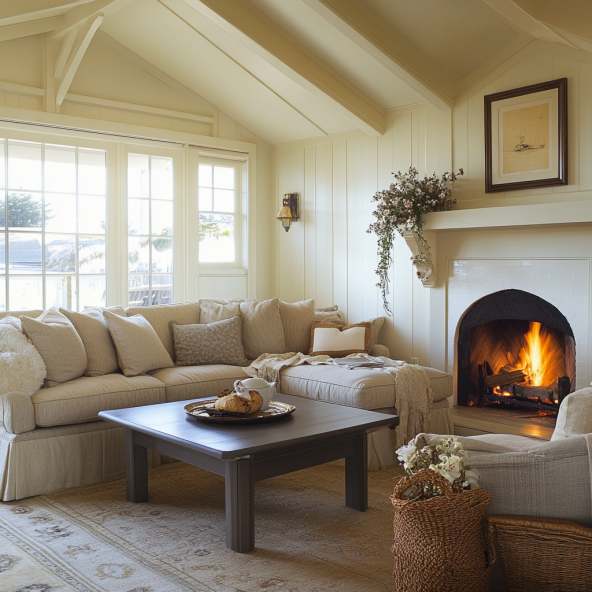
A well-styled large living room with fireplace layout — sectional anchored by a large rug, tall bookshelves filling the vertical wall space, and layered lighting creating a genuinely cozy atmosphere.
Furniture for Large Living Rooms: What to Buy and What to Avoid
Choosing the right furniture for large living room spaces requires thinking differently about scale, proportion, and multi-piece arrangements. The temptation is to fill a large living room setup with lots of furniture. The reality is that you need the right furniture in the right scale — not necessarily more of it.
Best Sofa Styles for Large Living Rooms
For large living room couch ideas, sectional sofas are the gold standard. An L-shaped or U-shaped sectional single-handedly anchors a large seating zone, seats multiple people comfortably, and eliminates the floating, disconnected look of a standard sofa flanked by chairs with too much space between them. Large living room furniture should prioritize pieces that make a visual statement — deep-seated sofas with substantial arms, coffee tables with real visual weight, and accent chairs that look like they belong rather than drifted in from another room.
For family room seating ideas where durability and comfort are paramount, performance fabrics in warm, medium-toned upholstery (think warm grey, camel, olive, or charcoal) are the practical choice that also photograph beautifully. Avoid very light upholstery in high-use family rooms — it rarely ages gracefully.
Large Family Room Furniture Layout Essentials
When planning a large family room furniture layout, work with these core pieces:
- Anchor sofa or sectional — The largest, most dominant piece that defines the room’s primary zone.
- Two accent chairs — Placed at angles to complete the conversation grouping. For a large great room furniture layout, these add visual balance without adding bulk.
- Substantial coffee table — Go bigger than feels natural. A 48–60 inch coffee table in a large room looks right; a 36-inch table looks like a side table.
- Console table — Behind a floating sofa, a console table grounds the piece and fills the visual gap to the wall.
- Large-scale floor lamp — Not a slender task lamp, but a statement arc or tripod lamp with enough visual mass to hold its own in a big space.
- Oversized ottoman — Functions as extra seating, a footrest, and a coffee table alternative. In large living room ideas, an upholstered ottoman adds softness and flexibility.
What to Do With Extra Space in the Living Room
Even after you’ve set up your primary seating zone, most large living rooms have leftover space — and figuring out what to do with extra space in living room is one of the most common design puzzles. The answer depends on your lifestyle, but some universally popular extra living room ideas include:
- A reading nook with a wingback chair, side table, and floor lamp tucked near a window
- A games table with two or four chairs — particularly popular for large family room ideas
- A small home bar or drinks cabinet
- A dedicated plant corner with large statement plants like fiddle leaf figs or monstera
- A writing desk and small bookshelf for a soft, home-office feel
- A built-in window seat with cushions along a bay window — one of the coziest possible additions to any large living room
How to Decorate a Long Living Room
Long, narrow rooms — sometimes called long family room configurations — present their own unique set of design challenges. When a room is significantly longer than it is wide, the space can feel like a bowling alley or hallway, with no clear sense of where to settle. Knowing how to design a long living room is about visually “shortening” the room while maximizing its length for dual functionality.
Zone It Into Two Distinct Areas
The most effective approach for a long living room is to treat it as two rooms with a shared aesthetic. Create a primary seating zone at one end — anchored with a rug, sofa, and chairs facing a focal point — and a secondary zone at the other end, perhaps a reading area or dining space. What to do with a long living room often comes down to resisting the urge to line all furniture along the walls and instead letting the room breathe with two distinct, purpose-driven groupings.
For how to place furniture in a long living room, use a large bookcase or console positioned perpendicular to the wall as a visual divider between zones. A consistent flooring material keeps the space feeling unified, while the two rugs and two furniture groupings create the sense of two distinct, intimate areas within the whole.
Visual Tricks for Long Rooms
A few reliable tricks for decorating long living room spaces: hang art low and group it horizontally to draw the eye along the wall rather than toward the ceiling. Use furniture with strong horizontal lines — long sofas, wide coffee tables, elongated credenzas — to echo the room’s natural proportions rather than fight them. And consider painting the short end walls in a slightly deeper tone than the long walls — this “pushes” the shorter walls forward visually, correcting the lopsided feel.
Finishing Touches: Plants, Scent, and the Details That Make a Room Feel Lived-In
The last mile of how to create a cozy living room with furniture is often the most personal — and the most overlooked. Once your layout is set and your major pieces are in place, it’s the small, layered details that transform a well-designed room into a genuinely beloved one. These are the things that make a big living room feel like a big cozy living room.
Plants: The Fastest Way to Add Life
Large-format plants — fiddle leaf figs, olive trees, palms, monstera deliciosa — add organic form, color, and life to a large room in a way nothing else quite replicates. Research from the American Horticultural Therapy Association confirms that indoor plants reduce perceived stress and increase a sense of warmth and comfort in living spaces. For large living room design, use plants at varying heights: a tall statement plant in a corner, a medium-sized plant on a side table, and small succulents or herbs on shelves.
Scent, Sound, and Atmosphere
Truly cozy rooms engage all five senses. Scent is neurologically one of the most powerful triggers of comfort and memory — a few well-placed candles or a diffuser with warm, woody notes (sandalwood, cedarwood, vanilla, amber) creates an immediate shift in how a room feels. Soft background music — even at barely audible levels — fills the acoustic “emptiness” of a large room and makes it feel inhabited and alive.
Books, family photographs, well-loved objects, and imperfect things — the slightly chipped vintage vase, the inherited wooden bowl — all contribute to what designers call “authenticity,” the quality of a room that tells you real people actually live there. This is the element that no amount of budget or perfect furniture selection can replace, and it’s available to anyone who decorates with genuine personal intention.
Frequently Asked Questions
How do I make a large living room feel cozier without a complete renovation?
The fastest no-renovation fixes for a large living room: pull furniture away from walls into a floating grouping, add a large area rug (9×12 minimum), layer multiple warm light sources instead of relying on overhead lighting, and add abundant textiles — throws, cushions, and curtains. These four changes alone can completely transform how a room feels.
What is the best furniture layout for a large living room?
The conversation circle is the most universally effective living room furniture arrangement: a primary sofa facing the room’s focal point (fireplace or TV), two accent chairs at angles, and a large coffee table in the center, all anchored by a generous area rug. For very large spaces, add a secondary zone with a reading chair and lamp at the room’s far end.
How do you fill empty space in a large living room?
The best extra space in living room ideas: create a secondary seating zone or reading nook, add a games table in a corner, install a large bookcase along one wall, or incorporate a small home bar. Plants — especially large-format statement plants — are the most immediate and affordable way to fill visual emptiness in a large room.
How do I divide a large living room into two functional areas?
The three most effective non-structural dividers for dividing a living room into two seating areas: separate area rugs for each zone, a bookcase or open shelving unit placed perpendicular to the wall, and the back of a sofa used as a soft partition. Two distinct lighting zones — a floor lamp in each area — also reinforce the division visually.
What size rug do I need for a large living room?
For most large living room layouts, a 9×12 foot rug is the minimum. A better guide: the rug should be large enough that the front legs of every major seating piece can rest on it simultaneously. In very large rooms or for large family room furniture layout configurations, a 10×14 or custom-sized rug may be appropriate.
How do I decorate a long, narrow living room?
For how to decorate a long living room: zone the space into two functional areas with separate furniture groupings and rugs, use a bookcase or console as a soft divider, hang art horizontally to lead the eye along the wall, and paint short end walls a slightly deeper shade to visually correct the room’s proportions.
What furniture works best for large family rooms?
The best furniture for large living room family configurations: an L-shaped or U-shaped sectional as the primary anchor, performance-fabric upholstery for durability, an oversized ottoman that doubles as a coffee table, a large storage console behind the sofa, and ample accent lighting. For great room furniture in open-plan spaces, choose pieces with visual weight appropriate to the scale of the room.
How do I make a very large room look smaller and more intimate?
Effective strategies for how to make a big room cozy: use warm, dark paint colors on walls or a single accent wall; choose warm-toned lighting at 2700K; layer textiles generously; float furniture in a tightly grouped central arrangement; add a large-format area rug; and use floor-to-ceiling curtains in heavy fabric. Together, these elements visually compress the room and create a sense of intimacy without reducing actual square footage.
Conclusion
Creating a truly cozy living room out of a large, potentially overwhelming space is entirely achievable — and it doesn’t require a design degree or a limitless budget. It requires understanding a few fundamental truths: furniture that floats creates intimacy, scale matters more than quantity, layered textiles beat sparse minimalism for warmth, and the details that make a space feel personal are the ones no amount of money can manufacture.
The heart of how to create a cozy living room with furniture is intentionality. Whether you’re working with a large living room with fireplace, a sprawling great room, an awkward long living room, or simply a large space that’s never quite felt like home — the principles in this guide give you a clear, proven path from empty to inviting.
Start with your layout. Get your rug right. Layer your lighting. Build in texture. Then step back and let the room become a place people choose to spend time in. That’s what cozy really means — not a style, but a feeling. And now you know exactly how to create it.
Ready to transform your large living room? Save this guide and start with just one change today — pull your sofa away from the wall. You’ll be amazed at the difference.
Start Designing Your Cozy Space →