

A modular sofa is made of separate pieces, like armless chairs, corner units, chaises, and ottomans, that you arrange and rearrange into the shape you want. One set can be a straight sofa this year, an L-shape next year,r and two smaller sofas after you move.
That flexibility is the whole appeal. It’s also why choosing one takes a little more thought than buying a regular couch.
This guide explains how modular sofas work, which layout suits your room, the measurements that matter, what to check in frames, connectors,s and cushions, and how to style one so it looks intentional rather than improvised.
What is a modular sofa?
A modular sofa is built from individual seat sections, called modules, that sit side by side and usually lock together. Each module is a complete piece of furniture on its own, with its own frame and cushions.
The most common modules are:
| Module | What it is | Typical use |
|---|---|---|
| Armless chair | A single seat with no arms | Extends the sofa’s length in the middle |
| Arm chair (left or right) | A seat with one arm | Finishes each end of a run |
| Corner unit | A square seat that turns 90 degrees | Creates L-shapes and U-shapes |
| Chaise | A long seat for stretching out | Lounging, napping, a sectional look |
| Ottoman | A backless seat or footrest | Extra seating, a footrest or a coffee-table alternative |
| Console or table module | A built-in surface or storage | A place for drinks, lamps or remotes |
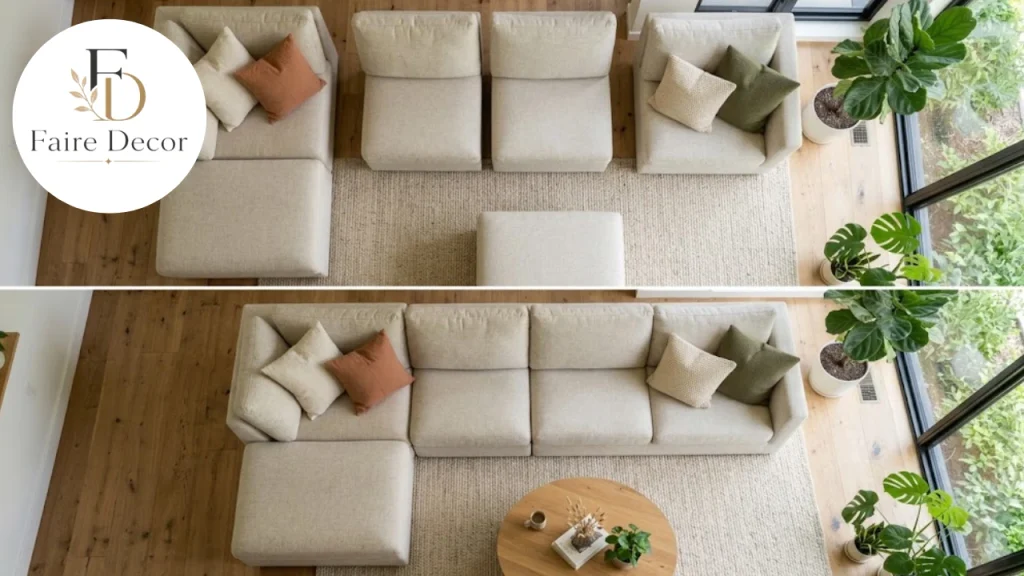
Add, remove, or rearrange these pieces and the sofa changes shape. Many brands sell modules individually, so you can grow the sofa over time.
Modular sofa vs sectional: what’s the difference?
People often use the words interchangeably, but there’s a real difference.
A traditional sectional is usually sold in two or three fixed pieces that only fit together one way, such as a left-facing chaise and a matching sofa. You choose the configuration when you buy, and it rarely changes.
A modular sofa is built from smaller, more interchangeable pieces. You can usually rearrange them into several layouts, swap a chaise from one side to the other, and add or remove seats later.
| Modular sofa | Traditional sectional | |
|---|---|---|
| Pieces | Many smaller modules | Two or three large fixed pieces |
| Rearranging | Easy; many layouts | Limited to one or two layouts |
| Adding seats later | Often possible | Rarely possible |
| Moving house | Easier to carry and fit through doors | Large pieces can be hard to move |
| Visual look | More seams between seats | Cleaner, more continuous look |
| Price | Can be higher per seat | Often lower for the same size |
If you move often, have an awkward room, or expect your household to change, modular is usually the better long-term bet.
Pros and cons of a modular sofa
A modular sofa solves a lot of problems, but it isn’t perfect for everyone. Here’s an honest look.
The advantages:
- Flexibility. Rearrange the shape for a new room, a new home,e or a party.
- Easy delivery. Individual modules fit through narrow doors, tight staircases,es and small lifts far more easily than a big sectional.
- Grow as you go. Start with three seats and add a chaise or ottoman later.
- Repairable. If one module is damaged, you can often replace just that piece.
- Room for everyone. Corner units and chaises create big, family-sized seating without a huge single frame.
The drawbacks:
- Gaps and shifting. Poorly connected modules can slowly drift apart, especially on hard floors.
- Seams. More pieces mean more joins between cushions, which some people find less comfortable or tidy.
- Cost. Good modular systems can cost more per seat than a fixed sofa of similar quality.
- Limited mixing. Modules from different collections, or even different production runs, may not match perfectly in height or color.
For most families, the flexibility outweighs the downsides, as long as you choose a well-made system with strong connectors.
Modular sofa layouts for every room
The right layout depends on your room’s size and shape, and how you use the space. These are the most common configurations.
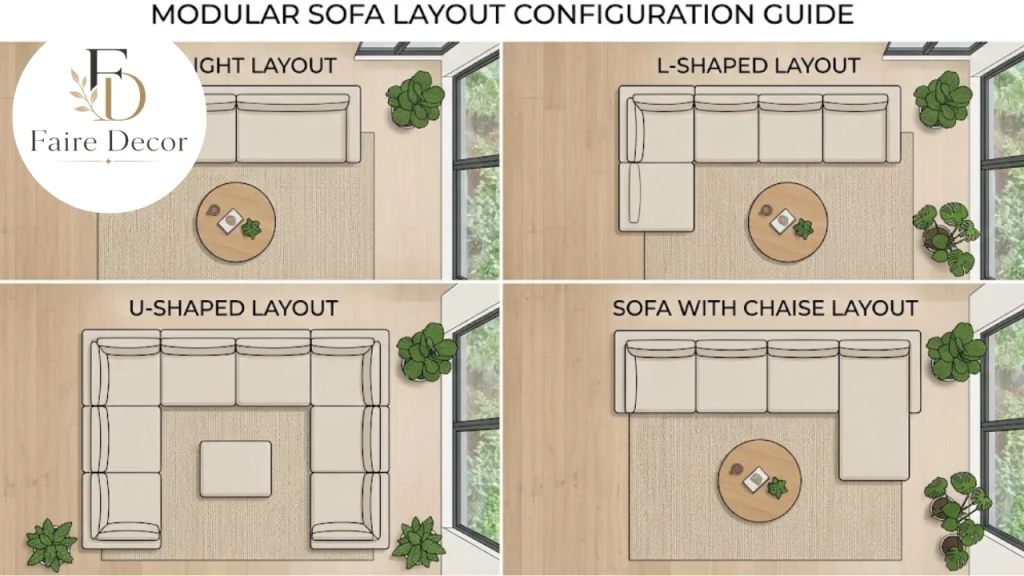
Straight sofa
Two to four modules in a line create a classic sofa. It’s ideal for narrow living rooms, apartments, and placing against a wall or behind a dining area.
L-shaped sofa
A corner unit turns the sofa 90 degrees. L-shapes define a conversation zone, fit neatly into corners, and seat more people without taking up as much floor as a U-shape.
Sofa with chaise
Swap one end for a chaise,e and you get a lounging spot without committing to a full L-shape. This is a favorite for small apartments, where one person wants to stretch out.
U-shaped sofa
Two corner units create a U that wraps around a coffee table. It’s the ultimate family movie setup, but it needs a large room and good walkway space around it.
Pit or conversation layout
Several modules face each other or form a square around an ottoman. It suits big open-plan rooms and households that entertain a lot.
Split layout
Separate modules become two sofas facing each other, or a sofa and two chairs. It’s a smart way to create a formal, symmetrical living room from the same set.
Choosing the right size: measurements that matter
Size mistakes are the most common reason people end up unhappy with a sofa. Measure your room, your doorways,ys and your habits before you buy.
Measure the room
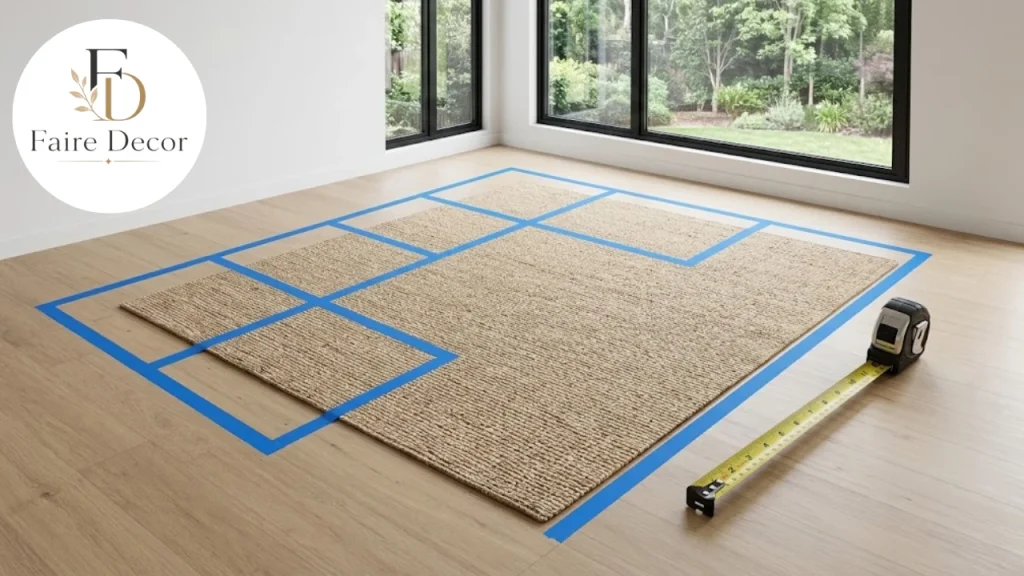
Mark the outline of the sofa on the floor with painter’s tape or flattened boxes. It’s the easiest way to see how much space it really takes up and how you’ll move around it.
Interior designers quoted by Homes & Gardens suggest these clearances (Homes & Gardens):
| Space | Recommended distance |
|---|---|
| Main walkways between large furniture | 30 to 36 inches (tighter rooms can go to about 24) |
| Sofa to coffee table | 14 to 18 inches |
| Wall to back of sofa | At least 3 to 5 inches |
| Sofa to side table | 2 to 4 inches |
| Sofa to a 55-inch TV | About 7 to 9 feet |
| Sofa to a 65-inch TV | About 8 to 10 feet |
Check seat depth
Seat depth makes a big difference to comfort. Shallower seats suit upright sitting and shorter people, while deeper seats suit lounging and taller people.
If you like to tuck your feet up or nap on the sofa, look for deeper seats. If you mostly sit upright to talk or work, a standard depth is more supportive. When in doubt, sit on the model in a store before buying.
Measure the path in
The beauty of a modular sofa is that each piece is smaller than a full couch. Still, measure the width and height of doors, hallways, stair turns, and lifts, and compare them to the largest module’s dimensions.
Modular sofas for small spaces
You don’t need a big room to enjoy modular seating. In fact, small spaces often benefit most.
Start small. Two or three modules make a compact sofa. Add an ottoman that doubles as extra seating when guests visit.
Choose a chaise over a full L. A chaise gives you room to stretch out without blocking a walkway.
Go armless where you can. Arms take up width without adding seating. Low or slim arms save several inches.
Pick raised legs. Sofas on visible legs let the eye see the floor beneath, which makes a small room feel larger.
Keep the color light. Pale neutrals and soft colors visually recede, while dark, bulky shapes can dominate a small room.
Use storage modules. Some systems offer ottomans or consoles with hidden storage, which is valuable in apartments.
What makes a good modular sofa? A buyer’s checklist
Two modular sofas can look identical online and feel completely different in your living room. These are the details that separate a sturdy one from a frustrating one.
Connectors
Connectors are what stop modules from sliding apart. Look for strong metal clips, brackets, or locking systems underneath or between the pieces.
Avoid systems that rely only on friction or flimsy plastic clips, especially on hard floors. Ask how the modules join, and read reviews for mentions of gaps or shifting.
Frame
The frame is the skeleton of each module. Solid hardwood or engineered hardwood frames last far longer than particleboard or very thin softwood.
Check the warranty on the frame. A long frame warranty is usually a good sign that the maker trusts its construction.
Suspension
Suspension supports you under the cushions. Common options include sinuous springs, webbing, and pocket springs.
Sinuous springs are widely used and durable. Good-quality webbing can be comfortable too, while cheap webbing may sag over time.
Cushions
Cushion filling decides how the sofa feels and how it ages. High-resilience foam holds its shape well, while feather or down blends feel softer and more relaxed but need regular fluffing.
Many good sofas wrap a foam core in a soft layer of fiber or feathers, balancing support and comfort. Reversible and removable cushions last longer, since you can flip and rotate them.
Covers
Removable, washable covers are a major advantage, especially with children and pets. Check whether covers are machine-washable or dry-clean only, and whether replacement covers are sold separately.
Modular sofas for families with kids and pets
Busy households put a sofa through a lot, and modular designs can handle it well when you choose carefully.
Pick washable covers. Removable, machine-washable covers are the single most useful feature for families. Spills, muddy paws, and art projects become a laundry job instead of a cleaning crisis.
Choose performance fabric. Tightly woven performance fabrics resist stains and stand up to claws better than loose weaves or loop textures like bouclé.
Think about color. Mid-tones and subtle patterns hide everyday marks far better than bright white or very dark solids, which show lint and pet hair.
Use the flexibility. Pull an ottoman out as a play surface, or split the modules to create separate zones for kids and adults during movie night.
Prioritize sturdy connectors. Children climbing and jumping will quickly expose weak clips. A well-locked system stays together through rough play.
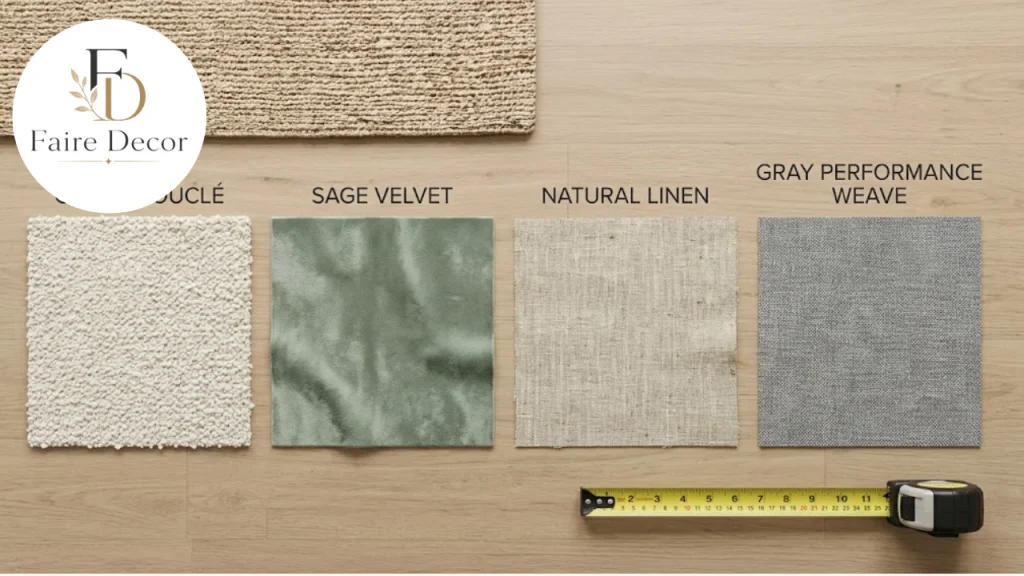
Choosing the right fabric
Fabric affects how your modular sofa looks, feels, and copes with real life.
| Fabric | Best for | Watch out for |
|---|---|---|
| Performance polyester or blends | Families, pets, everyday use | Can feel less natural than cotton or linen |
| Cotton | Soft, breathable, comfortable | Stains more easily unless treated |
| Linen | Relaxed, natural, airy look | Wrinkles easily |
| Velvet | Rich color, luxury feel | Shows pressure marks; may need gentle care |
| Bouclé | Textured, cozy, on-trend | Loops can snag on claws or jewelry |
| Leather | Durable and easy to wipe | Can scratch; feels cool in winter and warm in summer |
For homes with pets or kids, performance fabrics are the safest bet. A tight weave and a mid-tone or patterned color hide wear far better than a pale, loose weave.
Always ask for fabric swatches. Check them at home in daylight and evening light, next to your floor and walls.
What affects the price of a modular sofa?
Modular sofas range from budget flat-pack sets to designer systems, and the price difference usually comes down to a few things you can check.
Frame material. Solid or engineered hardwood costs more than particleboard, but lasts much longer.
Cushion quality. High-resilience foam and feather-wrapped cushions cost more than low-density foam, which can flatten within a year or two.
Fabric. Performance fabrics, natural linens, and leather raise the price compared with basic polyester.
Number of modules. Each corner unit, chaise, and ottoman adds to the total. Price the exact configuration you want, not just the starting price.
Delivery and assembly. Some brands include white-glove delivery; others charge extra or ship flat-pack boxes for you to assemble.
Warranty and service. Longer warranties and easy access to replacement covers and modules add value over the sofa’s life.
A mid-priced system with a good frame and cushions often costs less over time than a cheap sofa you replace twice.
Styling a modular sofa
A modular sofa is a big visual element, so styling it well pulls the whole room together.
Anchor it with a rug. Place a rug large enough that at least the front legs of the sofa sit on it. Designers quoted by Homes & Gardens suggest leaving about 12 to 18 inches of exposed floor between the rug and the walls.
Layer cushions and throws. Mix two or three cushion sizes and textures, and drape a throw over one arm or the chaise. Repeat colors from elsewhere in the room.
Balance the shape. An L-shaped sofa looks best with a round or square coffee table that softens its straight lines.
Light the corners. A floor lamp near the corner unit or chaise makes the sofa a cozy reading spot.
Match the room’s style. A low, neutral modular suits calm, minimal interiors. Our Japanese bedroom ideas show the same low-profile, natural approach. For something bolder, mix colorful cushions and art in a modern eclectic style.
Not sure which direction suits you? Take our interior design style quiz before choosing colors and fabrics.
Color ideas for a modular sofa
Neutral modular sofas are popular because they adapt to any rearrangement and any room. Warm beige, oatmeal, soft gray,y and greige all work across seasons and styles.
If you want more personality, earthy tones like olive, rust, terracotta,ta and deep blue feel warm and current. Our guide to earthy bedroom ideas uses the same palette, and it translates easily to the living room.
Choose a color that works with your floor and walls. Our home color combinations guide helps you build a scheme around a large piece like a sofa.
Setting up and keeping modules together
A careful setup on day one saves a lot of frustration later.
Unbox in the room. Bring each module to its final spot before unwrapping, so you don’t scratch floors or walls carrying bare pieces around.
Start with the corner or chaise. Place the anchor piece first, usually the corner unit or chaise, then build outward from it.
Level the legs. Screw in all the legs fully and check that each module sits flat. A wobbly module stresses the connectors.
Lock every connector. Fit the clips or brackets between every pair of modules, not just a few. Check that the seat fronts line up in a straight line.
Use a rug or grippers. On smooth floors, a large rug or non-slip furniture pads under the legs help stop modules drifting apart.
Leave a gap behind. Keep a few inches between the sofa and the wall, so you can reach connectors and vacuum behind it.
Recheck the connectors after the first few weeks, since new upholstery settles and pieces can shift slightly as cushions soften.
How to care for a modular sofa
Good care keeps a modular sofa looking and feeling new for years.
Rotate and flip cushions every few weeks so they wear evenly.
Rearrange modules occasionally. Swapping seats spreads wear across the whole sofa.
Fluff feather cushions regularly to restore their shape.
Vacuum weekly with an upholstery attachment, including between modules where crumbs collect.
Treat spills quickly by blotting, not rubbing, and follow the fabric care code on the label.
Check connectors every few months and tighten or re-clip them if pieces have drifted.
Protect from sun. Strong direct sunlight fades fabric over time, so use curtains or blinds in bright rooms.
Common mistakes when buying a modular sofa
Avoid these, and you’ll be far happier with your purchase.
Buying too big. A huge U-shape can swallow a room and block walkways. Tape it out on the floor first.
Ignoring seat depth. Very deep seats look inviting but can be uncomfortable for upright sitting or shorter family members.
Forgetting the connectors. Without solid connectors, you’ll spend years pushing modules back together.
Mixing collections. Modules from different collections, or bought years apart, may not match in height, depth,h or fabric shade.
Choosing fabric from a screen. Colors and textures look different in person. Always order swatches.
Skipping the delivery check. Measure every door, corner,er and stairwell the largest module needs to pass through.
Beyond the living room
A modular sofa isn’t only for the main living space. Its flexibility makes it useful in other rooms too.
Family rooms and basements. Large, relaxed layouts like pits and U-shapes suit casual rooms built for movies and games.
Home offices. A single chaise or two modules make a comfortable reading corner or a spot for video calls away from the desk.
Guest rooms. Some modules pull together into a daybed-style surface for an occasional overnight guest.
Kids’ rooms and playrooms. Low, soft modules and ottomans double as play furniture and can be rearranged as children grow.
Bedroom seating. A small modular piece at the end of a bed or in a bay window creates a quiet reading nook.
Is a modular sofa worth it?
For many households, yes. A modular sofa costs more than a basic couch at the same quality level, but it can follow you from apartment to house, adapt to new rooms, and grow with your family.
It’s especially worth it if you rent or move often, have narrow doors or stairs, want flexible seating for guests, or expect your space to change in the next few years.
A fixed sofa might be the better choice if you want the lowest price, the cleanest seamless look, or you’re furnishing a room that’s unlikely to change.
Getting the most out of your modular sofa
Think of a modular sofa as a system, not a single purchase. Buying a good core set and adding pieces over time can be more affordable than replacing a whole sofa every few years.
Before buying, check whether the brand sells individual modules, how long it keeps collections available, and whether replacement covers are offered. These details decide how flexible your modular sofa really is.
FAQs:
What is a modular sofa?
A modular sofa is made of separate seat sections, such as armless chairs, corner units, chaises and ottomans. You can arrange and rearrange them into different shapes.
Are modular sofas worth it?
For many households, yes. They’re flexible, easier to move, and can grow over time. A fixed sofa may be cheaper if your room and needs won’t change.
What’s the difference between a modular sofa and a sectional?
A sectional usually has two or three fixed pieces that fit together one way. A modular sofa uses smaller, interchangeable modules you can rearrange or add to later.
Do modular sofas come apart easily?
Good ones lock together with metal clips or brackets and stay in place. Cheaper systems with weak connectors can drift apart, especially on hard floors.
Is a modular sofa good for a small space?
Yes. Start with two or three modules, choose a chaise instead of a full L-shape, and look for slim arms and raised legs.
What is the best fabric for a modular sofa with pets?
Tightly woven performance fabrics resist stains and claws best. Avoid loop textures like bouclé, which snag easily.
How far should a coffee table be from a sofa?
Designers commonly suggest about 14 to 18 inches between the sofa and the coffee table.