

Have you ever read a paragraph about a marble staircase and felt like you were standing on it? That’s the quiet magic behind great writing luxuryinteriorsorg content — it doesn’t just describe a room, it makes you feel the weight of the silk drapes and the cool hush of polished stone underfoot. If you’ve ever wondered why some interior design articles stop you mid-scroll while others get skipped in half a second, the answer almost always comes down to the words, not just the photographs.
This matters more than most people realize. Luxury buyers, homeowners, and design enthusiasts aren’t just looking for pretty pictures; they’re looking for a narrative that justifies the price tag, explains the craftsmanship, and helps them imagine their own life inside that space. That’s where thoughtful writing luxuryinteriorsorg strategy comes in — turning showroom photos and architectural plans into stories people actually want to read.
In the next few sections, we’ll walk through exactly what makes this kind of content work, the research-backed reasons readers respond to it, and practical, real-world techniques you can use whether you’re a designer, a blogger, or a brand trying to stand out in a crowded luxury market.
Why Luxury Audiences Read Differently
People shopping for a $40 throw pillow skim. People considering a $40,000 renovation read carefully, slowly, and often more than once. A 2023 Nielsen Norman Group study on high-involvement purchase content found that readers researching big-ticket items spend significantly longer per page and revisit content multiple times before deciding — which means quality, accurate, emotionally resonant copy has outsized influence on luxury buying decisions.
This is the core reason behind any serious approach to writing luxuryinteriorsorg content. You’re not writing for a casual scroller; you’re writing for someone mentally rehearsing a decision that will affect their daily life for years. That changes everything about tone, structure, and depth.
The Trust Gap in High-End Design
Luxury interiors carry an inherent trust problem: anyone can claim “premium materials” or “bespoke craftsmanship.” Readers have grown skeptical of vague superlatives. Specificity is what rebuilds that trust — naming the wood species, explaining the joinery technique, or citing the actual stone quarry does more for credibility than ten adjectives ever could.
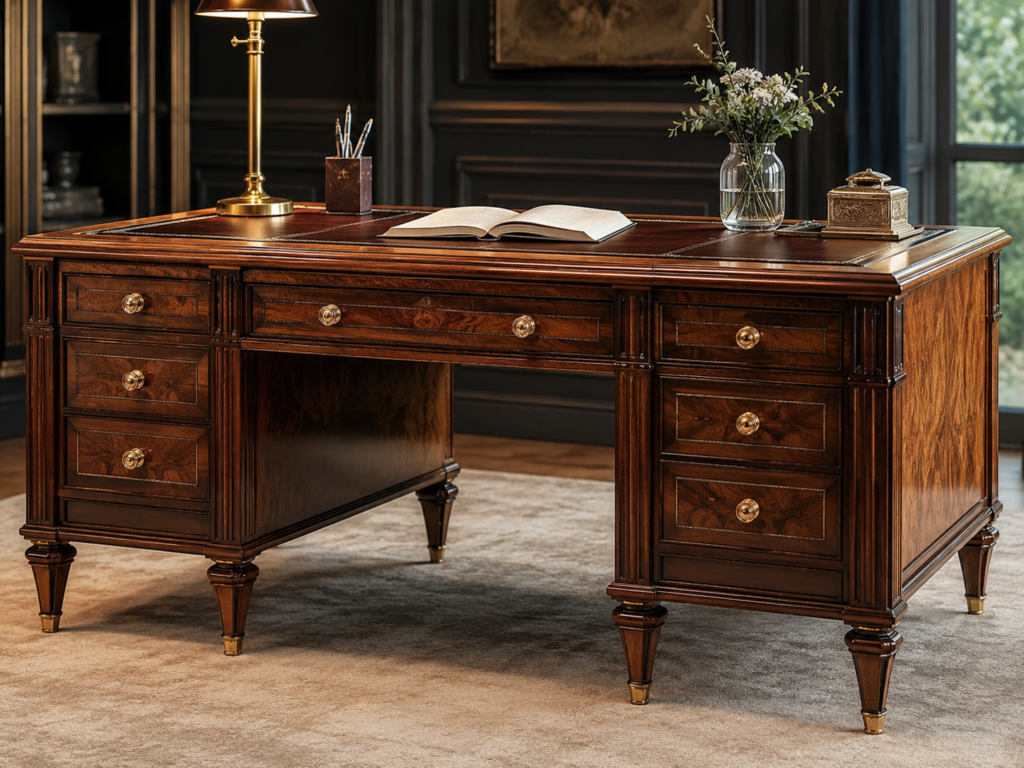
A handcrafted luxury writing desk — the kind of detail-driven piece that earns descriptive language rather than relying on it.
The Anatomy of Strong Interior Design Writing
Good design writing isn’t poetry for its own sake — it serves a purpose at every turn. Below is a breakdown of the elements that consistently appear in content that ranks well and reads well.
Sensory Language That Earns Its Place
Words like “luxurious” and “elegant” have been used so often they’ve gone numb. Instead, strong writing leans on concrete sensory detail: the temperature of a brushed-brass handle, the faint resin scent of a freshly oiled walnut table, the particular way morning light moves across a Venetian plaster wall. This is a habit worth building into any writing luxuryinteriorsorg workflow — replace one generic adjective per paragraph with one specific, sensory image.
Structural Clarity
Even gorgeous prose fails if readers can’t navigate it. Headings should answer real questions (“How much does custom millwork actually cost?”) rather than vague topic labels (“Millwork Basics”). Short paragraphs, occasional bullet points, and a logical flow from concept to execution keep even long articles easy to follow.
A Few Practical Habits Worth Adopting
- Research material origins and pricing ranges before describing them as “premium”
- Interview designers or use direct quotes where possible to add authority
- Avoid stacking adjectives — one precise word beats three vague ones
- Read the piece aloud; awkward phrasing reveals itself instantly
- Vary sentence length so the rhythm doesn’t feel mechanical
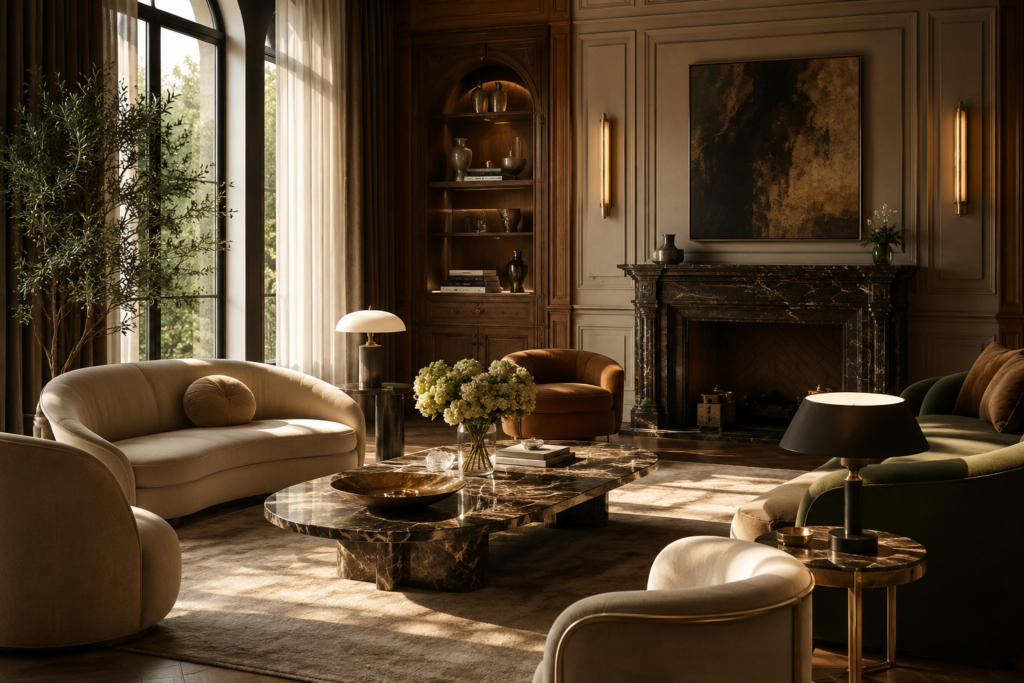
An elegant living room where material choice and lighting do the storytelling — exactly what specific, sensory writing should capture.
How Research-Backed Content Solves Real Reader Problems
One of the biggest gaps in interior design content is that it often skips the “why.” Readers don’t just want to know that a room uses Calacatta marble; they want to know whether it’s worth the investment, how it holds up over time, and what alternatives exist at different price points. This problem-solving angle is what separates content that merely looks nice from content that genuinely helps people make decisions.
Addressing Budget Anxiety Directly
Luxury doesn’t mean unlimited budget for most readers — it means stretching a serious budget intelligently. According to a 2022 Houzz renovation trends report, over 60% of homeowners undertaking high-end renovations cited cost transparency as a top frustration with the design process. Articles that openly discuss price ranges, cost-saving substitutions, and where it’s worth splurging versus saving build far more trust than those that avoid the topic entirely.
Solving the “Will This Age Well?” Question
Trend cycles move fast, and readers are increasingly wary of investing in finishes that will look dated in five years. Addressing longevity directly — which materials patina gracefully, which finishes are timeless versus trend-driven — answers a question many readers are silently asking but rarely see addressed head-on.
Demystifying the Design Process
Many readers have never worked with a designer and don’t know what to expect. Breaking down the typical project timeline, the role of a design consultation, or how custom furniture orders work removes friction and positions the content (and the brand behind it) as a genuinely helpful resource rather than a sales pitch.
Common Mistakes in Luxury Interior Content
Even experienced writers fall into a few recurring traps:
- Overusing the word “luxury” itself until it loses meaning
- Describing spaces without grounding them in a real use case (who actually lives here, and how?)
- Ignoring maintenance and practicality in favor of pure aesthetics
- Failing to credit designers, architects, or craftspeople by name
- Writing exclusively in superlatives instead of comparative, useful detail
Avoiding these pitfalls is a major part of disciplined writing luxuryinteriorsorg practice, because readers — especially design-savvy ones — notice when content feels hollow.

A clean, organized writing workspace — a visual reminder that good design content starts with disciplined, structured thinking.
Building a Sustainable Content Voice
Finding the Right Tone
The best luxury content sounds confident but never condescending. It assumes the reader is intelligent and curious, not that they need to be impressed with jargon. A useful test: would this sentence make sense if read aloud to a friend over coffee? If not, it probably needs simplifying.
Balancing Authority and Warmth
Authority comes from accuracy and specificity. Warmth comes from acknowledging the reader’s real concerns — budget, timeline, lifestyle fit. The strongest pieces of writing luxuryinteriorsorg content blend both, rather than leaning too far into either cold expertise or empty enthusiasm.
Consistency Across Formats
Whether it’s a blog post, a product description, or a designer profile, the voice should feel like it’s coming from the same trusted source. Readers build familiarity over time, and that familiarity is part of what turns casual visitors into returning ones.
Practical Framework for Writing About Luxury Spaces
Here’s a simple structure many design writers use when approaching a new piece:
- Hook: Open with a specific, vivid detail rather than a general statement
- Context: Explain why this space, material, or trend matters right now
- Substance: Provide real facts — pricing, materials, sourcing, designer insight
- Application: Show the reader how this applies to their own space or decision
- Close: End with a takeaway that feels earned, not generic
This framework keeps content from drifting into vague flattery and instead gives readers something they can actually use, which is ultimately what good writing luxuryinteriorsorg content is meant to achieve.
FAQ
What makes luxury interior design content different from regular home decor writing?
Luxury content tends to involve higher reader investment, more specific material and sourcing details, and a tone that balances aspiration with practical guidance, since readers are often weighing significant financial decisions.
How important are visuals compared to the writing itself?
Visuals capture initial attention, but the writing is what builds trust and answers the deeper questions readers have about cost, durability, and process — both elements work together rather than competing.
Should luxury design content avoid talking about price?
No. Many readers actually appreciate transparency around cost ranges, even in high-end content, since it helps them gauge whether a project or product fits their situation.
How long should a luxury interior design article be?
There’s no fixed rule, but longer, well-organized pieces tend to perform better for readers researching significant purchases, as long as the length is filled with genuinely useful detail rather than padding.
Is it okay to use technical design terms in this kind of content?
Yes, as long as terms are briefly explained the first time they appear, so readers who aren’t design professionals can still follow along comfortably.
How can a brand make its content feel less like an advertisement?
Focusing on the reader’s questions and concerns first, rather than leading with product promotion, naturally shifts the tone away from sales-heavy language.
What role do designer quotes or interviews play?
They add authenticity and a layer of expertise that’s hard to fake, giving readers a sense that the content reflects real industry knowledge rather than generic copy.
How often should trend-related content be updated?
Given how quickly design trends shift, revisiting and updating trend-focused articles every year or two helps keep the information accurate and useful.
Conclusion
At its heart, thoughtful writing luxuryinteriorsorg content is less about flowery language and more about respect — respect for the reader’s intelligence, their budget concerns, and their genuine curiosity about how beautiful spaces actually come together. The brands and writers who get this right aren’t the ones piling on the most superlatives; they’re the ones willing to slow down, get specific, and answer the questions readers are actually asking. That’s the kind of writing people remember, trust, and come back to.