

A fungal infection happens when a fungus grows on or inside the body in a way that causes symptoms. Most are mild and affect the skin, nails, or moist areas like the feet, groin,n and mouth, and they usually respond well to treatment from a pharmacy.
A small number are serious. These mostly affect people with weakened immune systems, and they need urgent medical care.
This guide explains the common types, how they spread, how they’re usually treated, how to stop them coming back, and the warning signs that mean you should see a doctor.
This article is general information, not medical advice. If you’re unsure what’s causing your symptoms, speak to a pharmacist or doctor.
What is a fungus?
Fungi are a huge group of living things that includes mushrooms, molds, and yeasts. They live in soil, on plants, in the air, in our homes, and on our bodies.
Most fungi are harmless. Some even help us in bread, cheese, and medicines like penicillin. Our skin also carries a normal mix of yeasts that usually cause no problems.
A fungal infection starts when certain fungi overgrow, usually because conditions suit them. Warmth, moisture, damaged skin, a disrupted balance of microbes, or a weakened immune system all give fungi the chance to spread.
How common are fungal infections?
Very common. Fungal skin and nail infections are among the most frequent skin conditions people see pharmacists and doctors about.
Fungal diseases as a whole affect more than 300 million people every year, according to figures reported by CIDRAP in coverage of the World Health Organization’s work on fungal threats (CIDRAP).
Most of these are minor. The serious, invasive infections are far less common but can be life-threatening.
The main types of fungal infection
Fungal infections are usually grouped by where they occur and how deep they go.
| Type | Where it affects | Examples |
|---|---|---|
| Superficial skin infections | Outer layer of skin, hair and nails | Ringworm, athlete’s foot, jock itch, fungal nail infection |
| Yeast infections | Moist areas and mucous membranes | Vaginal thrush, oral thrush, nappy rash, skin fold infections |
| Yeast-related skin conditions | Oily areas of skin | Pityriasis versicolor, some types of dandruff |
| Invasive infections | Lungs, blood and organs | Invasive candidiasis, aspergillosis, cryptococcal infection |
The rest of this guide focuses mainly on the common ones, followed by a short section on serious infections.
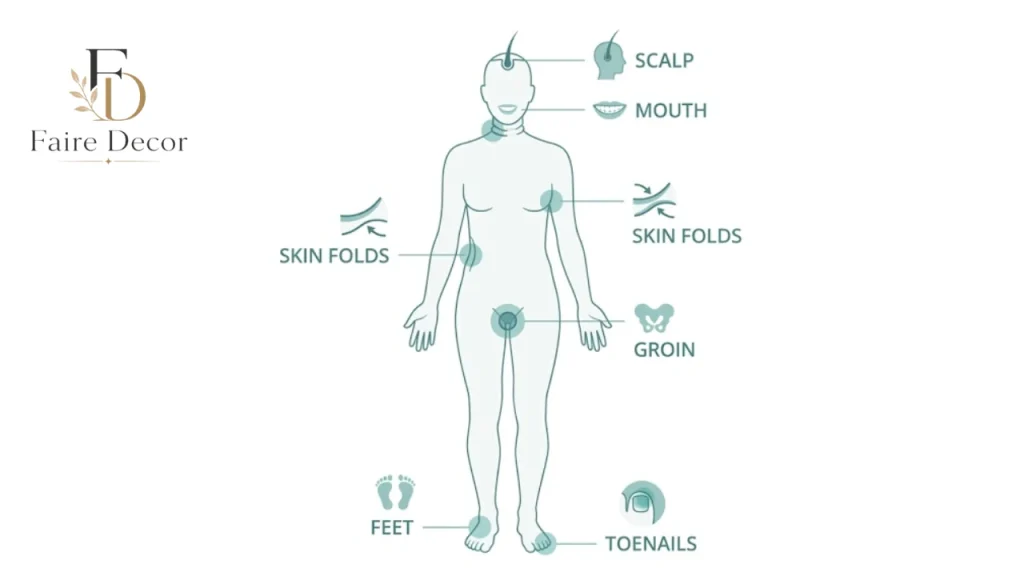
Ringworm
Despite the name, ringworm has nothing to do with worms. The NHS describes it as a common fungal infection (NHS).
Symptoms
The main sign is a rash. According to the NHS, it may look red or darker than the surrounding skin, depending on skin tone, and can be scaly, dry, swollen or itchy.
It’s usually ring-shaped, but it may look different on the face, neck or scalp. On the scalp, it can cause patchy hair loss.
How it spreads
The NHS lists three main routes:
- Close contact with an infected person or animal.
- Sharing items such as towels, combs and bedsheets.
- Less commonly, from infected soil.
Pets, especially cats, dogs and farm animals, are a common source. Patches of missing fur can be a sign of ringworm in an animal.
Treatment
For ringworm on the body, the NHS advises seeing a pharmacist first. They can recommend an antifungal cream, gel, spray or tablet, depending on where the rash is.
Treatment may be needed daily for up to four weeks. Keep using it for the full course, even after the rash clears.
Ringworm on the scalp is different. The NHS says it usually needs prescription antifungal tablets and shampoo, so see a GP.
Athlete’s foot
Athlete’s foot is a fungal infection of the skin on the feet, most often between the toes.
Symptoms
The NHS describes itchy white patches between the toes, and sore, flaky patches that may look red. On brown or black skin, the redness may be less visible (NHS).
The skin may crack or bleed. The infection can also spread to the soles or sides of the feet, sometimes with fluid-filled blisters.
How it spreads
You can catch it from someone who has it, or by walking barefoot in shared areas like changing rooms and showers. Wet or sweaty feet and damaged skin raise the risk.
Treatment
Antifungal creams, sprays and powders are available from pharmacies without a prescription. The NHS notes they usually take a few weeks to work, and that athlete’s foot is unlikely to clear up without treatment.
Some products are only suitable for adults, so check the packet or ask a pharmacist. Left untreated, athlete’s foot can spread to the toenails.

Jock itch
Jock itch is a fungal infection in the groin and inner thighs. It’s closely related to athlete’s foot and is often caused by the same fungi, sometimes spreading from the feet to the groin.
It typically causes an itchy, red or darker rash with a raised edge, often in the skin folds. Heat, sweat,t and tight clothing make it more likely.
Pharmacy antifungal creams usually treat it well. Keeping the area clean and dry, changing out of sweaty clothes quickly, and treating any athlete’s foot at the same time all help stop it coming back.
Fungal nail infection
A fungal nail infection usually affects toenails, though fingernails can be affected too.
Symptoms
The NHS describes nails that are brittle, discolored, or thicker than usual (NHS). The infection often starts at the edge and can spread across the nail, turning it white or yellow.
In severe cases, the nail can crumble or lift off, and the skin around it may become swollen and painful.
Treatment
Nail infections are slow to clear. A pharmacist can recommend an antifungal nail paint, applied daily or weekly depending on the product.
The NHS says treatment usually lasts 6 to 12 months, and it can take several months to see improvement. The infection is cured when healthy nail grows back from the base.
If pharmacy treatment doesn’t work, a GP can prescribe antifungal tablets. These may need blood tests to check the liver, and they aren’t suitable for everyone, so they’re always prescribed by a doctor.
Yeast infections (thrush)
Thrush is caused by an overgrowth of Candida, a yeast that normally lives on the body without causing problems.
Vaginal thrush
Vaginal thrush is very common. It often causes itching, soreness, and white discharge. Antibiotics, hormonal changes, pregnancy, and diabetes can make it more likely.
Treatments are available from pharmacies, but see a doctor or sexual health clinic if it’s your first time, if you’re pregnant, if symptoms don’t improve, or if it keeps coming back. Other conditions can cause similar symptoms and need different treatment.
Oral thrush
Oral thrush causes white patches in the mouth, soreness,s and sometimes a changed sense of taste. It’s more common in babies, older adults, people who wear dentures, people using steroid inhalers, and people with weakened immune systems.
A pharmacist or doctor can recommend treatment. Babies with oral thrush and adults with persistent or recurrent thrush should be checked by a doctor.
Skin fold and nappy infections
Candida can also grow in warm, moist skin folds, such as under the breasts, in the groin or in a baby’s nappy area. It often looks like a bright red rash with small spots around the edges.
Keeping the area dry and using a suitable antifungal product, advised by a pharmacist, usually helps.
Other common fungal skin conditions
Pityriasis versicolor is caused by a yeast that normally lives on the skin. It causes patches that are lighter or darker than surrounding skin, often on the chest, back, and upper arms, and it’s more common in hot, humid weather.
Dandruff and seborrheic dermatitis are linked in part to skin yeasts. Antifungal shampoos are often used to manage them.
Both are common, not contagious in the usual sense, and often recur. A pharmacist can advise on suitable shampoos and creams.
Is a fungal infection contagious?
Some are, some aren’t.
| Infection | Contagious? |
|---|---|
| Ringworm | Yes, through people, animals and shared items |
| Athlete’s foot | Yes, especially in shared showers and changing rooms |
| Jock itch | Yes, through shared towels and clothing; can spread from your own feet |
| Fungal nail infection | Can spread, often from athlete’s foot |
| Thrush | Not usually considered contagious in the same way |
| Pityriasis versicolor | Not usually contagious |
According to the NHS, children with ringworm can usually go to school or nursery once treatment has started. You don’t need to stay off work or school for athlete’s foot.
What raises your risk?
Fungi thrive where it’s warm and damp. Several things make an infection more likely:
Moisture and heat, from sweat, tight shoes, synthetic clothing or not drying skin properly.
Shared spaces, like gym showers, pools, and changing rooms.
Close contact with infected people or animals.
Damaged skin, from cuts, cracks,s or scratching.
Antibiotics, which can upset the normal balance of microbes and allow yeast to overgrow.
Diabetes, especially when blood sugar is high.
A weakened immune system, from conditions such as HIV, cancer treatment, organ transplants or long-term steroids.
Obesity, which creates more warm, moist skin folds.
How fungal infections are diagnosed
Many common fungal skin infections are recognized by how they look. A pharmacist can often suggest a treatment straight away.
If the diagnosis isn’t clear, or treatment doesn’t work, a doctor may take a skin scraping, nail clipping,g or swab to test in a lab. This confirms whether a fungus is the cause and which type.
Getting the diagnosis right matters, because a fungal infection is easy to confuse with other rashes. Eczema, psoriasis and bacterial infections can look similar but need different treatment. Using steroid creams on an undiagnosed fungal rash can sometimes make it worse.
How fungal infections are treated
Treatment depends on the type and location of the infection.
| Treatment type | Typical uses | Where to get it |
|---|---|---|
| Antifungal creams, gels, sprays and powders | Ringworm, athlete’s foot, jock itch, skin fold yeast infections | Pharmacy |
| Antifungal nail paints | Mild to moderate fungal nail infections | Pharmacy |
| Antifungal shampoos | Dandruff, pityriasis versicolor, alongside scalp ringworm treatment | Pharmacy or prescription |
| Vaginal and oral thrush treatments | Thrush | Pharmacy or prescription |
| Antifungal tablets | Scalp ringworm, severe or stubborn skin and nail infections | Prescription only |
| Intravenous antifungals | Serious invasive infections | Hospital |
Getting the most from treatment
Use it for the full course. Symptoms often fade before the fungus is gone. Stopping early is a common reason infections come back.
Follow the packet or pharmacist’s instructions on how often to apply and for how long.
Treat the whole area, including a little of the healthy-looking skin around the rash.
Treat everyone affected, and pets too, if the infection is passing around the household.
Ask a pharmacist before using products on children, or if you’re pregnant or breastfeeding.

Home habits that help prevent fungal infections
Preventing a fungal infection mostly comes down to keeping skin clean and dry and not sharing personal items. These tips draw on NHS advice.
Dry carefully. Dry your skin thoroughly after washing, especially between the toes and in skin folds. Dab rather than rub.
Use your own towels. Don’t share towels, combs, bedsheets, socks or shoes. Use a separate towel for your feet if you have athlete’s foot.
Wear breathable fabrics. Choose clean cotton socks and loose, breathable clothing, and change out of sweaty clothes promptly.
Rotate shoes. The NHS suggests not wearing the same pair more than two to three days in a row, and avoiding shoes that make your feet hot and sweaty.
Wear flip-flops in communal showers, pools and changing rooms.
Wash bedding and towels regularly, especially during an infection.
Keep nails short and clean, and don’t share nail clippers or scissors.
Check your pets. Take a pet to the vet if it has patches of missing fur or itchy, scaly skin.
Keeping damp and mold under control at home
Indoor mold is a separate issue from skin infections, but damp homes can affect health, especially for people with asthma, allergies or weak immune systems.
Run extractor fans when showering and cooking, dry laundry outdoors or in a ventilated space, and fix leaks quickly. Keep bathrooms well ventilated, and choose moisture-resistant finishes in damp rooms.
If you’re updating a bathroom, materials matter. Our guide to bathroom wallpaper covers options that cope with humidity, and our small bathroom vanity guide includes choices that resist moisture.
Clean towels and bath mats regularly and let them dry fully between uses. Damp fabrics are a favorite place for fungi to grow.

When to see a doctor
A mild fungal infection of the skin can usually be managed with pharmacy treatment. See a doctor if:
- Pharmacy treatment hasn’t worked after the recommended time.
- The infection is on the scalp.
- It’s spreading to other parts of the body, or to other nails.
- The skin becomes very painful, hot, swollen, or red, which can signal a bacterial infection.
- You have diabetes, especially with a foot infection.
- You have a weakened immune system.
- You’re pregnant, or the patient is a baby or young child.
- Infections like thrush keep coming back.
Get urgent medical help if you have a fever, feel very unwell, or have symptoms like a persistent cough, breathlessness, or confusion alongside a known risk factor such as chemotherapy, a transplant, or HIV. These can be signs of a serious infection.
Fungal infection or something else?
Plenty of rashes look alike, so it helps to know the usual differences. This table is a rough guide only, not a way to diagnose yourself.
| Condition | Typical signs | Usual first step |
|---|---|---|
| Fungal skin infection | Itchy, scaly rash, often ring-shaped with a clearer middle; in warm, damp areas | Pharmacist |
| Eczema | Dry, itchy, inflamed patches, often in skin creases; tends to flare and settle | Pharmacist or GP |
| Psoriasis | Raised, well-defined patches with silvery scale, often on elbows, knees and scalp | GP |
| Bacterial skin infection | Skin that’s hot, swollen, painful and spreading, sometimes with fever | Doctor promptly |
If a rash doesn’t fit neatly, or treatment isn’t helping, get it checked rather than trying one cream after another.
Fungal infections in babies and children
Children pick up fungal infections easily, through play, pets, school and shared sports facilities.
Scalp ringworm is more common in children than adults. Watch for scaly patches, hair loss or broken hairs on the scalp. It needs a GP, because creams alone don’t reach the fungus in the hair roots.
Nappy rash can sometimes be caused by Candida, especially if it doesn’t settle with usual nappy care. A pharmacist or health visitor can advise.
Oral thrush in babies shows as white patches on the tongue, gums or inside the cheeks that don’t wipe away easily. Feeding mothers may notice sore nipples at the same time. Speak to a pharmacist, GP or health visitor before treating a baby.
Always check that a product is suitable for your child’s age, and ask a pharmacist if the packet isn’t clear.
Fungal infections and diabetes
People with diabetes are more prone to fungal infections, particularly thrush and foot infections, and high blood sugar can make them harder to clear.
Foot care deserves extra attention. Cracked skin from athlete’s foot can let bacteria in, and reduced feeling in the feet may mean a problem goes unnoticed.
Check your feet daily, keep the skin between your toes dry, and tell your diabetes team or GP about any infection that isn’t clearing. Keeping blood sugar in your target range also helps.
Serious and invasive fungal infections
Invasive fungal infections affect the lungs, blood or other organs. They’re much rarer than skin infections, but they can be life-threatening.
They mainly affect people with weakened immune systems. The World Health Organization’s concerns, as reported by CIDRAP, include people with HIV, cancer, chronic lung disease and organ transplants.
The WHO priority list
In 2022, the WHO published its first-ever fungal priority pathogens list, naming 19 fungi considered public health threats. Fungi of particular concern include Candida auris, Candida albicans, Aspergillus fumigatus and Cryptococcus neoformans.
Drug resistance
Antifungal resistance is growing. Some fungi are becoming harder to treat with the limited number of antifungal medicines available.
Candida auris is a major worry because it can resist several antifungal drugs and spread in hospitals and care homes. CIDRAP reports that invasive C. auris infections are fatal in 29% to 62% of patients.
Resistant forms of ringworm are also spreading in more countries, making some skin infections harder to treat. This is another reason to finish treatment courses and to see a doctor if an infection doesn’t respond.
Why fungal threats are rising
The WHO links the growing threat to factors including climate change, increased global travel and the widespread use of antifungal chemicals in agriculture.
Common myths about fungal infections
“Fungal infections only happen to people with poor hygiene.” Not true. Anyone can get one, especially in warm, damp conditions or shared spaces.
“If the rash is gone, the infection is cured.” Often not. Stopping treatment early is a common reason infections return.
“Ringworm is caused by a worm.” It’s caused by a fungus.
“Any itchy rash can be treated with steroid cream.” Steroid creams on their own can make some fungal infections worse. Ask a pharmacist before treating an unknown rash.
“Home remedies work just as well.” Some home remedies have little reliable evidence and can irritate skin. Proven antifungal treatments from a pharmacy are a safer first step.
Living with a recurring fungal infection
Some people get the same fungal infection again and again. That’s frustrating, but there’s usually a reason.
Look at possible triggers: sweaty footwear, synthetic clothing, a partner or pet with an untreated infection, or an underlying condition like diabetes. Fixing the trigger is as important as treating the rash.
If it keeps coming back, see a doctor. They may test to confirm the diagnosis, check for conditions that raise your risk, or suggest a longer or different treatment.
The bottom line
A fungal infection is usually a common, treatable problem affecting the skin, nails, or moist areas of the body. Most respond well to pharmacy treatments when used for the full course, alongside simple habits like keeping skin dry and not sharing towels.
See a doctor if treatment doesn’t work, if the infection is on your scalp, if you have diabetes or a weakened immune system, or if you feel unwell. Taking any fungal infection seriously and treating it properly is the best way to clear it and stop it coming back.
FAQs:
What does a fungal infection look like on the skin?
Usually an itchy, scaly rash that may look red or darker than the surrounding skin. Ringworm is often ring-shaped with a clearer middle. Athlete’s foot causes white, flaky, or cracked skin between the toes.
How long does a fungal infection take to go away?
Most skin infections improve within a few weeks of pharmacy treatment, and the NHS says ringworm treatment may be needed for up to four weeks. Nail infections are much slower, often 6 to 12 months.
Can a fungal infection go away on its own?
Some mild ones may settle, but many don’t. The NHS says athlete’s foot is unlikely to clear up without treatment, and untreated infections can spread.
Is a fungal infection contagious?
Ringworm, athlete’s foot and jock itch can spread through contact and shared items like towels. Thrush and pityriasis versicolor are not usually considered contagious in the same way.
What is the fastest way to get rid of a fungal infection?
Use a suitable antifungal treatment from a pharmacist for the full course, keep the area clean and dry, and don’t share towels. Stopping treatment early is a common reason infections come back.
Can I use steroid cream on a fungal rash?
Not on its own without advice. Steroid creams can make some fungal infections worse. Ask a pharmacist before treating an unknown rash.
When should I see a doctor about a fungal infection?
See a doctor if pharmacy treatment hasn’t worked, the infection is on the scalp, it’s spreading, you have diabetes or a weakened immune system, or you feel unwell. Get urgent help for fever or breathing problems.
Can damp and mold at home cause fungal infections?
Indoor mold mainly affects breathing and allergies rather than causing skin infections, but damp towels, bath mats, and sweaty footwear help skin fungi thrive. Good ventilation and dry fabrics help on both fronts.