

Food processing is anything that changes food from its natural state before you eat it. Washing and chopping spinach is processing. So is pasteurizing milk, freezing peas, baking bread, or turning corn into breakfast cereal.
That’s why “processed food” can mean almost anything, from a bag of frozen berries to a packet of flavored crisps. Some processing makes food safer and more convenient. Some turns ingredients into products that look very little like the food they started as.
This guide explains what food processing is, why it’s done, how scientists group processed foods, what research says about ultra-processed foods, and simple ways to cook more from scratch at home.
This article is general information, not medical or dietary advice. For personal guidance, speak to a doctor or registered dietitian.
What is food processing?
At its simplest, processing means doing something to food between the farm and your plate. It can happen on a farm, in a factory,y or in your own kitchen.
Common examples include:
- Cleaning and cutting: washing, peeling, chopping, slicing
- Preserving: freezing, drying, canning, pickling, salting, smoking
- Heating: pasteurizing, cooking, baking, roasting
- Transforming: milling grain into flour, pressing seeds into oil, fermenting milk into yogurt or cheese
- Manufacturing: combining many ingredients and additives into ready-to-eat products
A short history of food processing
People have always found ways to make food last. Drying fruit and fish in the sun, salting meat, smoking over fires,es and fermenting milk, grains,ins and vegetables are among the oldest kitchen skills there are.
The industrial era changed the scale. In the early 1800s, French confectioner Nicolas Appert developed a method of sealing food in glass containers and heating it, the forerunner of modern canning. Later in the 19th century, Louis Pasteur’s work on microbes led to pasteurization, now used to make milk and juice safer.
The 20th century brought home refrigerators, commercial freezing, and eventually the factory-made snacks, soft drinks and ready meals that fill supermarket shelves today. Modern food processing is the result of all these steps, some of which have saved countless lives and some of which are now being questioned.
Why food is processed
It’s easy to think of food processing as a bad thing, but much of it is essential to a safe, affordable food supply.
| Purpose | How processing helps | Examples |
|---|---|---|
| Safety | Kills or controls harmful microbes | Pasteurized milk, canned foods, cooked meats |
| Shelf life | Slows spoilage so food lasts longer | Frozen vegetables, dried beans, pickles |
| Convenience | Saves time in the kitchen | Pre-washed salad, canned tomatoes, frozen fruit |
| Nutrition | Adds or protects nutrients | Fortified cereals and flours; frozen produce picked at peak |
| Access and cost | Lets food travel and be stored year-round | Canned fish, dried grains, long-life milk |
| Flavor and variety | Creates new foods and textures | Cheese, bread, yogurt, chocolate |
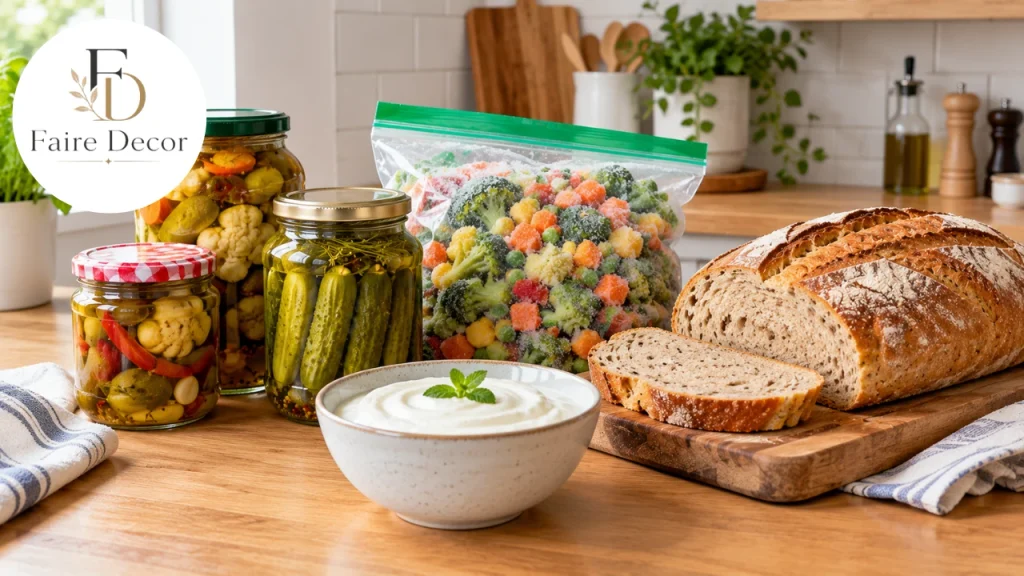
Frozen vegetables are a good example. They’re often frozen soon after harvest, so they can be just as useful in a healthy diet as fresh ones, especially when fresh produce is out of season or expensive.
Not all processing is the same
The problem with talking about food processing in general is that it lumps together foods that are very different. A tin of chickpeas and a sugary soft drink are both processed, but they have little else in common.
To make sense of this, researchers have developed ways to group foods by how much, and how, they’re processed. The best known is the NOVA system.
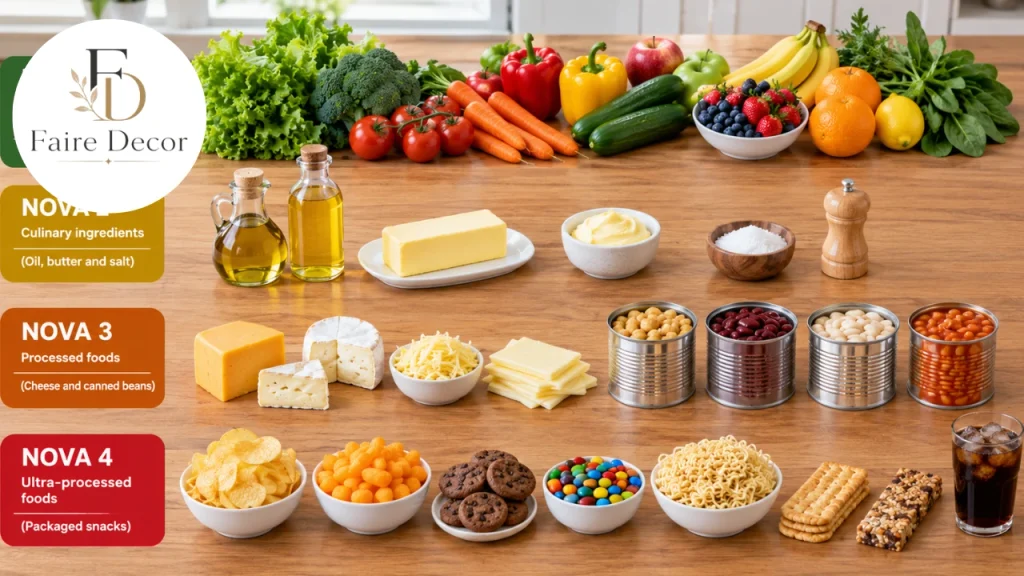
The NOVA classification explained
NOVA was proposed in 2009 by researchers at the University of São Paulo in Brazil, led by Carlos Augusto Monteiro, according to Wikipedia (Wikipedia: Nova classification). It sorts foods into four groups based on the nature, extent,t and purpose of their processing.
| NOVA group | What it means | Examples |
|---|---|---|
| 1. Unprocessed or minimally processed | Natural foods, sometimes cleaned, dried, frozen or pasteurized, with no added salt, sugar, oil or fat | Fresh or frozen fruit and vegetables, grains, beans, fresh meat, eggs, milk, plain yogurt |
| 2. Processed culinary ingredients | Substances taken from group 1 foods or nature, used for cooking and seasoning | Oils, butter, salt, sugar, vinegar, honey, flour starches |
| 3. Processed foods | Simple products made by adding group 2 ingredients to group 1 foods | Cheese, canned vegetables, salted nuts, canned fish, simple breads |
| 4. Ultra-processed foods | Industrial products with many ingredients, including substances rarely used in home cooking | See below |
What makes a food “ultra-processed”?
Wikipedia’s summary of NOVA describes ultra-processed foods as industrially manufactured products with many ingredients, often including:
Sugar, oils, fats and salt, usually in larger amounts than in processed foods
Substances rarely used in home kitchens, such as high-fructose corn syrup, hydrogenated oils and protein isolates
Additives used mainly for appearance, taste or texture, such as flavors, colors, emulsifiers and sweeteners
Whole foods from group 1 are absent or make up only a small share.
Common examples that are generally considered ultra-processed include soft drinks, packaged sweet snacks, many breakfast cereals, instant noodles, reconstituted meat products like nuggets and hot dogs, and many mass-produced packaged breads.
A quick label test
A simple rule many people use: if the ingredients list includes items you wouldn’t find in a home kitchen, or it’s very long, the product is likely ultra-processed.
It isn’t perfect, but it’s a useful starting point when you’re shopping.
How much ultra-processed food do people eat?
A lot, in many countries. Wikipedia reports that, as of 2023, ultra-processed foods made up about 58% of daily calories in the United States and 57% in the United Kingdom, citing research published in The BMJ (Wikipedia: Ultra-processed food).
The same source notes much lower shares in some countries, with Colombia, Italy and Taiwan at 20% or less.
These figures matter because when ultra-processed foods make up more than half of what people eat, they leave less room for fruit, vegetables, whole grains and other minimally processed foods.
What does research say about ultra-processed food and health?
This is where food processing becomes a health question.
The BMJ umbrella review (2024)
In February 2024, The BMJ published an umbrella review that pooled 45 meta-analyses from 14 review articles, covering almost 10 million participants (BMJ Group).
It found that higher exposure to ultra-processed food was linked to 32 adverse health outcomes. The evidence was rated strongest for:
About a 50% higher risk of death related to cardiovascular disease
A 48% to 53% higher risk of anxiety and common mental disorders
A 12% higher risk of type 2 diabetes
It also found highly suggestive evidence for higher risks of death from any cause, obesity, sleep problems,s and depression.
The NIH feeding trial (2019)
Most ultra-processed food research is observational, meaning it shows links rather than proof of cause. One well-known exception is a small randomized trial at the US National Institutes of Health.
According to the NIH, 20 healthy adults stayed at the NIH Clinical Center for a month and ate an ultra-processed diet and a minimally processed diet for two weeks each, in random order (NIH). The meals offered were matched for calories, sugar, fiber, fat, and carbohydrates, and people could eat as much as they wanted.
On the ultra-processed diet, people ate about 500 more calories a day, ate faster, and gained about 2 pounds (0.9 kg). On the minimally processed diet, they lost about the same amount.
Important caveats
The research is concerning, but it isn’t the full picture.
Most studies are observational. People who eat lots of ultra-processed food may differ in other ways, such as income, sleep, smoking or activity, that also affect health.
The NIH trial was small. The NIH noted that differences in protein between the diets might explain up to half the calorie difference.
Mechanisms are unclear. Researchers still don’t know exactly what about ultra-processed food drives these effects. It could be texture, eating speed, calorie density, additives, or a combination.
Not all ultra-processed foods are equal. Wikipedia cites a 2023 Lancet study finding that some ultra-processed breads and cereals were not linked to higher disease risk, while sugary and artificially sweetened drinks and some animal-based products were.
The definition is debated. Critics argue NOVA focuses on processing rather than nutrients, and can group very different foods together.
The fair conclusion: diets high in ultra-processed food are consistently linked with poorer health, and cutting back is a reasonable goal. But you don’t need to fear every packaged food.
How to read a food label
Labels tell you a lot about food processing if you know where to look.
Ingredients list. Ingredients are listed in order of weight, from most to least. If sugar, syrup or oil appears near the top, it’s a major part of the product.
Length and familiarity. A short list of words you recognize, like “oats” or “tomatoes, salt,” usually points to minimal processing. A long list with emulsifiers, flavorings, colors, and sweeteners usually points to ultra-processing.
Hidden sugars. Sugar has many names on labels, including glucose syrup, dextrose, maltodextrin, fructose, and cane juice.
Nutrition panel. Compare salt, sugar, saturated fat and fiber per 100 g between similar products. Front-of-pack traffic-light labels, where available, make this quicker.
Health claims. Words like “natural,” “light” or “high protein” don’t tell you how a product was made. Always check the ingredients.
Processed doesn’t always mean unhealthy
Plenty of processed foods are useful parts of a balanced diet. Keep these in your kitchen with confidence:
- Frozen fruit and vegetables: convenient, long-lasting and nutritious
- Canned beans, lentils and chickpeas: fast protein and fiber (rinse to reduce salt)
- Canned tomatoes: the base of countless sauces and soups
- Canned fish: sardines, salmon and tuna for quick meals
- Plain yogurt and cheese: fermented foods made with simple ingredients
- Wholegrain bread with a short ingredient list
- Rolled oats, dried pasta and rice
- Pasteurized milk
The key difference is between foods that are processed to preserve or prepare real ingredients, and products engineered from industrial ingredients to be hyper-palatable and convenient.
Food processing methods: a closer look
Here’s how common methods work and what they do to food.
Freezing. Low temperatures stop microbes from growing and slow chemical changes. Freezing preserves most nutrients well.
Canning. Food is sealed in containers and heated to kill microbes. Canned foods keep for a long time, but some vitamins sensitive to heat, like vitamin C, can drop. Many canned foods also contain added salt or sugar, so check labels.
Drying. Removing water stops microbes from growing. Dried fruit, beans, grains, herbs and spices all rely on drying.
Pasteurization. Gentle heating kills harmful bacteria in milk, juice and other drinks while keeping flavor largely intact.
Fermentation. Friendly bacteria or yeasts transform food, producing yogurt, cheese, sauerkraut, kimchi, bread, soy sauce and more.
Milling and refining. Grinding grain into flour, or refining it to white flour, changes fiber content. Wholegrain versions keep more of the grain.
Extrusion and industrial forming. Ingredients are mixed into a dough or paste and forced through shapes under heat and pressure. Many breakfast cereals and puffed snacks are made this way.
Practical ways to eat less ultra-processed food
You don’t need a complete diet overhaul. Small, steady changes add up.
Start with one meal
Breakfast is often the easiest place to begin. Swap a sugary cereal for oats with fruit, or plain yogurt with nuts and berries.
Read ingredient lists, not just nutrition labels
Look for short lists of recognizable ingredients. Compare two versions of the same food, such as two loaves of bread, and choose the simpler one.
Cook in batches
Make a large pot of soup, chili, curry or pasta sauce at the weekend and freeze portions. It gives you a home-cooked “ready meal” for busy evenings.
Make simple swaps
| Instead of | Try |
|---|---|
| Flavored yogurt | Plain yogurt with fruit and a little honey |
| Sugary drinks | Water, sparkling water with citrus, plain tea or coffee |
| Packaged snack bars | Nuts, fruit, or homemade oat bars |
| Instant noodles | Quick stir-fry with frozen vegetables and dried noodles |
| Processed meats | Leftover roast chicken, eggs, canned fish or beans |
| Flavored crisps | Homemade popcorn or roasted chickpeas |
| Ready-made sauces | Canned tomatoes, garlic, herbs and olive oil |
Stock a “scratch cooking” pantry
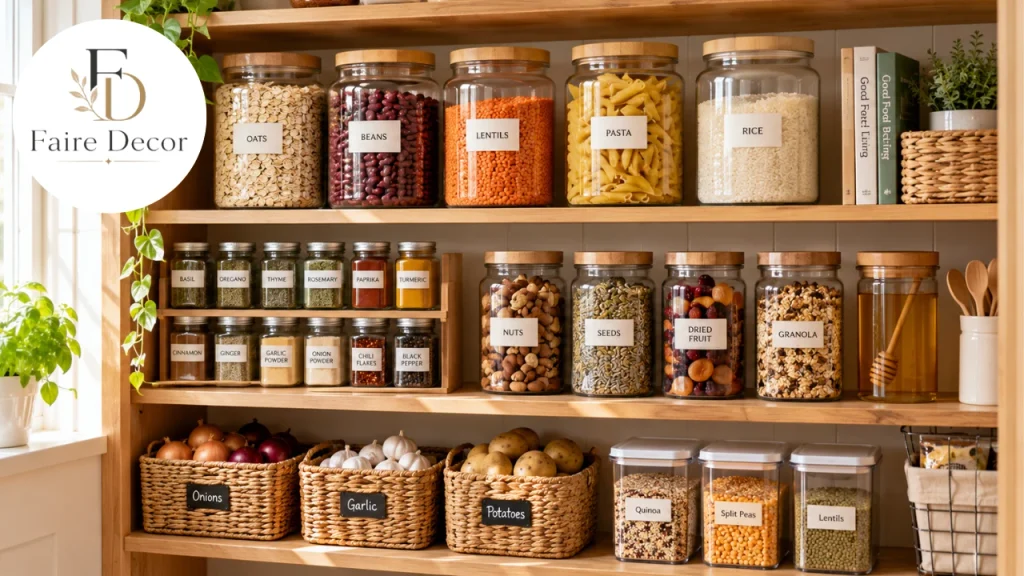
Keep staples on hand so a home-cooked meal is always possible: canned tomatoes and beans, dried pasta and rice, oats, eggs, frozen vegetables, onions, garlic, spices and a good oil.
Don’t aim for perfection
Most families will still eat some ultra-processed foods, and that’s fine. The goal is to shift the balance toward minimally processed foods, not to eliminate everything in a packet.
Food processing at home
You do your own food processing every time you cook, and home processing can be one of the healthiest habits you have.
Batch cooking and freezing let you control ingredients and portion sizes. Label containers with the date and contents.
Home pickling and fermenting are simple, satisfying ways to preserve vegetables. Follow trusted, tested recipes, especially for canning, because improper home canning of low-acid foods can be dangerous.
Making staples from scratch, such as bread, granola, salad dressings, and stock, cuts out many additives.
A well-organized kitchen makes all of this easier. Clear counters, labeled jars, and a freezer with room for batch-cooked meals help scratch cooking feel effortless. If you’re planning a kitchen update, our guide to modern kitchen cabinets covers storage ideas that keep staples visible and close at hand.
For a bright, relaxed cooking space, a coastal kitchen with open shelving makes it easy to display jars of oats, beans,s and grains. And if you love classic style, our Victorian-style kitchen ideas show how a traditional pantry can make home cooking feel special.
Eating well on a budget
Ultra-processed foods are often cheap and convenient, which is a big reason people rely on them. The NIH itself noted that less-processed foods can take more time and money to prepare. But minimally processed eating doesn’t have to be expensive.
Lean on low-cost staples. Dried or canned beans and lentils, oats, rice, pasta, eggs,gs and seasonal vegetables are among the cheapest nutritious foods available.
Buy frozen. Frozen vegetables and fruit cut waste because you use only what you need.
Cook once, eat twice. Turn tonight’s roast vegetables into tomorrow’s soup or frittata.
Plan meals around what’s on offer. Build your week around seasonal produce and discounted staples.
Make your own snacks. Popcorn kernels, oats and nuts often cost less per portion than packaged snacks.
Small amounts of time spent planning can save money and reduce reliance on ultra-processed convenience foods.
Food processing and children
Children’s diets in many countries include a high share of ultra-processed foods, from sugary cereals to packaged snacks and soft drinks. Parents don’t need to aim for perfection, but a few habits help.
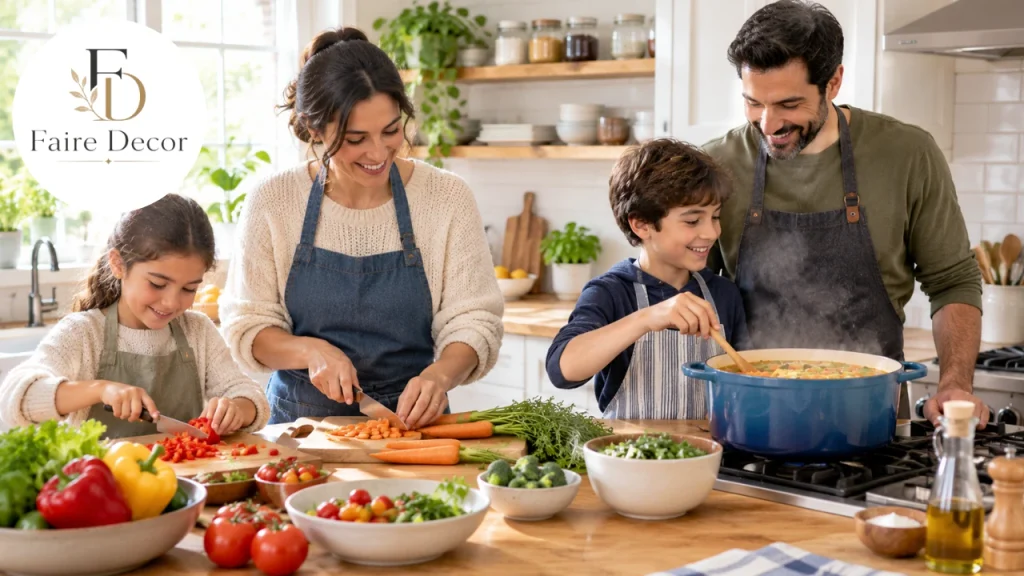
Offer water and milk as everyday drinks. Keep fruit, yogurt, cheese and wholegrain crackers on hand for snacks. Involve children in simple cooking tasks like washing vegetables or stirring porridge, which can make them more willing to try new foods.
If you have questions about your child’s diet, growth or food allergies, speak to your doctor or a registered dietitian.
Food processing and food safety
Processing plays a major role in keeping food safe. Pasteurization, proper canning, refrigeration, and freezing all help prevent foodborne illness.
At home, the same principles apply:
Keep cold food cold and hot food hot. Refrigerate leftovers promptly.
Separate raw and cooked foods to avoid cross-contamination.
Cook foods thoroughly, especially poultry, minced meat, and eggs.
Store food properly. Keep dried goods in airtight containers in a cool, dry place.
Follow tested recipes for home canning and preserving.
Good kitchen hygiene is a simple form of food processing that protects your family every day.
How governments are responding
Food processing is increasingly part of public health policy. According to Wikipedia:
Brazil’s 2014 national dietary guidelines, partly based on NOVA, advise choosing natural or minimally processed foods and avoiding ultra-processed products.
Brazil, Uruguay, Peru and Ecuador now have guidelines recommending avoiding ultra-processed foods.
Chile requires warning labels on some products and taxes sugar-sweetened drinks.
The World Health Organization and the American Heart Association recommend reducing intake of ultra-processed foods.
The UK’s Scientific Advisory Committee on Nutrition has recommended further research rather than adopting a formal position.
Expect more debate and more research as scientists try to pin down exactly how processing affects health.
Myths about food processing
“All processed food is junk.” Not true. Frozen vegetables, canned beans, and plain yogurt are all processed and can be part of a healthy diet.
“Fresh is always better than frozen.” Not necessarily. Frozen produce is often picked and frozen quickly, keeping its nutrients well.
“Additives are always dangerous.” Approved food additives are assessed for safety by regulators. The bigger concern with ultra-processed foods is usually the overall diet pattern, not a single additive.
“If it’s labeled ‘natural’ or ‘healthy,’ it isn’t ultra-processed.” Marketing claims don’t tell you how a food is made. Check the ingredient list.
“Homemade means healthy.” Home-cooked food is usually less processed, but a homemade cake is still a cake. Balance still matters.
FAQs:
What is food processing?
Any change made to food between the farm and your plate, such as washing, freezing, canning, cooking, fermenting, or manufacturing it into new products.
What is the difference between processed and ultra-processed food?
Processed foods are simple products made by adding ingredients like salt, sugar,r or oil to whole foods, such as cheese or canned vegetables. Ultra-processed foods are industrial products with many ingredients, often including additives and substances rarely used in home cooking.
What is the NOVA classification?
A system proposed in 2009 by researchers at the University of São Paulo. It sorts foods into four groups: unprocessed or minimally processed foods, processed culinary ingredients, processed foods, and ultra-processed foods.
Is all processed food bad for you?
No. Frozen vegetables, canned beans, plain yogurt,rt and pasteurized milk are processed and can be part of a healthy diet. The main health concern is diets high in ultra-processed foods.
What does research say about ultra-processed food?
A 2024 umbrella review in The BMJ linked higher intake to 32 adverse health outcomes. Most of the evidence is observational, though, and scientists are still studying why.
How can I tell if a food is ultra-processed?
Check the ingredients list. Long lists with additives such as emulsifiers, flavorings, colors, and sweeteners, or ingredients you wouldn’t use at home, usually signal ultra-processing.
Are frozen vegetables processed?
Yes, but only minimally. Freezing preserves nutrients well, and frozen vegetables are a convenient, healthy option.
How can I eat less ultra-processed food?
Start with one meal, read ingredient lists, batch cook, make simple swaps, and keep a well-stocked pantry of staples like oats, beans, canned tomatoes, and frozen vegetables.