

Potting soil is a light, fluffy growing mix made for containers. Despite the name, most bags contain little or no actual soil. They’re blends of peat moss or coco coir, bark, perlite, and sometimes compost, built to hold water and air at the same time.
That balance is the whole point. Roots in a pot need moisture, but they also need oxygen, and ordinary dirt from the yard can’t supply both in a confined space.
If your houseplants keep sulking, rotting, or drying out, the mix is often the hidden cause. This guide explains what’s really in the bag, how to read the label, which blend suits which plant, how to make your own, and how to reuse what you already have.
Potting soil vs potting mix vs garden soil
The names on garden center shelves overlap, and the labels aren’t always strict. Here’s how the main products usually differ.
| Product | What it usually contains | Best use |
|---|---|---|
| Potting soil/potting mix | Peat or coir, bark, perlite or vermiculite, often a starter fertilizer | Containers, hanging baskets, houseplants |
| Garden soil | Topsoil blended with compost or other organic matter | Mixing into in-ground beds |
| Topsoil | Mostly mineral soil, sometimes screened | Filling low spots, leveling lawns |
| Raised bed mix | Soil, compost and coarse material, heavier than potting mix | Raised beds and large planters |
| Seed-starting mix | Very fine peat or coir with perlite or vermiculite, little or no fertilizer | Germinating seeds |
In practice, “potting soil” and “potting mix” are used for the same thing. “Mix” is the more accurate word, because the best container blends are soilless.
The important line runs between container products and in-ground products. A bag labeled “garden soil” or “in-ground” is meant to be dug into a bed, not poured into a pot.
Why garden soil fails in pots
It seems logical to fill a pot with free dirt from the yard. It almost always goes badly. The University of Massachusetts Extension puts it plainly: mineral-based soils alone are not recommended for container plants (UMass Extension). In a pot, garden soil compacts, holds too much water,r and leaves too little air for roots.
In the ground, earthworms, roots, ts and freezing and thawing keep soil open. A pot has none of that. Every watering presses the particles closer together, until the bottom of the pot becomes a soggy, airless layer where roots rot.
Unpasteurized yard soil can also bring along weed seeds, insects, and disease organisms. Indoors, that often means fungus gnats flying around your windows. Potting soil solves both problems. It’s light, sterile or close to it, and built from materials that keep their structure after months of watering.
What’s actually inside a bag of potting soil
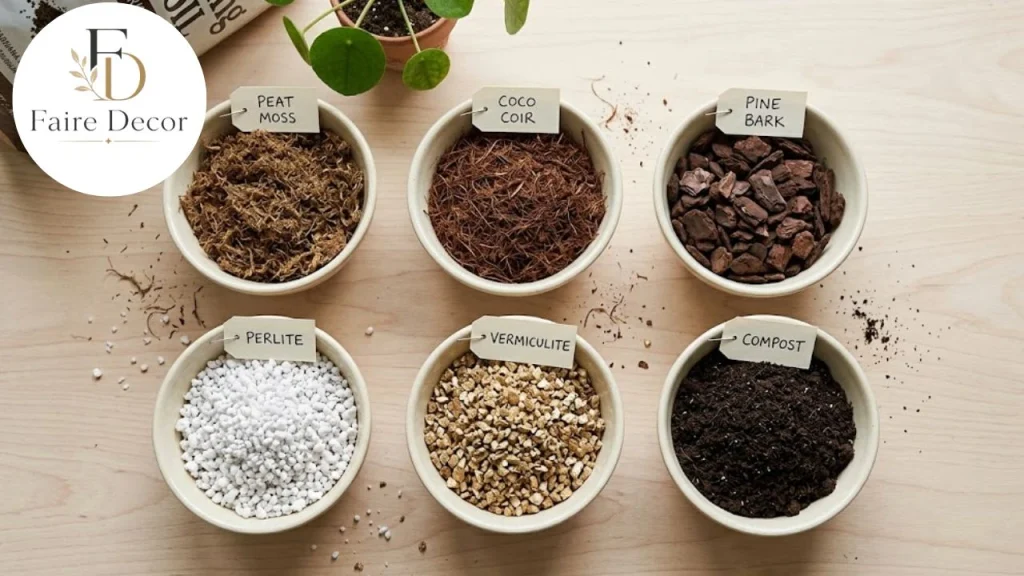
Every brand has its own recipe, but most use the same handful of ingredients. Knowing what each one does makes it far easier to choose a bag, or fix one.
| Ingredient | What it does | Watch out for |
|---|---|---|
| Peat moss | Holds water and nutrients; the base of many mixes | Acidic, so lime is added; hard to rewet once bone dry |
| Coco coir | Holds water like peat, rewets more easily | Needs fertilizer; poorly washed coir can be salty |
| Pine bark | Adds air and structure, cheaper than peat | Dries faster; fine bark can tie up nitrogen |
| Perlite | White, puffed volcanic rock that improves drainage and air | Floats to the top over time |
| Vermiculite | Shiny, expanded mica that holds water and some nutrients | Too much keeps mixes wet |
| Compost | Adds nutrients and biological life | Quality varies; strong compost can burn roots |
| Sand | Adds weight and fast drainage | Generally unwanted except for cacti and succulents |
UMass notes that peat moss makes up roughly 30 to 80% of many mixes. Because peat is acidic, manufacturers add limestone to balance the pH, and they add wetting agents because dry peat repels water. That’s why a mix that has dried out completely can sit in its pot like a cork, with water running straight past it. More on fixing that below.
Fertilizer in the bag
Many bags include fertilizer, and the label tells you which kind. A starter charge is a small dose that UMass says is usually used up after two or three waterings. After that, you’re responsible for feeding.
A continuous or controlled-release fertilizer comes as small coated beads that release nutrients over weeks, faster in warm weather. When the beads look empty, the fertilizer is spent.
Wetting agents and water-holding gels
Wetting agents help water soak into dry peat. Organic mixes sometimes use yucca extract instead of synthetic agents.
Some bags add water-holding gels or polymers. UMass notes these break down by mid to late summer, and that they can lead to overwatering in cool weather. They’re useful for hanging baskets in hot sun and less useful for indoor plants.
How to read a potting soil label
A quick read of the bag tells you most of what you need. Look for these points before you buy. Container or in-ground? Make sure it says potting mix, container mix, or for pots. Skip anything labeled garden soil or for in-ground use.
Main ingredients. Look for peat moss, coir or pine bark, plus perlite or vermiculite. Fertilizer type. Check whether it’s a starter charge or continuous feed, and how many months it lasts. Additives. Note any wetting agents or moisture-control gels, and decide whether you want them.
Plant-specific claims. Cactus, orchid,d and seed-starting mixes are different products, not just marketing. Then pick the bag up. UMass suggests a good mix should feel light and fluffy. A heavy, compacted bag can mean water damage or too much sand.
If you can see inside, look for visible white specks of perlite and a crumbly texture. A bag that smells sour or rotten has likely been stored wet and is worth skipping.
The right potting soil for each type of plant
There’s no single best mix. The right blend depends on how much water your plant likes and how its roots are built.
| Plant type | What it needs | What to use |
|---|---|---|
| Most tropical houseplants (pothos, philodendron, monstera) | Moist but airy | All-purpose potting mix, plus extra perlite or orchid bark |
| Cacti and succulents | Fast drainage, dries quickly | Cactus mix, or potting mix with lots of perlite or grit |
| Orchids and many aroids | Lots of air around thick roots | Chunky bark-based orchid mix |
| African violets | Light, slightly acidic, evenly moist | African violet mix, often peat-based with perlite and vermiculite |
| Seeds and cuttings | Fine, sterile, low fertilizer | Seed-starting mix |
| Vegetables and herbs in containers | Moisture, nutrients, good structure | Quality potting mix with compost, plus regular feeding |
| Citrus and small trees in pots | Stability and drainage over years | Bark-heavy, coarse mix that holds its shape |
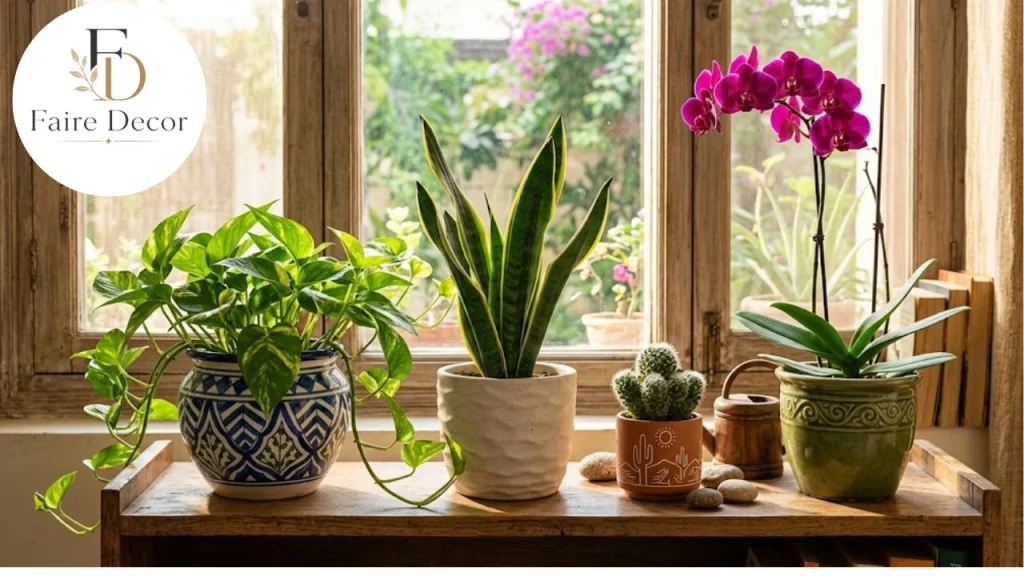
A simple rule helps when you’re unsure. The more a plant dislikes wet feet, the more coarse material it needs: perlite, pumice or bark. If you’re decorating with indoor plants, matching the mix to the plant is the difference between a lush corner and a sad one. A modern eclectic interior full of trailing pothos and a sculptural snake plant needs two different blends.
How to make your own potting mix
Making your own potting soil is easy, often cheaper in bulk, and lets you tune the mix to your plants. The basic formula is simple: a water-holding base, an air-making material, al and a little nutrition.
A basic all-purpose mix
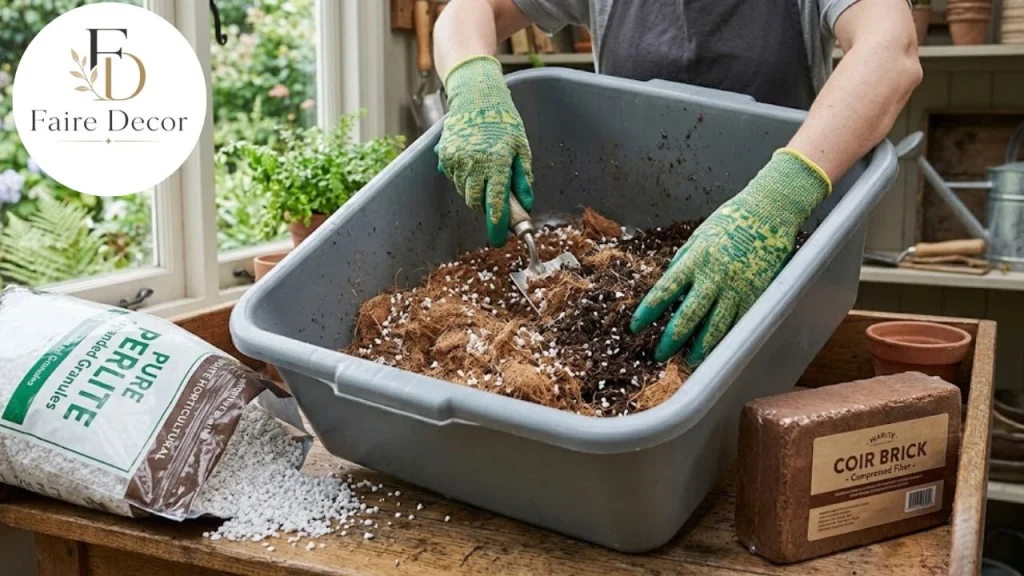
2 parts peat moss or coco coir, 1 part perlite, 1 part compost. A sprinkle of balanced slow-release fertilizer, following the package rate. If you use peat, add a little garden lime to balance its acidity, following the lime package’s rate. Coir is closer to neutral and usually doesn’t need it.
Extension recipes by plant
The Piedmont Master Gardeners share coir-and-compost recipes, measured by parts (Piedmont Master Gardeners).
| Use | Recipe (by parts) |
|---|---|
| Seedlings | 1 compost, 2 coir, 1 builders’ sand |
| Ornamentals | 1 coir, 1 compost, 1 topsoil, 1 builders’ sand |
| Edibles | 2 compost, 2 coir, 1 builders’ sand |
The ornamental recipe includes topsoil. That works in a balanced blend with plenty of coarse material, which is very different from filling a pot with straight garden soil.
Mixing tips
Moisten the base first. Dry peat and compressed coir bricks need water before they’ll mix evenly. Coir bricks expand to several times their size. Mix in a tub or on a tarp. Wear a dust mask, because dry peat and perlite produce fine dust.
Squeeze test. A handful should hold together briefly when squeezed, then crumble. If water drips out, it’s too wet. Make only what you’ll use. Homemade mix with compost is best used within a season.
Peat-free potting soil
Peat moss is excellent for plants but comes with an environmental cost. The Piedmont Master Gardeners note that peat bogs cover about 3% of the earth’s surface, yet store an estimated 15 to 30% of the planet’s land-based carbon.
Harvesting peat releases that stored carbon. That’s why many gardeners and some countries are moving toward peat-free mixes. Coco coir is the most common replacement. It holds moisture, drains well, resists compaction, breaks down more slowly than peat, and is less acidic.
It does have trade-offs. Coir contains few nutrients and tends to hold onto the ones you add, so peat-free mixes usually need regular feeding. Poorly washed coir can also carry salts.
Composted bark and wood fiber are other good options, especially in blends. No single substitute is perfect, so the master gardeners suggest trying a few mixes and moving away from peat gradually.
Bagged or homemade: which is better value?
For a few houseplants, bagged mix is the easy winner. You buy one bag, it’s ready to use, and there’s nothing left over to store.
Homemade mix starts to pay off when you garden in volume: lots of containers, a balcony vegetable garden, or seasonal displays. Buying peat or coir, perlite, and compost in large bags and blending them yourself usually costs less per liter. It also lets you adjust the recipe for each plant.
Specialty mixes sit in the middle. Orchid, cactus, and African violet blends cost more per bag, but you need only small amounts. For one or two special plants, buying the specialty bag is simpler than stocking every ingredient.
A good compromise works for many households. Buy one quality all-purpose mix, then keep a bag of perlite and a bag of orchid bark on hand to customize it.
Potting your plant the right way
A good mix can still fail if the pot or the potting job works against it. Choose a pot with drainage holes. It’s the single most important rule in container growing. If you love a decorative pot without holes, use it as an outer cachepot and keep the plant in a plastic nursery pot inside.
Skip the gravel layer. Putting rocks in the bottom of a pot doesn’t improve drainage. It raises the wet zone higher in the pot and leaves less room for roots. Size up gradually. Move a plant to a pot just 1 to 2 inches wider than its current one. A huge pot holds far more wet mix than the roots can use, which invites rot.
Don’t pack it down. Fill around the root ball, tap the pot on the table to settle the mix, and water to close air gaps. Pressing hard with your fingers squeezes out the air you just paid for. Leave a gap at the top. Keep the mix about an inch below the rim so water has room to soak in rather than spill over.
Signs it’s time to replace the mix
Potting mix doesn’t last forever. The organic parts slowly break down, the structure collapses, and the mix holds more water and less air each year.
Most houseplants benefit from fresh potting soil every one to two years, often at the same time you size up the pot. Watch for these signs that it’s due sooner: Water sits on the surface for a long time before soaking in. The mix has shrunk well below the rim or pulled away from the sides.
Roots circle the pot or poke out of the drainage holes. A white crust keeps returning, even after flushing. The plant has stopped growing despite good light and regular feeding. You don’t always need a bigger pot. If the plant is the size you want, you can trim the outer roots a little, shake off old mix,x and replant it in the same pot with fresh blend.
Can you reuse potting soil?
Yes, if the plants that grew in it were healthy. The Piedmont Master Gardeners suggest mixing used mix 50/50 with fresh mix, and discarding any mix that had disease problems.
How to refresh old potting soil
Empty and break it up. Remove old roots, leaves, es and any stray bugs. Check its condition. Old mix that smells sour, has visible mold, or came from a diseased plant goes in the compost or the garden bed, not back into a pot.
Restore structure. Old mix breaks down and compacts over time, so add fresh perlite or bark. Add nutrients. The original fertilizer is long gone. Blend in compost or a slow-release fertilizer. Mix with fresh. A 50/50 blend with new potting mix gives the best results.
Spent mix also has a second life outdoors. It’s a useful soil conditioner when worked into flower beds or used to top up garden areas. Many gardeners reuse old mix for annual flowers and vegetables, and save fresh mix for long-lived houseplants. Those plants will sit in the same mix for a year or more.
How to store potting soil
Potting soil keeps well when it’s stored dry and closed. Wet, warm storage causes most problems. UMass warns that bags containing slow-release fertilizer should be stored dry. Moisture can release fertilizer inside the bag, concentrating salts that can burn roots later.
Roll the top of an opened bag tightly and clip it, or tip the mix into a lidded plastic bin. Keep it in a shaded spot, like a garage, shed, or under a porch, away from rain. A well-sealed bag typically stays usable for a year or two. Over time, the fertilizer fades, and wetting agents become less effective, so older mix may need fresh feeding.
Common potting soil problems and fixes
Most container troubles show up first in the mix itself. Here’s how to read the signs.
| Problem | Likely cause | Fix |
|---|---|---|
| Water runs straight through and out | Mix dried out and became water-repellent | Bottom-water: soak the pot in a tub for 20 to 30 minutes |
| White crust on the surface or pot rim | Fertilizer or mineral salts building up | Scrape off the top layer and flush with plenty of water |
| Tiny flies hovering around the pot | Fungus gnats breeding in constantly wet mix | Let the top inch or two dry between waterings |
| White fuzz on the surface | Harmless saprophytic fungus from wet, organic mix | Scrape it off, improve airflow, water less often |
| Mix pulls away from the pot sides | Dried out and shrunk | Bottom-water, then repot if it keeps happening |
| Soggy mix and yellowing leaves | Overwatering, poor drainage or old, compacted mix | Check drainage holes; repot into fresh mix |
The water-repellent problem catches almost everyone eventually. Peat-based potting soil that dries out completely resists water, because dry peat sheds moisture. Bottom-watering fixes it. Set the pot in a sink or tub with a few inches of water and leave it until the surface feels damp. Then let it drain fully.
Indoor vs outdoor containers
The same bag can behave very differently inside and outside, so adjust the mix to where the pot will live. Indoor pots dry slowly. There’s no wind, less sun, and often cooler, steadier temperatures, so the mix stays wet longer. For most houseplants, an airier blend with extra perlite or bark is safer than a dense, moisture-holding mix.
Outdoor containers face the opposite problem. Sun, wind, and summer heat can dry a pot in a single afternoon, especially terracotta and small hanging baskets. A mix with more coir, compost, or a water-holding additive helps them last between waterings.
Big outdoor planters have their own trick. Filling a very large pot with fresh potting soil gets expensive and heavy. Many gardeners fill the bottom third of deep planters with an inverted plastic pot or lightweight filler, then use quality mix where the roots actually grow.
Window boxes and balcony rails are worth extra thought. They’re small, exposed, and often in full sun, so they dry fastest of all. A moisture-retentive mix and a layer of mulch on top make a real difference.
Is potting soil safe to handle?
Bagged mixes are generally safe for home use, but a few simple habits are worth keeping. Wear gloves and a dust mask when mixing dry materials. Dry peat and perlite produce fine dust that’s unpleasant to breathe.
Wash your hands after handling any potting mix, especially products containing compost or manure. Garden and health agencies routinely recommend this as basic hygiene. Store bags out of reach of children and pets. Some mixes contain fertilizer pellets that aren’t safe to eat.
How much potting soil do you need?
Bags are usually sold by volume in quarts, liters, or cubic feet. It’s easy to underbuy for large planters. As a rough guide, a 1-cubic-foot bag holds about 28 liters. That’s enough to fill several small pots or one large planter.
For an accurate figure, check the volume printed on your container, or measure it. Then add a little extra, since fresh mix settles after the first few waterings.
Getting the most from your containers
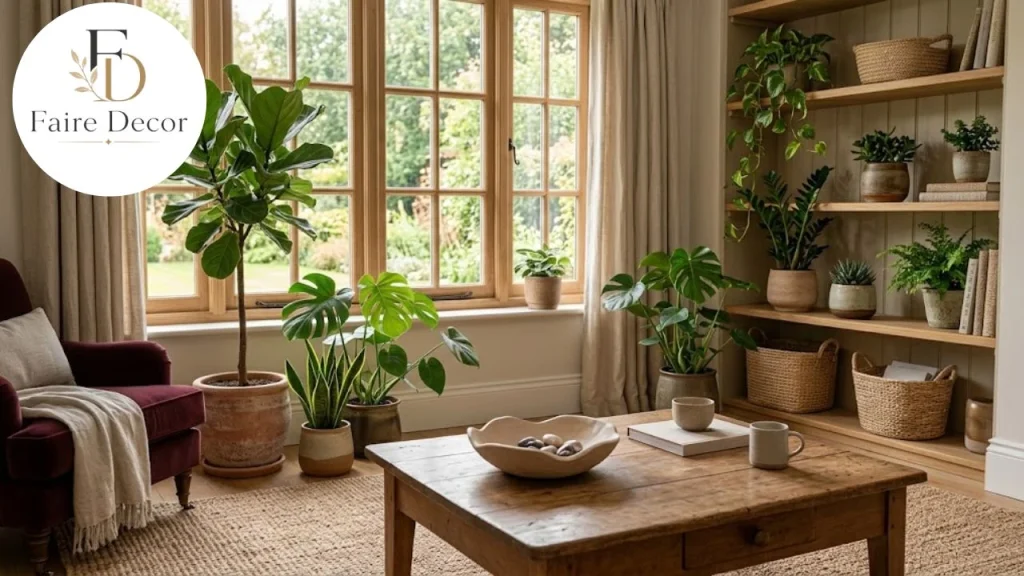
Good containers make good rooms. A healthy fiddle-leaf fig or a lush trailing plant can change a space as much as a new paint color. Pairing the right mix with the right pot, then placing plants where they get the light they need, lets them grow into a feature. Calm, earthy rooms, like our earthy bedroom ideas, are especially easy to soften with greenery.
FAQs:
Is potting soil the same as potting mix?
In practice, yes. Both names describe light, usually soilless blends made for containers. “Garden soil” and “topsoil” are different products meant for in-ground use.
Can I use garden soil in pots?
Not on its own. Garden soil compacts in containers, holds too much water, and leaves roots short of air. It can also carry weeds, pests, and disease.
What is the best potting soil for indoor plants?
A quality all-purpose potting mix with added perlite or orchid bark suits most tropical houseplants. Use cactus mix for succulents and chunky bark mix for orchids.
How often should I change potting soil?
Every one to two years for most houseplants, or sooner if water pools on the surface, roots fill the pot,t or a white crust keeps returning.
Can you reuse old potting soil?
Yes, if the plants were healthy. Remove old roots, add fresh perlite and compost or fertilizer, and mix it 50/50 with new potting mix. Throw out mix from diseased plants.
Does potting soil go bad?
It doesn’t spoil like food, but it degrades. Fertilizer fades, wetting agents weaken,n and the structure breaks down. Store it dry and sealed, and use it within a year or two.
Why is my potting soil not absorbing water?
Peat-based mixes repel water once they dry out completely. Soak the pot from below in a tub of water for 20 to 30 minutes until the surface feels damp, then let it drain.