

A front porch is more than a covered area outside your front door. It is the transition between the public street and your private home — the first place guests experience your personality and the space that welcomes you back every day.
A well-designed porch can make a modest house feel more complete, improve curb appeal, create outdoor living space, and even make your entrance feel safer and more inviting. But many homeowners approach porch design backward.
They start by buying furniture, choosing decorations, or copying a picture they found online. The best porches begin with a different question: How should this space actually be used? A porch designed for morning coffee needs a different layout from one designed mainly to protect the entrance.
A small townhouse porch requires different decisions than a wide farmhouse-style veranda. The most successful designs balance:
- architecture
- comfort
- weather protection
- lighting
- materials
- landscaping
- maintenance
- personal lifestyle
This guide explains how to design a front porch that looks beautiful while working naturally with your home.
What Makes a Front Porch Design Successful?
A beautiful porch is not created by adding more objects. It comes from creating balance. The strongest porch designs usually include five elements:
A Clear Entry Point
The front door should immediately communicate where people should go. A common mistake is allowing decorations, plants, or furniture to compete with the entrance. Your eye should naturally move: street → walkway → porch → front door. A strong entry usually includes:
- a visible doorway;
- appropriate lighting;
- balanced landscaping;
- clean pathways;
- correctly sized decorations.
The entrance should feel intentional before anyone steps onto the porch.
Comfortable Movement
A porch is still a pathway. A design can look attractive in photographs but feel frustrating in daily use. Common problems include:
- chairs blocking the door;
- oversized planters narrowing the walkway;
- rugs that create trip hazards;
- furniture that forces people to squeeze past.
A practical porch protects movement first and decoration second.
A Sense of Scale
One of the biggest differences between professional-looking porches and amateur designs is proportion. A large house with a tiny porch light can feel unbalanced. A small porch filled with oversized furniture can feel cramped. Every element should match the available space:
- furniture size;
- lighting size;
- planter height;
- rug dimensions;
- door proportions.
Good design is often less about adding more and more about choosing the right size.
How to Choose the Right Front Porch Style
Your porch should support your home’s existing architecture instead of fighting against it.
Modern Front Porch Design
Modern porches focus on simplicity. Typical features include:
- clean lines;
- minimal decoration;
- natural wood;
- concrete or stone surfaces;
- black metal accents;
- simple outdoor furniture.
The goal is not to make the porch empty. It is to make every element intentional. A modern porch often works best with fewer but stronger visual elements:
- one large planter instead of many small pots;
- one statement light instead of several decorative fixtures;
- a strong front Porch color.
Farmhouse Front Porch Design
Farmhouse porches are popular because they create a relaxed, welcoming feeling. Common features:
- wooden rocking chairs;
- porch swings;
- natural textures;
- simple planters;
- lantern-style lighting;
- neutral colors.
However, farmhouse style is often overdone. Adding every rustic decoration at once can make a porch feel like a themed display. A better approach is to combine:
- natural materials;
- comfortable seating;
- simple greenery;
- warm lighting.
The architecture should create the farmhouse feeling, not decorations alone.
Traditional Front Porch Design
Traditional porches often rely on symmetry. Popular elements include:
- matching columns;
- balanced planters;
- classic lighting;
- timeless colors;
- structured landscaping.
This style works especially well for Colonial, Georgian, and classic suburban homes. The key is consistency. Traditional design feels calm because the eye understands the pattern.
Cottage Front Porch Design
Cottage porches create a softer, more personal atmosphere. They often include:
- flowering plants;
- painted furniture;
- vintage details;
- natural textures;
- welcoming colors.
Unlike formal styles, cottage design can handle slight imperfections. A mix of materials can actually make the space feel more authentic.
Small Front Porch Ideas That Make Limited Space Work
Small porches are often the hardest to design because every inch matters. The solution is not to make the porch look fuller. The solution is to make it smarter.
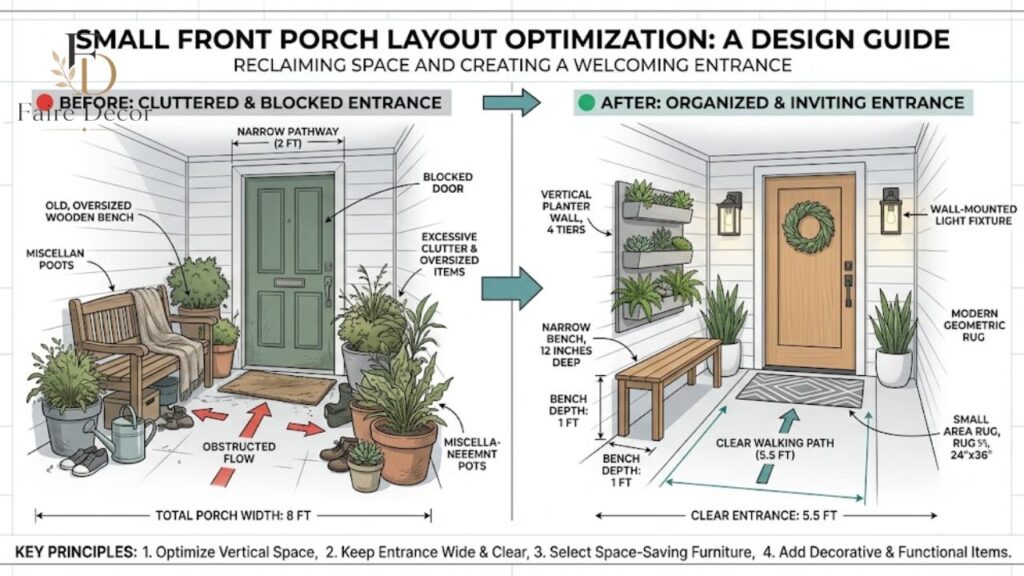
Use Vertical Space
When floor space is limited, use:
- hanging plants;
- wall lights;
- vertical planters;
- decorative house numbers;
- wall-mounted storage.
This adds personality without reducing walking space.
Choose Multi-Purpose Furniture
A small porch benefits from furniture that performs more than one function. Examples:
- a narrow bench for seating and packages;
- a storage bench for outdoor items;
- a small side table that fits beside a chair.
Avoid filling the porch with furniture that only looks good.
Keep the Color Palette Simple
Too many colors make small spaces feel busy. A small porch usually looks larger with:
- two or three main colors;
- matching planters;
- coordinated textiles;
- consistent finishes.
Simple does not mean boring. It means controlled.
Front Porch Furniture: Choose Based on Real Life
Furniture should match how you actually use the space.
Rocking Chairs
Best for:
- relaxing;
- reading;
- traditional homes;
- deeper porches.
They create movement and character.
Porch Swing
Best for:
- larger covered porches;
- family homes;
- relaxing spaces.
A swing needs proper structural support and should never be attached casually to a ceiling without considering load requirements.
Bench Seating
Best for:
- narrow porches;
- practical entrances;
- smaller homes.
A bench provides seating without taking the same depth as multiple chairs.
Outdoor Sofa
Best for:
- large porches designed as outdoor rooms.
A sofa requires enough depth to avoid making the porch feel crowded.
Front Porch Lighting: The Detail Many Homeowners Forget
Lighting changes how a porch feels after sunset. A good lighting plan needs both beauty and function.
Entrance Lighting
The front door should be easy to see. Wall sconces are popular because they frame the entrance and provide practical illumination.
Step Lighting
Steps should never disappear into darkness. Good lighting improves:
- safety;
- visibility;
- nighttime appearance.
Ambient Lighting
Larger porches benefit from softer lighting:
- ceiling fixtures;
- string lights;
- lanterns;
- landscape lighting.
The goal is not brightness. The goal is atmosphere.
Choosing Front Porch Flooring Materials
The floor creates the foundation of the entire design.
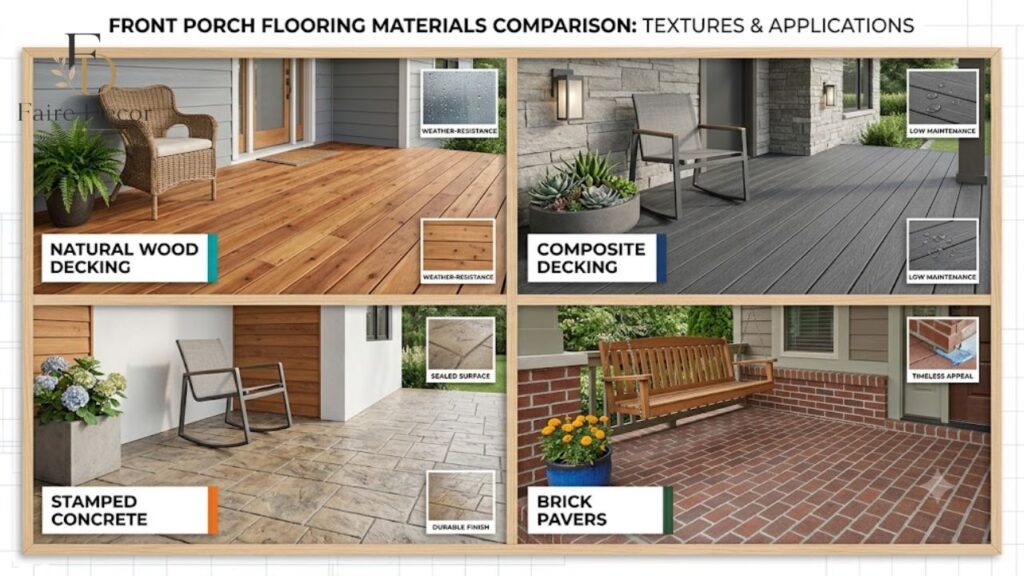
Wood
Advantages:
- warm appearance;
- traditional appeal;
- easy to customize.
Challenges:
- maintenance;
- moisture protection;
- regular finishing.
Composite Decking
Advantages:
- lower maintenance;
- resistance to weather;
- consistent appearance.
Challenges:
- higher initial cost;
- less natural feel.
Concrete
Advantages:
- durable;
- versatile;
- affordable.
Modern concrete options include:
- staining;
- stamping;
- decorative finishes.
Brick and Stone
Advantages:
- timeless appearance;
- strong architectural character.
Challenges:
- installation complexity;
- cost variation.
The best material depends on:
- climate;
- maintenance preference;
- budget;
- house style.
Front Porch Plants: Design With Your Climate
Plants can completely change a porch, but choosing them only because they look attractive online often leads to disappointment.
Consider:
- sunlight;
- temperature;
- wind exposure;
- watering needs.
A covered porch may still receive intense afternoon heat or very little natural rain. Good porch plants should match the environment. Examples:
Sunny Porch
Consider:
- lavender;
- ornamental grasses;
- succulents;
- heat-tolerant flowers.
Shaded Porch
Consider:
- ferns;
- begonias;
- coleus;
- shade-loving foliage plants.
Large containers often create a stronger visual impact than many small pots.
Front Porch Makeover Ideas on a Budget
You do not always need a complete renovation. Some of the biggest improvements are relatively simple.
Paint the Front Door
A new door color can completely change the entrance.
Upgrade Hardware
Small details matter:
- handles;
- house numbers;
- doorbell;
- mailbox.
Improve Lighting
A better fixture often creates an immediate upgrade.
Add Large Planters
Large plants create presence and make the entrance feel intentional.
Remove Clutter
Sometimes the best makeover begins by removing things. Too many decorations can hide the architecture.
Front Porch Mistakes to Avoid
Copying Another Home Exactly
A design that works on a large farmhouse may fail on a small modern home.
Buying Furniture Before Measuring
Always measure:
- porch depth;
- door swing;
- walking path;
- furniture clearance.
Ignoring Weather
Outdoor spaces experience:
- rain;
- sunlight;
- humidity;
- temperature changes.
Choose materials accordingly.
Making the Porch Look Better Than It Functions
A porch should not only photograph well. It should work every day.
How a Front Porch Improves Curb Appeal
A porch influences how people perceive the entire home. It creates:
- a stronger entrance;
- visual balance;
- architectural character;
- outdoor connection.
The biggest curb appeal improvements usually come from:
- front door appearance;
- lighting;
- landscaping;
- clean surfaces;
- appropriate furniture.
A beautiful porch does not require expensive materials. It requires thoughtful choices.
Frequently Asked Questions
How do I make my front porch look expensive?
Use fewer but higher-impact elements. A well-finished door, quality lighting, large planters, coordinated colors, and properly scaled furniture often create a more expensive appearance than many decorations.
What is the cheapest way to improve a front porch?
Cleaning, painting, upgrading hardware, adding plants, and improving lighting usually provide the biggest visual improvement for the lowest cost.
How do I decorate a small front porch?
Keep the walkway open, choose compact furniture, use vertical decorations, and avoid overcrowding the limited space.
What furniture is best for a front porch?
The best furniture depends on porch size and lifestyle. Chairs work well for relaxation, benches work well for compact spaces, and sofas suit deeper porches.
Should a front porch match the house?
Yes. The strongest designs complement the home’s architecture instead of introducing unrelated styles.