

A balcony is more than an extension of a building. It is a transition between indoor comfort and the outside world. It can become a quiet morning corner, an entertainment area, a place to enjoy a view, or simply an architectural feature that improves the character of a home.
One element quietly controls how that space feels: the railing. A well-designed balcony railing does not just prevent falls. It influences how open the balcony feels, how much light enters the space, how the exterior looks from the street, and how comfortable the area becomes for everyday use.
Many homeowners make the mistake of choosing a railing only after the major construction decisions are complete. By that stage, they often focus only on matching colors or finding something attractive. But railing design deserves earlier consideration. The wrong choice can:
- block an important view
- make a small balcony feel closed
- create unnecessary maintenance
- clash with the home’s architecture
- require expensive changes later
The right choice can:
- improve curb appeal
- increase outdoor usability
- create a stronger architectural identity
- provide long-term durability
A successful design comes from understanding the relationship between appearance, performance, and the way people actually use the space.
Why Balcony Railing Design Is More Than an Exterior Detail
When people redesign homes, they often focus on visible features:
- flooring
- paint colors
- furniture
- lighting
- landscaping
The railing is sometimes treated as a final accessory. That approach can create problems because the railing occupies a unique position. It is both:
A safety feature and a design feature.
A wall protects privacy. A window controls light. A railing controls the relationship between the home and the surrounding environment. For example: A transparent glass system can visually connect a balcony with a garden or ocean view.
A decorative metal design can become a statement feature on a traditional home. A timber railing can add warmth to a natural setting. A privacy-focused panel system can make an urban balcony more comfortable. The best designs solve a lifestyle problem, not just an appearance problem.
Understanding What You Actually Need From Your Balcony Railing
Before selecting materials or browsing design galleries, define the purpose of the balcony. Different balconies require different solutions.
Is the Balcony Mainly About the View?
Some balconies exist because of what is beyond them. Examples:
- homes overlooking the sea
- mountain properties
- apartments with skyline views
- gardens facing scenic landscapes
In these situations, the railing should interfere as little as possible. Popular choices include:
- frameless glass
- minimal stainless steel systems
- cable railing
These designs create visual openness and allow the surroundings to remain the focus. However, maximum visibility is not always the best choice. A glass railing facing a busy road may provide less comfort than a partially private design. The view outside matters, but so does the feeling of being inside the space.
Is Privacy More Important?
Urban living has changed how homeowners use balconies. A balcony overlooking neighboring apartments may technically be functional, but many people avoid using it because they feel exposed. Privacy-focused designs can improve usability. Options include:
Frosted Glass Panels
Useful when you want:
- natural light
- modern appearance
- reduced visibility
Decorative Metal Screens
These can provide:
- artistic patterns
- airflow
- partial privacy
Vertical Slat Designs
These create controlled privacy while maintaining a contemporary look.
Mixed Material Designs
A combination of glass, metal, and solid sections can provide a balance between openness and separation. A balcony should feel comfortable, not like a display platform.
Consider How the Balcony Will Be Used
A design that looks perfect in a photograph may not work for everyday life. Think about real activities: Will people eat outside? Will children spend time there? Will plants be placed around the edge? Will furniture sit close to the railing? Will pets have access? These questions influence design decisions.
For example: A homeowner who loves gardening may need a system that works safely with planters. Someone with young children may prefer designs that avoid climbable elements. Someone who entertains guests may prioritize durability and easy cleaning. The best railing reflects the homeowner’s routine.
The Relationship Between Architecture and Railing Design
A common design mistake is selecting a railing independently from the house. A balcony railing should communicate with the architecture around it.
Modern Homes
Contemporary architecture usually benefits from simplicity. Common choices:
- frameless glass
- black aluminum
- stainless steel
- cable systems
These materials support:
- clean lines
- open spaces
- minimalist appearance
A modern home rarely needs an overly decorative railing. The strength comes from proportion and simplicity.
Traditional Homes
Classic architecture often benefits from more detailed designs. Suitable options include:
- ornamental metal
- wood railings
- vertical balusters
The goal is not to copy historical designs exactly but to maintain visual harmony.
Farmhouse and Rustic Homes
Natural materials usually work best. Popular combinations:
- timber handrails
- black metal supports
- cable systems with wood accents
These designs create contrast between durability and warmth.
Luxury Homes
Premium properties often use materials that emphasize openness and craftsmanship. Common choices:
- custom glass systems
- stainless steel details
- architectural metalwork
Luxury is often created through precision rather than complexity. Clean alignment, hidden fixings, and carefully selected finishes usually create a more expensive appearance than excessive decoration.
How Climate Should Influence Your Choice
A railing that performs well in one location may struggle somewhere else. Climate affects:
- corrosion
- fading
- moisture absorption
- cleaning frequency
- coating durability
Before choosing a material, evaluate:
Coastal Environments
Salt exposure creates one of the biggest challenges for exterior metals. Important considerations:
- corrosion-resistant materials
- suitable fasteners
- protective finishes
Stainless steel and aluminum are often considered because of their resistance, but quality and specification still matter. A cheap metal system can fail even if the material name sounds appropriate.
Wet and Humid Areas
Moisture creates challenges for:
- untreated wood
- poorly protected steel
- low-quality finishes
Important features include:
- drainage
- sealed connections
- durable coatings
Hot and Sunny Locations
Strong sunlight can affect:
- painted surfaces
- wood finishes
- certain plastic components
UV-resistant finishes become important.
Cold Regions
Freeze-thaw cycles can stress:
- joints
- fasteners
- coatings
- surrounding construction
A good installation must consider water movement and seasonal changes.
The Importance of Choosing a Railing System, Not Just a Material
One of the biggest misconceptions is that choosing the material automatically determines quality. It does not. A railing is a complete system made of:
- posts
- panels
- cables
- glass
- brackets
- connectors
- fasteners
- mounting method
Two railings made from the same material can perform completely differently because of differences in:
- engineering
- manufacturing quality
- installation
- maintenance
For example: A glass railing is not simply “glass.” Its performance depends on:
- glass type
- thickness
- support design
- connection method
- structural attachment
A cable railing is not simply “cables.” It depends on:
- cable tension
- post strength
- spacing
- hardware quality
Thinking in terms of systems leads to better decisions.
What Makes a Railing Look Expensive?
Many homeowners assume expensive appearance comes from expensive materials. That is only partly true. High-end designs usually share several characteristics:
Consistent Proportions
The thickness of posts, spacing, and overall scale match the building.
Clean Connections
Visible clutter often makes a design look cheaper. Hidden or carefully designed connections create refinement.
Appropriate Material Combinations
Examples:
- glass with stainless steel
- wood with black metal
- stone architecture with simple metal
Quality Finishes
A good finish can make an affordable material appear premium. A poor finish can make expensive materials look ordinary.
Choosing the Right Balcony Railing Material
The material you select affects almost every part of ownership:
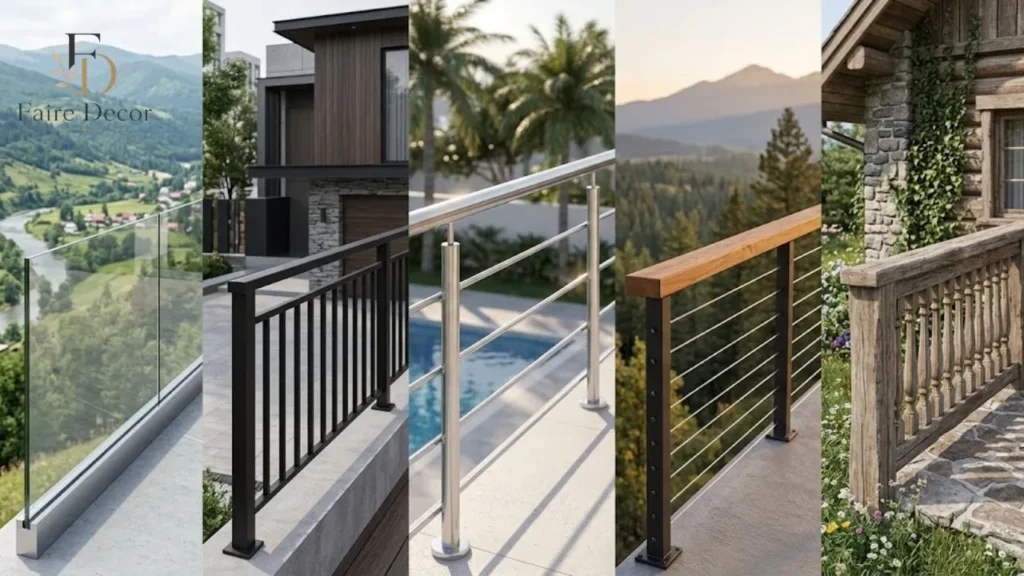
- appearance
- durability
- cleaning requirements
- repair options
- long-term cost
- how the balcony feels when you use it
There is no universal winner. The best material depends on your home’s architecture, climate, budget, and expectations.
Glass Balcony Railing: When Openness Matters Most
Glass has become one of the most recognizable choices in contemporary architecture because it changes the relationship between the balcony and the surrounding environment. Instead of creating a strong visual boundary, glass allows the space beyond the railing to remain visible. This makes it especially popular for:
- waterfront homes
- apartments with views
- modern villas
- rooftop terraces
A properly designed glass system can make a small balcony feel larger because it reduces visual interruption.
Advantages of Glass Railings
Unobstructed Views
The biggest benefit is visibility.A glass system allows homeowners to enjoy:
- landscapes
- city views
- gardens
- natural surroundings
without heavy vertical elements blocking the scene.
Contemporary Appearance
Glass creates a clean architectural style that works well with:
- concrete
- stone
- wood
- steel
- modern facades
Better Natural Light
Traditional solid barriers can make outdoor spaces feel enclosed. Glass maintains a brighter, more open feeling.
Limitations of Glass Railings
Glass looks simple, but it requires careful planning. Common considerations include:
Cleaning
Glass reveals:
- fingerprints
- dust
- rain marks
- mineral deposits
Properties near water may require more frequent maintenance.
Installation Precision
Glass systems depend heavily on accurate installation. Problems can appear when:
- panels are incorrectly aligned
- fittings are poor quality
- support systems are inadequate
Privacy
Clear glass provides visibility in both directions. For balconies facing neighbors, options such as:
- frosted glass
- tinted glass
- partial privacy panels
may provide a better balance.
Aluminum Balcony Railing: Practical, Durable and Versatile
Aluminum has become a popular choice because it provides a strong combination of:
- affordability
- durability
- low maintenance
- design flexibility
It is often selected by homeowners who want an attractive exterior without frequent upkeep.
Why Aluminum Works Well
Resistance to Corrosion
Unlike ordinary steel, aluminum does not rust in the same way. This makes it suitable for many outdoor applications.
Lightweight Construction
Aluminum systems are easier to handle during installation compared with heavier metal alternatives.
Design Variety
Modern aluminum systems are available in:
- vertical pickets
- horizontal designs
- glass combinations
- decorative patterns
They can suit both contemporary and traditional homes.
Things to Consider
Not all aluminum railings are equal. Important factors include:
- coating quality
- manufacturing standards
- hardware selection
- installation method
A premium powder-coated system will generally perform better than a low-quality painted product.
Stainless Steel Balcony Railing: A Premium Modern Option
Stainless steel is popular where homeowners want a refined architectural appearance. It is commonly paired with:
- glass panels
- cable systems
- minimalist designs
Its slim appearance creates a sophisticated look without making the balcony feel heavy.
Strengths of Stainless Steel
- modern appearance
- strong structural performance
- clean visual lines
- long-lasting when correctly specified
Maintenance Reality
Many people assume stainless steel means zero maintenance. That is not always true. Outdoor stainless components can still experience:
- surface staining
- contamination marks
- discoloration in harsh environments
The quality of the stainless grade, finishing, and cleaning routine influences performance.
Cable Balcony Railing: Minimal Design With Maximum Visibility
Cable systems have become popular among homeowners who want openness without using glass. Instead of solid panels, stainless cables run horizontally between posts. The result is a lightweight appearance.
Why People Choose Cable Railings
Cable systems are attractive because they provide:
- excellent sightlines
- modern appearance
- reduced visual weight
They work particularly well in:
- mountain homes
- coastal properties
- contemporary houses
- outdoor entertaining areas
The Hidden Engineering Behind Cable Systems
Although cable railing looks simple, the system requires careful design. Important factors include:
- post strength
- cable tension
- spacing
- connection quality
The clean appearance depends on accurate installation. A poorly tensioned system can lose its visual appeal over time.
Wooden Balcony Railing: Warmth and Character
Wood remains popular because natural materials create an emotional connection that manufactured materials often cannot replicate. Wood works especially well with:
- cottages
- traditional homes
- farmhouse designs
- natural landscapes
Benefits of Wood
Natural Appearance
Wood adds:
- warmth
- texture
- character
Customization
It can be:
- stained
- painted
- shaped
- combined with metal
Repairability
Individual components can often be repaired or refinished.
Challenges of Wood
Outdoor wood requires attention. Potential issues include:
- moisture absorption
- cracking
- fading
- insects
- surface deterioration
The lifespan depends heavily on:
- wood species
- protective finish
- climate
- maintenance routine
Wood is not a “set and forget” option. It is chosen by people who appreciate natural materials.
Iron and Decorative Metal Balcony Railings
Decorative iron remains popular for homeowners who want a more traditional or artistic appearance. Common applications include:
- heritage homes
- Mediterranean-style properties
- classic architecture
Advantages
- strong visual character
- custom designs
- timeless appearance
Disadvantages
The main concern is corrosion protection. Metalwork requires:
- quality coating
- inspection
- maintenance of damaged areas
A small scratch that exposes untreated metal can become a larger problem over time.
Modern Balcony Railing Design Ideas for Different Home Styles
A material alone does not create good design. The final result depends on how the railing interacts with the building.
Minimalist Black Railing Designs
Black railings have become popular because they create strong contrast while maintaining simplicity. They work well with:
- white walls
- concrete surfaces
- wood accents
- modern architecture
The key is proportion. Heavy black frames can dominate a small balcony, while thin profiles create elegance.
Mixed Glass and Metal Designs
Combining materials often creates a more balanced result. Examples:
- glass panels with black aluminum frames
- stainless steel posts with clear glass
- wood handrails with metal structures
This approach combines transparency with texture.
Vertical Line Designs
Vertical bars remain popular because they provide:
- safety
- traditional appearance
- visual rhythm
They suit:
- suburban homes
- modern farmhouse designs
- classic architecture
Decorative Privacy Designs
Privacy railings can become design features. Examples:
- laser-cut metal panels
- patterned screens
- frosted sections
These provide function while adding architectural interest.
Balcony Railing Cost: What Actually Determines the Price?
Homeowners often search for a simple answer: “How much does a balcony railing cost?” The reality is that several variables influence the final amount.
Material Choice
Different materials have different price ranges. Generally:
More Budget-Friendly
- basic wood
- standard aluminum
Mid-Range
- steel
- cable systems
Premium
- custom glass systems
- architectural stainless steel designs
Balcony Size and Layout
A simple straight balcony costs less than:
- curved designs
- multiple corners
- unusual shapes
- large terraces
Complex geometry increases:
- fabrication time
- material waste
- installation difficulty
Existing Balcony Condition
Replacement projects can become more expensive if there are problems with:
- old anchors
- damaged concrete
- waterproofing
- structural support
Sometimes the visible railing is not the real issue.
Installation Requirements
Labor costs increase when projects require:
- special equipment
- difficult access
- custom fabrication
- engineering review
- removal of old systems
Long-Term Value Matters
A cheaper installation may become expensive if it requires:
- frequent repainting
- repairs
- replacement parts
- premature replacement
A better comparison is: Initial cost + maintenance + expected lifespan
Balcony Railing Installation: Important Things Homeowners Should Know
A railing installation is not only a finishing task. It is a structural project.
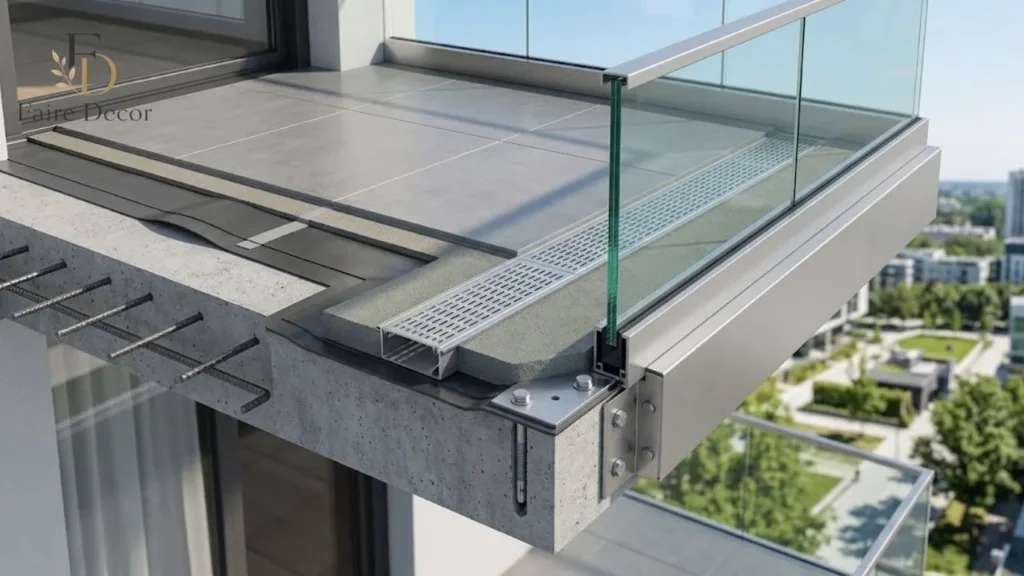
Check the Supporting Structure
Before installation, professionals should evaluate:
- where posts will attach
- strength of the substrate
- condition of existing materials
- suitability of anchors
The strongest railing is ineffective if the attachment point is weak.
Protect Waterproofing
Many balconies sit above:
- rooms
- garages
- living areas
Incorrect installation can create water problems. Important details include:
- sealing penetrations
- protecting membranes
- controlling drainage
Measure After Final Surface Installation
A common renovation mistake is installing a railing before finishing:
- tiles
- decking
- waterproof layers
Finished floor height can affect:
- railing height
- spacing
- compliance
Professional Installation vs DIY
DIY installation may be suitable for some simple systems. However, professional installation is recommended for:
- elevated balconies
- glass systems
- custom designs
- structural changes
- waterproof surfaces
A railing is a safety component, not just decoration.
Common Balcony Railing Mistakes to Avoid
Choosing Looks Over Performance
A beautiful design that fails in your climate becomes frustrating.
Ignoring Hardware Quality
Many people compare:
- glass
- metal
- wood
but ignore:
- bolts
- brackets
- connectors
Hardware quality affects durability.
Forgetting Maintenance
Every railing requires some care. Before buying, ask: “How much time am I willing to spend maintaining this?”
Installing Without Understanding Structure
The railing must connect to something strong. Decorative appearance cannot replace proper engineering.
Copying a Design Without Considering Location
A railing that works perfectly for a dry climate may not perform well near the ocean or in a wet region.
Which Balcony Railing Is Best for Your Situation?
There is no single material that works perfectly for every property. The right choice depends on where the balcony is located, how it will be used, and what matters most to the homeowner. Below are practical recommendations based on common situations.
Best Balcony Railing for Homes With Scenic Views
Recommended options:
- Frameless glass
- Cable railing
- Minimal stainless steel systems
Why:
When the surroundings are the main attraction, the railing should create the least visual interruption possible. Glass works especially well when homeowners want:
- uninterrupted views
- maximum daylight
- a luxury appearance
Cable systems provide a similar open feeling with a lighter structure.
Best Low-Maintenance Balcony Railing
Recommended option:
Powder-coated aluminum
Why:
Aluminum is popular because it combines:
- durability
- corrosion resistance
- simple cleaning
- design flexibility
It is often a practical choice for homeowners who want a good-looking exterior without regular painting or refinishing.
Best Balcony Railing for Coastal Properties
Recommended options:
- Marine-grade stainless steel
- High-quality aluminum
- Properly protected systems
Why:
Salt exposure can accelerate deterioration of unsuitable materials. Important considerations:
- corrosion-resistant hardware
- protective coatings
- regular inspection
The material alone is not enough. The complete system matters.
Best Balcony Railing for Small Balconies
Recommended options:
- Glass railing
- Cable railing
- Slim-profile aluminum systems
Why:
Small balconies benefit from designs that avoid visual heaviness. A thick, decorative barrier can make a compact area feel smaller. Lightweight-looking systems create a greater sense of space.
Best Balcony Railing for Modern Homes
Recommended options:
- Frameless glass
- Black aluminum
- Stainless steel cable
Why:
Modern architecture usually relies on:
- clean lines
- simple geometry
- minimal decoration
A simple railing often creates a more premium appearance than a complicated design.
Best Balcony Railing for Traditional Homes
Recommended options:
- Wood
- Decorative metal
- Classic vertical balusters
Why:
Traditional architecture usually benefits from warmth and detail.
The railing should complement:
- window styles
- exterior materials
- roof design
- existing decorative elements
Best Budget-Friendly Balcony Railing
Recommended options:
- Standard aluminum
- Basic wood systems
- Simple steel designs
Why:
The lowest upfront cost is not always the lowest lifetime cost. A cheaper material requiring frequent maintenance may become more expensive over time.
A Simple Decision Framework Before Buying
Before choosing a railing system, answer these questions:
What is the most important feature?
Choose one:
- View
- Privacy
- Low maintenance
- Traditional appearance
- Modern design
- Lowest cost
What environment will it face?
Consider:
- coastal exposure
- rain
- snow
- heat
- strong sunlight
Who will use the balcony?
Think about:
How much maintenance is acceptable?
Be realistic. A beautiful material that requires more care may not be the right choice for every homeowner.
Final Thoughts: Choosing a Balcony Railing That Ages Well
The best railing is not always the most expensive, the newest trend, or the one that looks most impressive in a showroom. It is the one that continues to work years after installation. A successful balcony railing should match four things:
- The architecture of the home
- The environment around the property
- The lifestyle of the people using it
- The amount of maintenance the owner is willing to provide
Glass can create openness. Aluminum can provide convenience. Steel can deliver strength and character. Wood can bring warmth. Cable can preserve views. Each material has a place when it is selected for the right reason. The smartest approach is to design the entire system, not just choose a material.
Frequently Asked Questions About Balcony Railing
What is the most popular balcony railing design?
Modern homeowners often choose glass, black metal, aluminum, and cable designs because they create clean lines and work well with contemporary architecture.
However, the most suitable style depends on the home’s design and the owner’s priorities
Which balcony railing material lasts the longest?
Longevity depends on climate, installation quality, and maintenance.
Properly installed aluminum, stainless steel, and quality glass systems can provide many years of service when correctly specified.
Is glass railing a good choice for balconies?
Glass is a strong option for balconies where maintaining views and creating an open appearance are priorities. It requires regular cleaning and careful installation to maintain its appearance and performance.
Which railing is best for privacy?
Privacy-focused options include:
frosted glass
decorative panels
vertical slats
mixed-material systems
The best choice depends on how much light and visibility you want to maintain
How often should balcony railings be maintained?
Maintenance depends on material and climate.
Examples:
Glass may require frequent cleaning.
Wood may need sealing or refinishing.
Metal systems may require inspection of coatings and hardware.
Can an old balcony railing be replaced?
Yes. Replacement is common during renovations, but the supporting structure should be checked before installing a new system.
Is a horizontal railing safe?
Horizontal designs can meet requirements when properly designed, but homeowners should consider climbability, household needs, and local regulations before selecting them.