

Fava beans are large, flat, buttery legumes with a nutty, slightly grassy flavor. They’re rich in fiber, folate, and plant protein, and they’re one of the easiest cool-season crops a home gardener can grow.
They come with one serious caution. People with G6PD deficiency can have a dangerous reaction to them, so the safety section below is worth reading before your first batch.
This guide takes you from seed to plate. You’ll learn what they are, what’s in them, how to peel them without losing your patience, how to cook fresh and dried beans, and how to grow your own.
What are fava beans?
Fava beans come from Vicia faba, a plant grown around the Mediterranean and the Middle East for thousands of years. Depending on where you live, you may know them as broad beans, horse beans, or field beans.
They’re closer to peas than to kidney or pinto beans. That’s why they love cool weather and taste sweet and green when picked young. You’ll find them in three main forms.
| Form | What it’s like | Best for |
|---|---|---|
| Fresh, in the pod | Thick green pods with a cottony lining, 3 to 7 beans inside | Spring salads, pasta, quick sautés |
| Dried | Hard, tan or brown beans; sold whole or split and peeled | Stews, dips, falafel, ful medames |
| Canned or frozen | Pre-cooked or pre-shelled; convenient but softer | Weeknight dips and soups |
Fresh beans are seasonal and a bit of work. Dried and canned beans are available year-round and need far less prep.
Fava beans nutrition
A cup of cooked fava beans is filling, almost fat-free, and dense in fiber and folate. The figures below come from USDA data for one cup (170 g) of boiled mature beans, without salt.
| Nutrient | Per cup cooked (170 g) | % Daily Value |
|---|---|---|
| Calories | 187 kcal | n/a |
| Protein | 12.9 g | about 26% |
| Fiber | 9.2 g | 33% |
| Folate | 177 mcg | 44% |
| Copper | 0.44 mg | 49% |
| Manganese | 0.72 mg | 31% |
| Magnesium | 73 mg | 17% |
| Iron | 2.6 mg | 14% |
| Potassium | 456 mg | 10% |
| Fat | 0.7 g | 1% |
Sources: UH Hospitals nutrition facts (USDA data); % Daily Value from ReciPal (USDA ID 16053). The standouts are folate and copper. One serving covers close to half of your daily need for each.
What can fava beans do for your diet?
Like most legumes, fava beans are good food rather than a miracle food. Here’s what the nutrition actually supports. Steady fullness. Fiber and protein together slow digestion, so a bean salad keeps you going longer than a plain grain bowl. Folate. Folate is essential for cell production.
That’s why it’s emphasized before and during pregnancy, and fava beans are one of the richer whole-food sources. Plant protein. At nearly 13 g per cup, they’re a solid protein base for vegetarian meals. Pair them with grains like bread or bulgur throughout the day to round out the amino acids.
Minerals for everyday function. Copper, manganese, magnesium, and potassium all play roles in energy and muscle function. Fava beans supply useful amounts of each. You’ll often read that fava beans contain L-dopa, the compound used in Parkinson’s medication.
That’s true; researchers measure levodopa in the seeds alongside other compounds (Springer). But the amount varies widely between beans, and food is not a substitute for prescribed treatment. If you take Parkinson’s medication, ask your doctor before eating them regularly.
Who should avoid fava beans?
This is the most important section of the article. For most people, fava beans are safe and healthy, but for some they can cause a medical emergency.
People with G6PD deficiency (favism)
G6PD is an enzyme that protects red blood cells. In people who inherit a deficiency of it, eating fava beans can trigger favism, a sudden breakdown of red blood cells (PMC review). The triggers are two natural compounds in the beans, vicine and convicine.
How much a person eats affects whether a reaction happens and how severe it is. G6PD deficiency is inherited on the X chromosome, so it’s more common in males. It’s widespread in people with Mediterranean, Middle Eastern, African, and South Asian ancestry.
Signs of a reaction can include dark urine, yellowing skin or eyes, paleness, and unusual tiredness. Children are especially vulnerable. Seek medical care immediately if these appear after eating fava beans.
Singapore’s food agency advises people with the deficiency to avoid fava beans completely, including plant-based meats made with fava bean protein (SFA). Read ingredient labels for “faba bean protein” too.
People taking certain medications.
People on MAOI antidepressants are often told to avoid broad bean pods. The same goes for anyone on levodopa-based Parkinson’s medication, because of the beans’ natural L-dopa. If either applies to you, check with your pharmacist first.
If you’re unsure
If you don’t know your G6PD status and a family member has had favism, ask your doctor about a simple blood test. Many countries screen newborns for it, so your records may already show the answer.
How to prepare fresh fava beans
Fresh fava beans have a reputation for being fussy. They need two rounds of peeling, but with a rhythm it takes about 15 minutes for a family-sized batch.
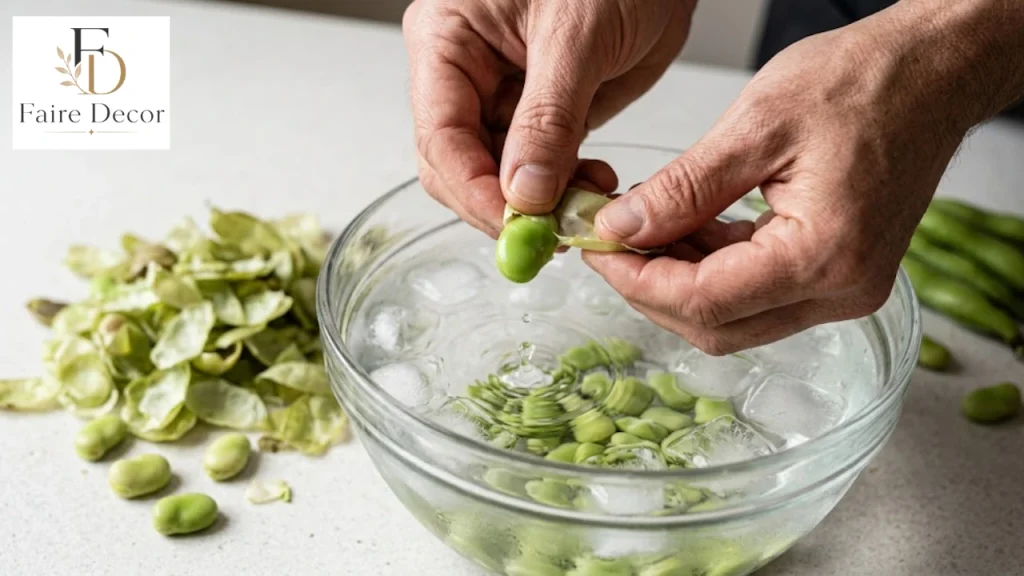
Shell the pods. Snap the stem end and pull the string down the seam, then run your thumb along the inside to pop out the beans. Two pounds of pods yields roughly one to one and a half cups of beans. Blanch. Drop the beans into salted boiling water for 1 to 2 minutes, just until the skins loosen.
Shock. Move them straight into ice water to stop the cooking and keep the color bright green. Slip the skins. Pinch a small tear in the pale outer skin with your thumbnail, then squeeze; the bright green bean pops out.
Very young, small beans can be eaten with their skins on. Larger, older beans have tough, slightly bitter skins that are worth removing. The pods are too fibrous to eat once mature, so add them to compost. Young fava leaves and tender tips are edible; sauté them like spinach.
Cooking with dried and canned fava beans
Dried beans have a deeper, earthier flavor than fresh, and they’re the base of many classic dishes. Soak first. Cover whole dried beans with plenty of water and soak overnight, or for 12 to 24 hours for large ones. Split, peeled dried favas cook much faster and often need only a short soak.
Peel if needed. Whole dried beans keep a thick skin after soaking. Some cooks peel them before cooking, while others cook them whole and let diners peel at the table. Simmer gently. Cook in fresh water until tender, which can take 1 to 2 hours for whole beans. Add salt toward the end.
Canned beans just need rinsing. They’re ideal for quick dips and stews, though they’re softer and saltier than home-cooked.
Easy ways to eat fava beans
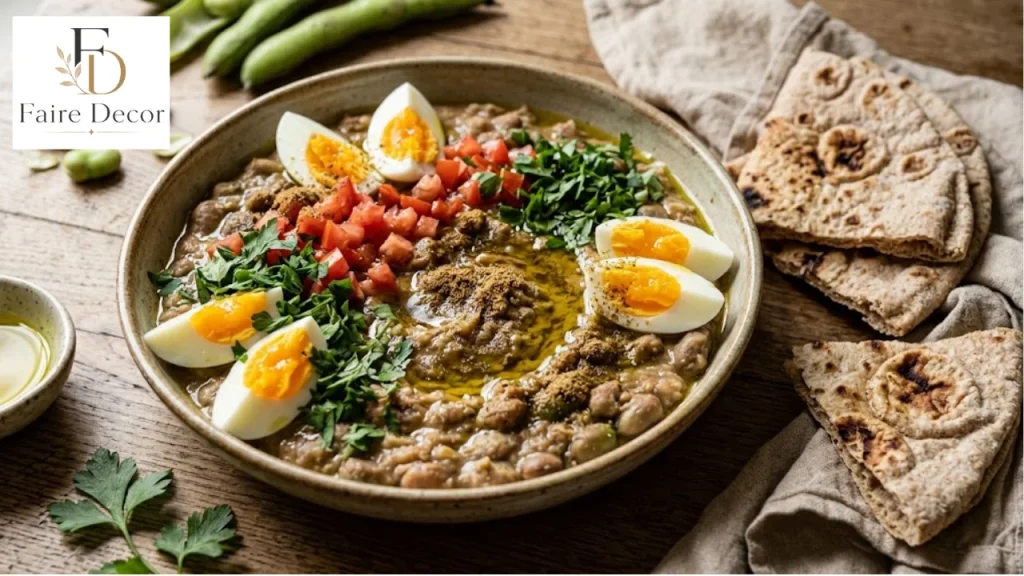
You don’t need a special recipe to enjoy them. These five ideas cover most of what people actually cook at home. Ful medames. Egypt’s beloved breakfast: dried favas simmered until soft, then mashed with garlic, lemon, cumin and olive oil. Serve it with bread, chopped tomato and a boiled egg.
Smashed on toast. Mash blanched fresh beans with lemon zest, olive oil, salt and a little mint, then spread on grilled bread. Top with crumbled feta or ricotta.Spring salad. Toss peeled fresh beans with peas, shaved fennel or radish, herbs and a sharp lemon dressing.
Falafel. In Egypt, falafel (ta’ameya) is traditionally made with dried fava beans rather than chickpeas. Soak them, but don’t cook them, before grinding with herbs. Stews and soups. Dried favas thicken soups beautifully. Pair them with onions, tomatoes, and warm spices, or blend them into a silky purée.
Growing fava beans at home
If you’ve ever paid premium prices for fresh pods, growing your own makes sense. Fava beans are among the easiest vegetables for beginners, because they like the cool weather that most crops avoid.
| Growing detail | What to aim for |
|---|---|
| Season | Cool weather; air temperatures below about 70°F (21°C) |
| When to sow | Early spring, or autumn in mild-winter areas |
| Planting depth | 1 to 2 inches (2.5 to 5 cm) |
| Spacing | 4 to 8 inches apart, rows about 24 inches apart |
| Plant height | 3 to 5 feet; stake taller varieties |
| Days to harvest | About 80 to 100 days |
| Feeding | Little needed; they fix their own nitrogen |
Sources: Harvest to Table, Gardening Know How, HGTV. Local timing varies, so check with your regional extension service.
Step by step
Pick the spot. Choose full sun to light shade, with loose, well-drained soil. Avoid beds where other beans or peas grew recently.
Sow. Push seeds in 1 to 2 inches deep. A legume inoculant can help germination in a new bed, but it’s optional.
Water steadily. Aim for about an inch of water a week, more during flowering and pod fill.
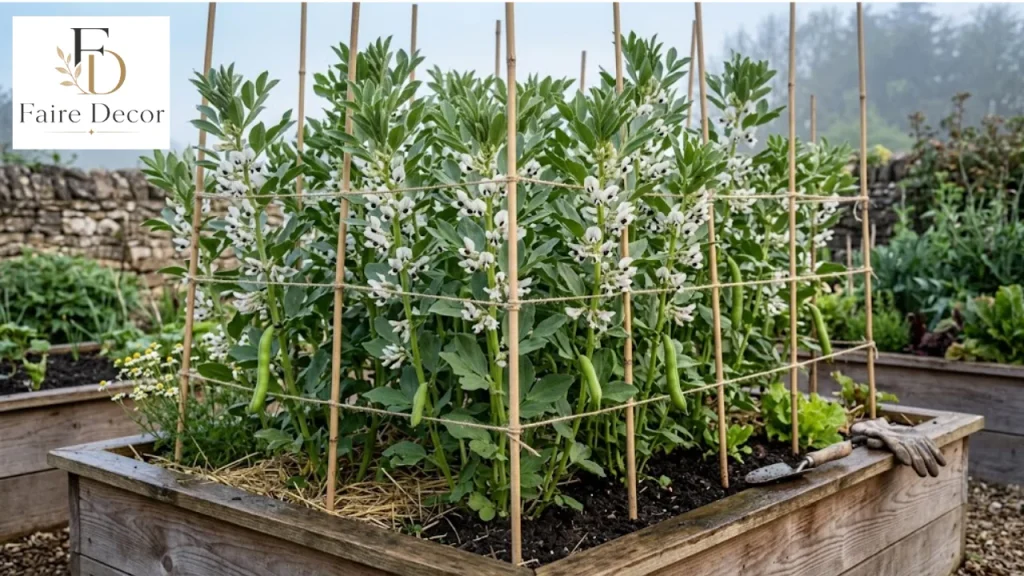
Support the plants. Stake or string-line taller varieties before they flop, especially in windy gardens.
Pinch the tips. Once the first pods set, pinching the growing tips helps discourage aphids. The tips are a tasty bonus green.
Harvest. Pick pods for fresh eating when the beans are plump but before the pods turn leathery. For dried beans, leave the pods on the plant until they’re dark and brittle.
In mild-winter areas where temperatures don’t usually drop below about 15°F, HGTV notes you can sow in fall for an early crop. In colder regions, sow as soon as the soil can be worked in spring.
No garden? Try containers
Shorter varieties grow well in deep containers, at least 12 inches deep, on a sunny porch or balcony. Their white-and-black flowers are pretty, and they attract early pollinators. A few pots can make a front porch feel lived-in through the cool months, with a harvest at the end.
Bonus for the garden
After harvest, cut the plants at soil level and leave the roots in the ground. The nitrogen-rich root nodules feed whatever you plant next, which makes fava beans a favorite cover crop.
How to store fava beans
Good storage keeps the sweet flavor that makes fresh fava beans worth the effort. Fresh pods: keep unwashed in the fridge crisper and use within a few days. The beans turn starchy as they sit. Blanched beans: after blanching and peeling, freeze them flat on a tray, then bag them.
They’ll keep for several months and cook straight from frozen. Dried beans: store in an airtight container in a cool, dry cupboard. Harvest to Table suggests they keep for 10 to 12 months, though older beans take longer to soften.
Common mistakes with fava beans
Skipping the ice bath. Without it, blanched beans keep cooking, turn gray, and get mushy. Over-boiling fresh beans. One to two minutes is enough to loosen skins; a short final sauté does the rest. Picking pods too late. Big, yellowing pods hold starchy, mealy beans. Pick earlier for sweetness.
Planting in summer heat. Hot weather stops flowering and pod set. Time your sowing so plants mature while it’s still cool. Serving without asking. At gatherings, mention fava beans on the menu so guests with G6PD deficiency can avoid the dish.
The bottom line
Fava beans reward a little effort with big flavor and solid nutrition. Buy a few pounds of pods in spring, or plant a short row this season, and you’ll understand why cooks fuss over them.
Just keep the safety rule in mind. If you or anyone at your table has G6PD deficiency, skip fava beans and choose peas or edamame instead.
FAQs:
Are fava beans and broad beans the same?
Yes. Both names refer to Vicia faba. “Broad beans” is common in the UK and Australia, while “fava beans” is common in North America.
Do you have to peel fava beans?
Fresh, mature fava beans taste best double-peeled: shelled from the pod, then slipped out of their pale skins after blanching. Very small, young beans can be eaten with skins on.
Can you eat fava beans raw?
Some Mediterranean cuisines eat young, tender fava beans raw. People with G6PD deficiency should never eat them raw or cooked.
What is favism?
Favism is a sudden breakdown of red blood cells that can happen when people with G6PD deficiency eat fava beans. It needs urgent medical care.
Are fava beans good for you?
For most people, yes. One cooked cup provides about 13 g of protein, 9 g of fiber, and over 40% of the daily value for folate and copper.
How long do fava beans take to grow?
Most varieties take about 80 to 100 days from sowing to harvest. They grow best in cool weather.
What do fava beans taste like?
Fresh beans are sweet, buttery, and slightly grassy, a little like a cross between peas and edamame. Dried beans taste earthier and nuttier.
.