

How to fix loose doorknob problems usually takes only a few minutes, and in many cases you won’t need to replace the hardware. The most common cause is a mounting screw or set screw that has worked loose through everyday use. But don’t start tightening every screw you can find.
A doorknob that wobbles at the base has a different problem from a handle that moves on its spindle. If the screw keeps spinning without becoming tight, the mounting hole may be damaged. And if the knob turns without retracting the latch, the problem may be inside the lockset rather than with the knob’s mounting hardware.
The good news is that these problems are usually easy to distinguish once you know what to look for. Start by finding out which part is actually moving. Then use the repair that matches the problem.
First, Find Out What Is Actually Loose
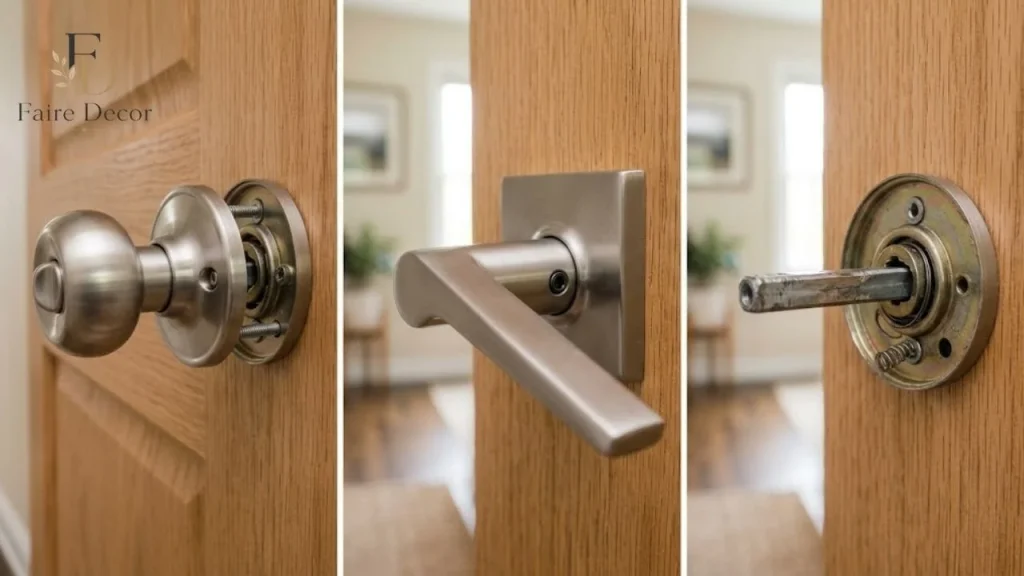
Before grabbing a screwdriver, leave the door open and gently move the knob. Look at the point where the knob meets the door. If the entire knob and its round base move against the door, the mounting hardware is probably loose.
If the base stays firmly against the door but the knob or lever itself wiggles, look for a small set screw on the handle or its neck. If the knob turns without retracting the latch, don’t keep tightening the mounting screws. The problem may be the spindle or another internal part.
If the screw turns but never becomes tight, the hole or threads may be damaged. And if the knob feels solid but the closed door rattles, the loose part may actually be the latch or strike plate rather than the knob. This small diagnosis can save you from taking apart a perfectly good lockset.
A quick diagnosis table
| What you’re seeing | Check first |
|---|---|
| Whole knob wobbles against the door | Mounting screws |
| Lever or knob wiggles at its neck | Set screw |
| No screws are visible | Decorative rose/rosette |
| Knob spins without moving latch | Spindle or internal mechanism |
| Screw won’t tighten | Stripped wood hole or damaged threads |
| Knob is tight but door rattles | Strike plate or latch |
| Knob doesn’t return after turning | Over-tightening or internal problem |
What You Need
For the usual repair, keep it simple:
- Phillips screwdriver
- Small flathead screwdriver
- Small Allen or hex key if your handle has a set screw
- Flashlight for concealed hardware
- Wood glue and wooden toothpicks or a small wood plug if a wood screw hole is stripped
Don’t start with a drill or power driver unless you actually need one. Small door-hardware screws are easy to strip, and a hand screwdriver gives you much better control.
Most importantly, keep the door open while you’re working. If you remove the knob and accidentally interfere with the latch, you don’t want to discover the problem with the door shut.
How to Fix a Doorknob With Visible Screws
If you can see two screws on the inside of the door around the knob’s base, you’re looking at the easiest version of the repair.
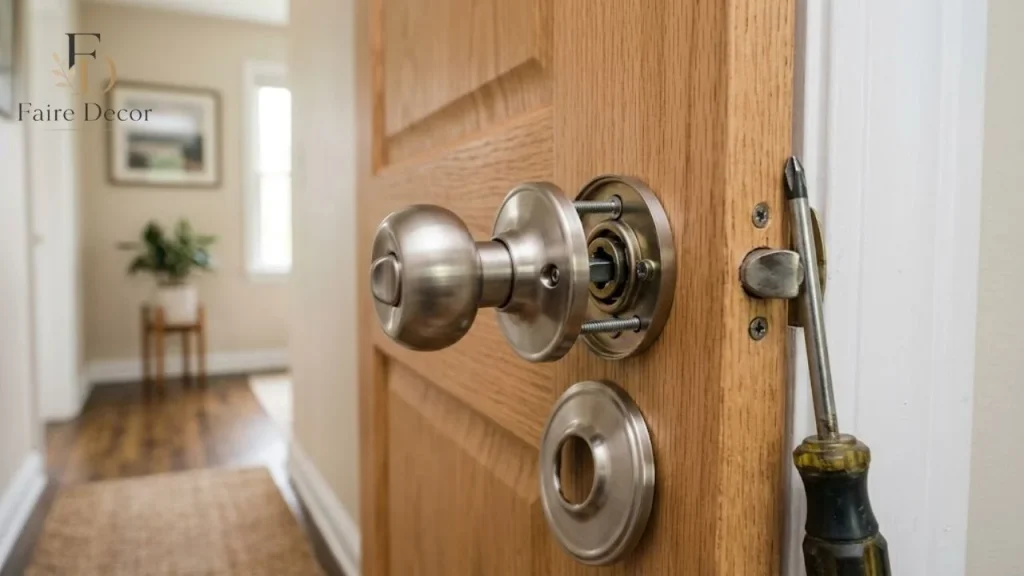
Hold the knob in its normal position
Push the knob or rose firmly back against the door. If the hardware has shifted noticeably, center it in the opening before tightening anything. A loose lockset can rub against the door and gradually mark the finish.
Tighten the mounting screws evenly
Tighten one screw a little, then move to the other. Don’t completely tighten one side while leaving the other loose. Pulling the assembly tight at an angle can create unnecessary pressure inside the lockset. Turn the screwdriver until the hardware is snug.
Then stop. You want the knob secure, not crushed against the door. Over-tightening can cause the internal mechanism to bind, which can make the knob difficult to turn or prevent it from returning properly. This is a commonly overlooked part of the repair.
Check the movement
Give the knob a gentle wiggle. If it is solid, turn it several times. The latch should retract smoothly and return when you release the knob. If everything works normally, you may be finished.
How to Fix a Doorknob With Hidden Screws
This is where many otherwise simple repairs become frustrating. You look at the knob and see no screws. That doesn’t necessarily mean there aren’t any. Many modern locksets hide their mounting screws underneath a decorative plate called a rose or rosette. Some handles also use a small spring-loaded release pin or a set screw.
Look for a release point.
Inspect the neck of the knob or lever. You may find:
- A tiny round hole
- A narrow slot
- A small screw underneath the handle
- A seam around the decorative rose
A round knob may use a spring-loaded detent. Pressing the pin with a paperclip or similar thin tool can release the knob. A lever handle may instead have a small Allen set screw underneath its neck.
The exact arrangement varies by lockset, so don’t force the hardware just because it doesn’t immediately come apart. Current repair guides from both general home-improvement sources and hardware specialists describe several concealed-screw configurations rather than one universal method.
Remove the knob or lever.
If there is a release pin, press it while gently pulling the handle away. If there is a set screw, loosen it with the appropriate Allen key and slide the handle off. Then inspect the edge of the rose.
Many decorative covers have a tiny notch where a flathead screwdriver can be inserted. Pry gently. The goal is to release the cover, not dig into the door. Once the rose comes off, the mounting screws should be visible.
Tighten the mounting screws
Hold the lockset centered and tighten the mounting screws alternately. Then replace the rose and reinstall the handle. Turn the knob several times before closing the door.
What If the Knob Is Still Loose?
This is the point where you should stop assuming the problem is simply a loose screw. A few different things can cause persistent looseness.
The set screw may be loose.
A set screw is the small screw that grips the handle against the spindle or mounting post. On an older knob, you may find it on the side or underside of the knob. On a lever handle, it is commonly located underneath the lever’s neck.
If the handle itself is loose but the base is firm, this is one of the first places to look. Remove or loosen the handle enough to see where the set screw is supposed to grip. Reposition the handle, align the screw with its intended groove or flat surface, and tighten it.
The spindle may be worn.
The spindle is the metal piece that transfers the turning motion of the knob or lever to the latch. Think of it as the bridge between your hand and the latch. Older mortise-style hardware can develop wear on the spindle. The edges can become rounded or damaged, allowing the knob to move without gripping the spindle properly.
In that situation, you can tighten the knob repeatedly and still have the same problem. The spindle itself may need replacement. The Craftsman Blog’s distinction between traditional mortise hardware and modern tubular locksets is particularly useful here because the mechanical arrangement can be quite different.
The internal lockset may be worn.
If the handle feels loose internally, rattles, or fails to operate the latch consistently even though the mounting hardware is tight, the lockset may simply be worn out. At that point, replacing the lockset is often more sensible than trying to repair an enclosed mechanism that wasn’t designed for field repair.
How to Repair a Stripped Screw Hole
There are two very different kinds of “stripped” problems, and confusing them causes trouble.
Stripped wood screw hole
If a screw is supposed to bite into wood and it simply spins, the surrounding wood fibers may have been damaged. This can happen on older doors, latch plates, strike plates, or other hardware attached directly to wood.
For a small, non-structural interior repair, one traditional approach is to remove the screw, pack the hole with small wood pieces and wood glue, allow the repair to set, trim it flush, and reinstall the screw.
A Canadian Mortgage and Housing Corporation maintenance guide describes this general approach using wood glue and toothpicks or other wood pieces to restore the screw hole.
For a more substantial or repeatedly failed hole, a proper hardwood plug or dowel repair is stronger and more controlled than simply stuffing the opening with toothpicks.
Stripped metal threads
This is different. If the problem is a damaged machine-thread connection inside the lockset, filling the hole with wood won’t solve it. A stripped internal thread may require:
- A replacement screw
- A replacement threaded component
- A replacement lockset
- Or a proper thread repair, depending on the hardware
This distinction is one reason blindly repeating the same “toothpick trick” isn’t good repair advice.
Why a Tight Knob May Still Not Work Correctly
Suppose you’ve tightened everything. The knob no longer wiggles. But the door still doesn’t behave normally. Don’t call the job finished yet.
Test the latch
With the door open, turn the knob several times. Watch the latch at the edge of the door. It should retract fully and return smoothly. Now close the door gently. The latch should enter the strike plate without needing you to push, lift, or yank the door.
If you have to lift the door to make it latch, you may have a hinge or alignment problem rather than a doorknob problem. If the knob is solid but the door rattles when closed, inspect the strike plate and latch.
The strike plate is the metal plate attached to the frame that receives the latch. A loose or poorly aligned strike can make a door feel wrong even when the lockset itself is perfectly secure.
Broader door-maintenance guidance also identifies loose hardware, misaligned strike plates, sagging doors, and worn internal parts as separate sources of door problems.
Check the return action.
Release the knob after turning it. It should return naturally. If it sticks or doesn’t bounce back, consider whether you tightened the mounting hardware too much. Back the screws off slightly and test again.
Angi specifically notes that excessive tightening can bind the turning mechanism and prevent the knob from returning normally.
When You Should Replace the Doorknob
Not every loose doorknob deserves a repair. Replacement makes more sense when:
- The spindle is visibly worn or broken.
- The internal lock mechanism is damaged.
- The handle’s own set-screw threads are stripped.
- The mounting hardware is badly damaged.
- The lockset has repeatedly loosened despite correct installation.
- Replacement parts are unavailable.
- You want to upgrade an old lockset anyway.
For a basic interior door, replacing the complete lockset can sometimes be easier than chasing a collection of worn components.
For antique or unusual hardware, however, don’t throw it away too quickly. Older mortise locks can sometimes be repaired while preserving the original door and hardware. The right replacement spindle or internal component may be preferable to installing modern hardware in a historic door.
Interior vs. Exterior Doors: Does It Matter?
Yes. A loose doorknob on a bedroom or closet door is usually a convenience problem. A loose handle or lockset on an exterior entry door deserves more attention because the hardware is part of the door’s security system.
If the exterior lock isn’t latching correctly, the deadbolt isn’t functioning, the lock cylinder is damaged, or the entire lockset is shifting, don’t treat it as merely cosmetic.
If you’re unsure whether the repair has compromised the locking mechanism, have the hardware inspected by a qualified locksmith or experienced door-hardware professional.
How to Keep a Doorknob From Coming Loose Again
A correct installation should stay tight for a long time, but a few habits help. First, don’t use the knob as a handhold to pull your body weight toward the door. Second, don’t slam a door repeatedly if the hardware is already loose.
Third, check the screws when you first notice movement rather than waiting until the entire lockset shifts. And pay attention to the door itself. A door that repeatedly slams, rubs the frame, or requires excessive force to close can transfer unnecessary stress into its hardware.
A sturdy doorstop can also prevent the knob from repeatedly striking the wall, which is useful for protecting both the hardware and the surrounding wall surface. Home-maintenance guidance from CMHC specifically recommends checking doorstops and addressing loose door hardware before it causes further damage.
The Simple Rule to Remember
If you remember only one thing, make it this: Don’t start by tightening everything you can see. Start by identifying what is moving. A loose base usually points to mounting hardware. A loose handle points toward the set screw or spindle.
A screw that won’t tighten points toward damaged threads or wood. A solid knob with a rattling door points toward the latch or strike. And a knob that still fails after the obvious fixes may have an internal mechanical problem. Once you know which part is actually loose, the repair becomes much less mysterious.
Most of the time, it’s a small hardware problem that can be corrected with a screwdriver and a few careful minutes. The important part isn’t forcing the knob tight. It’s getting the hardware seated correctly, tightening it evenly, and making sure the latch still works exactly as it should.
Frequently Asked Questions
How do I tighten a loose doorknob with no visible screws?
Look for a small release hole, slot, or set screw on the knob or lever. Many modern locksets conceal their mounting screws beneath a decorative rose. Remove the handle or rose carefully to expose the mounting screws.
Why does my doorknob keep coming loose?
Repeated use can gradually loosen mounting screws or a set screw. If the problem returns after proper tightening, inspect the screw threads, spindle, mounting holes, and internal lockset.
Why is my doorknob spinning but not opening the door?
The spindle or internal mechanism may be worn, disconnected, or broken. Tightening the mounting screws usually won’t correct a failed spindle.
Can I fix a stripped doorknob screw hole?
If the screw bites directly into wood and the wood is stripped, the hole can often be repaired with wood pieces and glue or a more substantial hardwood plug. Damaged metal threads require a different repair.
Why is my doorknob tight but the door still rattles?
The problem may be the latch or strike plate rather than the knob. Check whether the latch enters the strike correctly and whether the strike plate screws are secure.
Can overtightening a doorknob cause problems?
Yes. Excessive tightening can bind the internal mechanism and make the knob difficult to turn or prevent it from returning normally.
Do I need to replace a loose doorknob?
Not necessarily. Loose mounting screws or a set screw are usually repairable. Replacement becomes more reasonable when the spindle, internal mechanism, or metal threads are damaged.
Is a loose exterior doorknob a security problem?
It can be, particularly if the lockset isn’t latching correctly or the hardware has become mechanically unreliable. Exterior entry hardware deserves more attention than a loose interior passage knob.